Which Riders Are Better Off on a Non-Groomed Permit
Choosing a New Brunswick trail permit can be confusing if you ride only part of the year or rarely use groomed trails. A non-groomed permit may fit riders whose plans focus on the seasons and routes it covers, but it is not a general pass for any trail. The key is matching the permit to your riding calendar and checking access before setting out.
What a non-groomed permit means
The distinction is about the trail season and service the permit supports, not a promise that every route will be rough, easy, open or ungroomed in every condition. New Brunswick has groomed and non-groomed trail permits. The groomed option is associated with a longer riding season, while the non-groomed option covers a shorter season. Check the current permit descriptions to confirm the season dates and access terms before buying.
A non-groomed permit is generally worth considering when your riding takes place outside the period or network supported by the groomed option. It can be a practical choice for someone who rides in warmer months and does not plan to use groomed trails in winter. For details about the two categories, see New Brunswick Groomed vs Non-Groomed Permits, New Brunswick’s Non-Groomed Trail Permit and New Brunswick’s Groomed Trail Permit.
“Non-groomed” does not mean “use any trail that looks rideable.” A permit is tied to authorized trail access, and the route still needs to be open to the machine and type of riding you intend to do. It does not replace permission from a landowner where permission is required, or make closed, private or otherwise restricted routes available. Stay on marked corridors and check local restrictions.
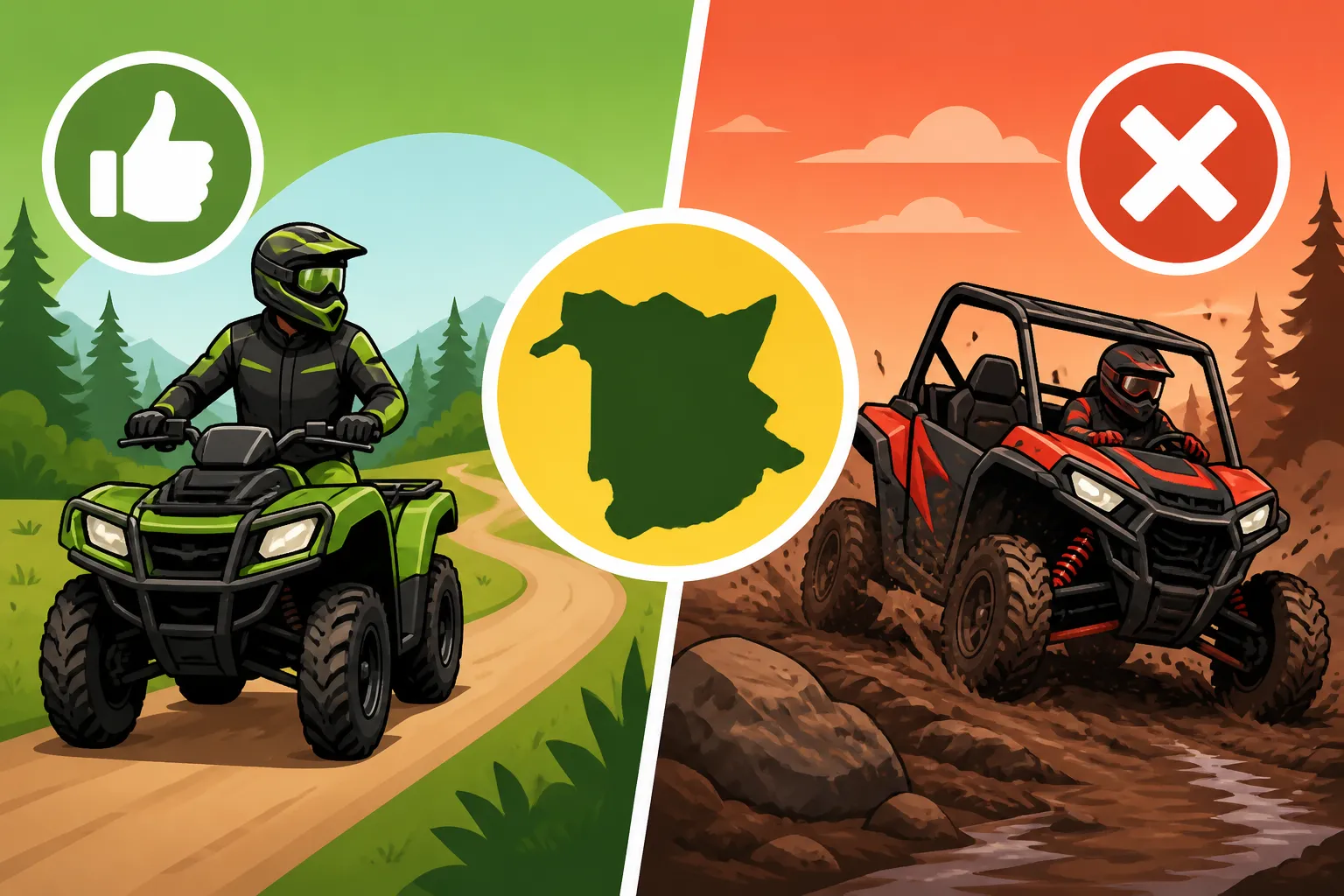
Nor should you assume that non-groomed trails are always more difficult. Trail surface and difficulty vary. Weather, maintenance, washouts, traffic and seasonal conditions can change how a route rides. A trail that is open may still be muddy, rocky or unsuitable for a particular machine or rider. Check New Brunswick Trail Conditions Before You Go and any posted closure notices rather than treating the permit category as a trail-condition rating.
| Question | Non-groomed permit may fit | Groomed permit may fit |
|---|---|---|
| When do you expect to ride? | Mainly in the shorter season covered by this option | Across the longer season associated with the groomed option |
| Will you ride groomed trails in winter? | Usually not part of your plan | You want the option of riding trails covered during that season |
| What matters most? | Matching the permit to a limited seasonal schedule | Keeping access to a broader riding season |
| What should you verify? | Covered dates, eligible trails and current closures | Groomed-season access, covered dates and current closures |
This is a starting point, not a guarantee of access on a specific trail. Confirm the current terms with the permit provider, and use an up-to-date trail map for route planning. For a closer look at the additional season associated with the other option, see What the Extra Season on a Four-Season Permit Covers.
Who is more likely to benefit from a non-groomed permit
The clearest fit is a rider whose calendar is limited to the non-groomed season and who does not need the extra seasonal access associated with the groomed permit. That might describe someone who rides a few weekends in warmer weather, uses a machine only during a summer stay at a camp, or avoids winter riding altogether.
It may also suit a rider who wants to keep permit spending aligned with actual use. If you do not expect to ride the trails covered by the groomed option’s additional season, paying for access you will not use may not make sense. Compare the current permit terms and costs before deciding; amounts and conditions can change. The lowest-cost option is only a good fit if it covers the riding you actually plan to do.
A non-groomed permit is less likely to fit if you want flexibility to ride through the additional season, including on trails that are maintained or groomed for winter use. It may also be the wrong choice if your riding group plans trips when the other permit category is required. A permit that suits one machine or rider does not automatically settle what another rider in the group needs.
Use your likely riding schedule, not just your best-case plans. Ask yourself:
- Which months are you realistically likely to ride?
- Will you ride during the season covered by the groomed option?
- Are the routes you use authorized for your permit category?
- Do planned trips depend on trails that may be closed or unavailable seasonally?
- If plans change, would the broader seasonal access of the other option be useful?
If you are unsure, check the dates and conditions for both permits before purchasing. Do not assume that buying the non-groomed option now means you can simply ride a groomed trail later in the season. Confirm whether a change, upgrade or separate permit is available and what process applies.
The right answer may differ even between riders who own similar machines. One person may ride locally during a limited season; another may travel to different regions and want more flexibility. If you keep more than one machine, check the rules for each one rather than assuming one sticker covers your whole household. New Brunswick Permit for a Second Machine can help clarify that separate question.
Questions to check before you buy
Before paying, confirm the current permit’s covered season, where it is valid and which trails are open. These details matter more than the label alone. Trail status can change because of maintenance, weather or seasonal closures, and the permit does not guarantee that a particular route will be open on the day you arrive.
Check that the permit you choose matches the machine you intend to ride. Make sure you understand where its sticker belongs and what proof of purchase or membership information you should keep. If a sticker is lost or damaged, follow the provider’s replacement process instead of moving a sticker between machines or riding without the required identification. See New Brunswick Permit Replacement If Lost for the replacement issue.
If you travel outside New Brunswick, do not assume the permit gives you access everywhere. Reciprocity arrangements are specific to jurisdictions and can change. Confirm the current agreement, eligible permit type and local requirements before crossing a border. For regional context, read New Brunswick Reciprocity With Nova Scotia and PEI and New Brunswick Riders Visiting Quebec.
When plans depend on one route, contact the relevant trail organization or permit seller before buying. Ask plainly: Does this permit cover the dates I plan to ride? Is my intended trail open to my machine and permit category? Are there closures or local restrictions? Keep a note of the answer and check again close to the ride, since conditions may change.
A practical way to choose
For a rider who expects to use only trails and dates covered by the non-groomed option, and does not need groomed-season access, that permit may be the better match. A rider who wants the flexibility to use the longer season or groomed trails should compare the groomed option before deciding. The choice is about planned access, not whether a trail sounds more or less challenging.
A simple decision process can keep the purchase straightforward:
- Write down the months you expect to ride, including any winter plans.
- Identify the trails or regions you expect to use and check their seasonal status.
- Compare the current permit descriptions for dates, access and restrictions.
- Confirm that the selected permit applies to the machine you will take.
- Recheck trail closures and route information before each ride.
If your schedule is uncertain, think about how much flexibility matters. Saving on a permit that leaves out a season you later want to ride can be a poor trade-off; paying for a season you know you will not use may be unnecessary. Compare the current options and choose based on the riding you are genuinely likely to do.
A non-groomed permit is most compelling when it matches both your calendar and the trails you intend to ride. It is not a shortcut around seasonal closures, land access rules or trail-specific restrictions. Verify the details before buying, then check conditions again before heading out.
Disclaimer
This article is for general informational purposes only and does not constitute professional advice. Laws, prices and regulations vary by location and change over time. Consult a qualified professional for guidance on your specific situation.