New Brunswick’s 57 Member Clubs
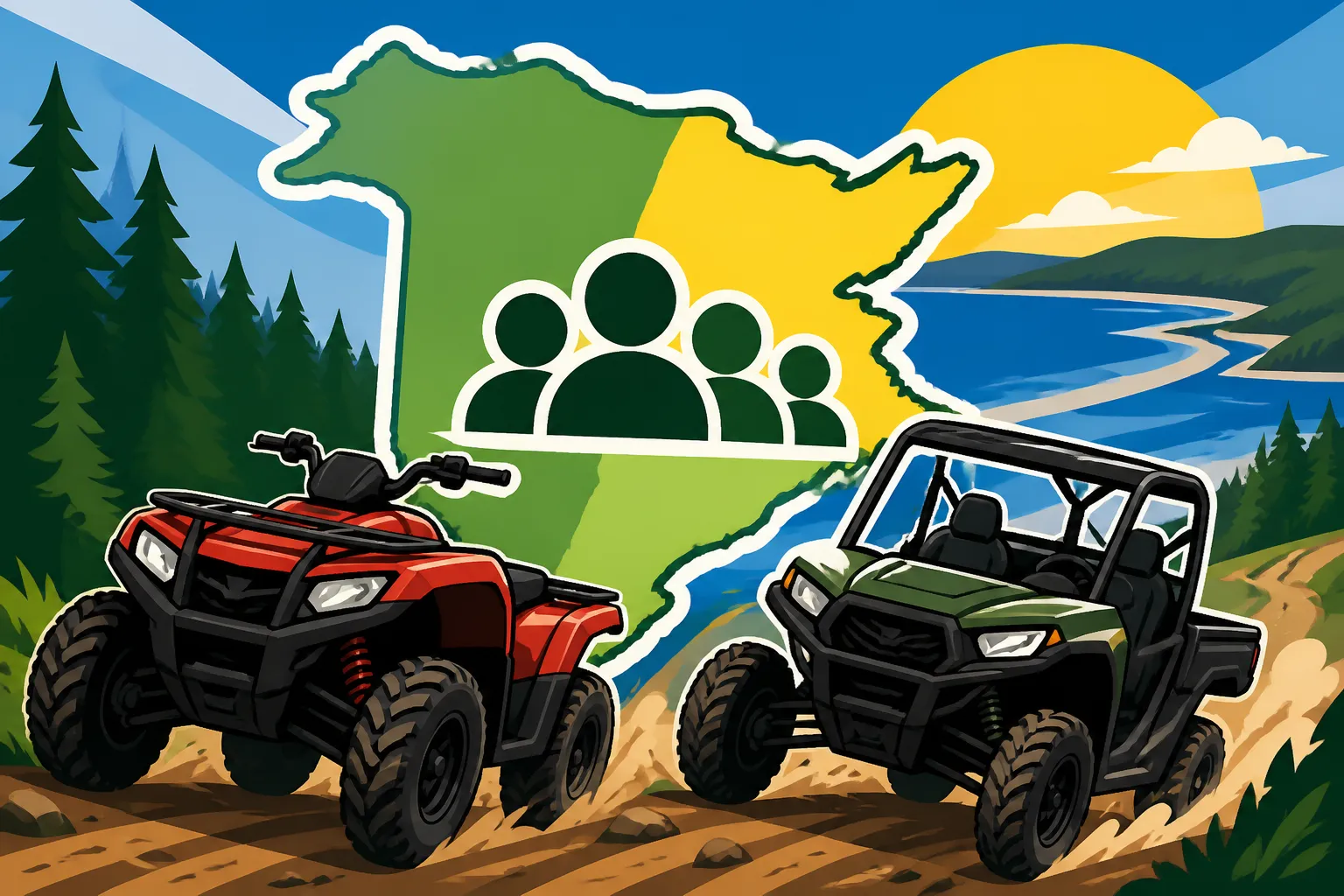
New Brunswick’s network of 57 member clubs can make it easier to find marked ATV and UTV trails, understand local conditions and connect with riders who know the area. But figuring out which club serves your route, what its membership supports and where to check before riding can feel like a puzzle. This guide explains how the clubs fit into the province’s trail system and how to make the most of them.
How New Brunswick’s member clubs fit into the trail network
Clubs connect local riders with a province-wide system
New Brunswick’s ATV clubs are part of a broader trail network associated with QuadNB, the provincial federation. The 57 member clubs give that network a local presence: riders can connect with people who know their area, while clubs contribute to the work involved in managing and maintaining riding corridors. For someone new to the province, that local link can be more helpful than trying to piece together a ride from scattered map pins.
A club is not simply a name on a membership list. Depending on its location and resources, it may help with trail work, local information, events, signage or communication about conditions. The exact activities can vary, so it is worth asking what a particular club does rather than assuming every club offers the same services.
The federation and clubs also help riders understand that a trail network is more than a collection of roads in the woods. Routes may involve marked corridors, bridges, land access arrangements and seasonal changes. If you are planning to ride near Woodstock, Bathurst or Miramichi, local context matters: a route shown on a map does not automatically mean every nearby road or track is open to ATVs.
Why the number of clubs matters to riders
A province-wide group of clubs means riders are not relying on one central office to know every bend, detour and local issue. A club close to your usual trailhead may be more familiar with a washed-out culvert, a new sign or an access concern than someone planning from home in another part of the province. That local knowledge is especially useful when conditions change after heavy rain, spring thaw or forestry work.
The number of clubs also gives riders more ways to get involved. Some people join because they want trail information; others volunteer, attend a club ride or help with practical work. You do not need to be an experienced mechanic or a confident backwoods navigator to contribute. Showing up, listening to local guidance and following the marked route are useful starting points.
If you are trying to understand the larger network before choosing a local club, [New Brunswick's Eight Trail Regions] offers a helpful way to think about the province’s riding areas. The regional picture can help narrow your search, but a nearby club is still the better place to ask about a specific trailhead, local event or route concern.
A club is a local connection, not a guarantee of access
It is easy to assume that joining a club gives you permission to ride anywhere in the surrounding area. It does not. Access depends on the trail, land arrangements, posted rules and applicable provincial or local requirements. A club can help explain how its routes work, but membership is not a substitute for checking whether a particular corridor is open and whether you have the necessary permit.
The same distinction applies to roads and informal woods routes. A route that looks suitable on a map may cross private property, a restricted area or a road where ATV use is not allowed. If a club map or rider recommendation points toward a route, confirm the status of the trail and stay on the marked corridor.
That may sound cautious, but it prevents the frustrating experience of reaching a gate, discovering a closure or unintentionally crossing a property boundary. For a closer look at the scale of the system and what organized trails mean, see [New Brunswick's 10,000 Kilometres of Trail]. Treat that figure as a description of the managed network, not an invitation to leave marked routes and explore every connecting track.
What local ATV clubs do for trails and riders
Trail maintenance is ongoing, practical work
Trail maintenance often means unglamorous jobs that make a ride safer and more predictable: brushing back growth, checking signs, clearing debris and helping identify damage. A route can look fine on a screen while a fallen limb, soft shoulder or damaged bridge makes it difficult in real life. Regular attention helps keep the trail legible and usable.
Clubs may also help coordinate workdays or communicate maintenance needs to the people who can address them. The scope of that work varies with local conditions, volunteers and the area’s trail arrangements. A small club with a limited volunteer base may have different capacity from one serving a busy corridor, so avoid assuming that a maintenance request will be handled immediately.
Riders can help by reporting a problem clearly. Note the trail name or nearby junction, describe what you saw and, if it is safe, share a useful location or photo with the club or appropriate trail contact. Avoid widening a route around a muddy section or cutting brush yourself unless the club has asked you to do so. Riding around a wet patch can turn a small problem into a much wider damaged area.
Signs, maps and local knowledge work together
Trail signs help riders stay on the intended route and recognize important turns, junctions or restrictions. They are particularly useful when a ride includes unfamiliar sections or several branching tracks. Still, signs can be obscured, damaged or missing, and a route may change after a reroute or maintenance issue. Use them alongside current trail information rather than treating any one sign as the whole plan.
Maps are another part of the picture, but map layers can differ in what they show and how recently they were updated. A general navigation app may display roads or tracks that are not part of a permitted ATV corridor. A club or federation trail map is a better starting point for designated routes, while local confirmation can help with recent changes.
Apps such as onX Offroad can be useful for organizing a ride, tracking your position or preparing an offline map for areas with weak service. They should complement, not replace, official trail information and permission checks. If you use onX Offroad, compare what it displays with current club or federation guidance before heading out, especially where a route approaches private land or a road.
Riders can help keep information useful
A good club relationship goes both ways. Riders benefit from local knowledge, and clubs benefit when trail users communicate respectfully and share relevant observations. If you notice a damaged sign, an unexpected closure or a safety concern, report it through the channel the club recommends. Include enough detail to help someone locate the issue, but do not post sensitive property or access information publicly without permission.
Be patient with volunteer-led communication. A club representative may be responding between work, family commitments and trail tasks. If your question is time-sensitive, such as whether a route is open for a planned weekend ride, ask early and provide the location and date you have in mind. A vague message like “Are the trails good?” is harder to answer than a specific question about a named area or trailhead.
For broader context on the work behind the routes, [New Brunswick Club Trail Maintenance] explains why a rideable corridor takes continued attention. Even when a trail looks quiet, there may be people doing the behind-the-scenes work that keeps it identifiable and usable.
Choosing a club for your riding area
Start with where you actually plan to ride
The most practical club for you is usually connected to the area where you expect to ride most often. If you live near Fredericton but plan occasional trips to the Restigouche region, your nearest club and your destination-area club may answer different questions. One can help with local riding habits; the other may know the route conditions and access details at your destination.
Make a short list of the places you want to explore. You might be interested in riding near Woodstock, heading out from Miramichi or planning a weekend around Bathurst. Then look for club or federation information associated with those areas and ask which organization is the best contact for the trails you have in mind. Avoid choosing based only on a club name that sounds geographically close.
If you are not sure which group serves a particular location, start with [Finding a New Brunswick Club Near Your Town]. A direct question to a club or federation contact can save you from relying on an old forum post or a trail pin that does not reflect present access arrangements.
Compare clubs by what you need, not by assumptions
One rider may want regular group rides; another may care most about trail updates, volunteer opportunities or local advice. Before joining or attending an event, consider what would make the club useful to you. A family with younger riders may want to ask about ride pace and event suitability. A visiting rider may need guidance on trail permits and where to start.
Use a few practical questions to understand how a club operates. Ask how it shares trail updates, whether it organizes member rides, what volunteer work is currently needed and whether it has guidance for visitors. These questions are more useful than assuming that every club has a formal ride calendar or a dedicated person answering messages every day.
| What you need | What to ask a club | Why it helps |
|---|---|---|
| Local trail information | Which marked routes or trailheads should a new rider start with? | Helps you choose a manageable first ride |
| Conditions | Where should I check for closures or recent damage? | Directs you to the best local updates |
| Group riding | Does the club organize rides or welcome new participants? | Sets expectations about pace and participation |
| Volunteering | What trail work or club tasks need help? | Lets you contribute in a useful way |
| Visiting the area | What permit, parking or access details should I confirm? | Reduces last-minute surprises |
| Family riding | Are there routes or events suited to our group’s experience? | Helps match the outing to the riders |
Check the fit before planning a long trip
If you are driving several hours to ride, do not rely on a single old map or a memory of last season’s conditions. Contact the local club or review its current communication channels before you leave. Ask about the specific trailhead, route or region rather than asking for a broad guarantee that everything is open.
Plan for the possibility that your preferred route will not be suitable that day. A bridge may be closed, a corridor may be under repair or a storm may have changed conditions. Having a second route or a nearby alternative can turn a disappointing drive into a useful day out. Keep in mind that a detour is not automatically legal just because it appears to reconnect with the trail.
For navigation, onX Offroad may help you keep track of your planned route, particularly if you prepare maps before entering an area with limited cell service. But an app cannot confirm that a trail is open, settle a land-access question or replace local signage. Use onX Offroad as a navigation aid alongside the trail information supplied by the relevant club.
How to prepare for a club trail ride
Confirm permits, registration and insurance first
Before you ride, check that your machine and paperwork meet the requirements for the ride you are planning. Trail access, vehicle registration, insurance and safety requirements are separate questions. Having one item in order does not automatically satisfy the others, and the rules can depend on the type of machine and where you intend to ride.
If you are new to the province, or if you have recently bought a machine, take time to confirm what applies to your situation. [New Brunswick ORV Registration Explained] is a useful starting point for understanding registration, while [New Brunswick's Groomed Trail Permit] covers a separate part of trail access. For insurance questions, see [New Brunswick Requires Insurance on Trails] and confirm the details relevant to your machine and intended use.
Do not assume that a friend’s permit or paperwork covers your machine. If you are borrowing, renting or riding a second vehicle in the household, ask what needs to be in place for that specific machine and rider. Sorting this out before the trip is far less stressful than discovering a missing requirement at the trailhead.
Plan the route around your group
A good ride plan considers the least experienced rider, not just the person with the biggest machine or the most trail time. Think about distance, terrain, weather, fuel range, daylight and how comfortable everyone is with mud, rocks or narrow wooded sections. A shorter route that leaves the group smiling is often a better first outing than an ambitious loop that turns into a recovery exercise.
Tell someone who is not riding where you plan to go and when you expect to return. Identify a meeting point and discuss what the group will do if machines become separated or someone has a mechanical issue. On longer rides, carry the basics for communication, first aid and minor repairs. Remote sections may not have dependable cell coverage, so do not treat a phone signal as guaranteed.
If your route plan depends on live navigation, download relevant maps and route information before leaving reliable service. onX Offroad can help with offline route preparation, but save the trail details you need in a way you can access without a connection. A paper note with a trailhead name, a club contact and a planned return time can still be valuable if your phone battery fails.
Pack for changing trail conditions
New Brunswick conditions can shift during a ride. A clear morning near Moncton may not mean every wooded section will stay dry, and a shaded trail can hold water or soft ground after rain. Bring layers, rain protection, drinking water and footwear suited to the conditions you expect. Leave space for the fact that a ride may take longer than planned.
A basic kit can include a first-aid supply, a charged phone, a flashlight, a tire or belt repair plan appropriate to your machine, and a way to secure or recover a vehicle safely. The right equipment depends on your route and machine, so ask experienced local riders what they consider essential for that area. Carrying gear is not a substitute for knowing how to use it.
Respect closures and wet trail conditions even when the group is eager to continue. If a route is soft or damaged, turning back protects the trail and can prevent a manageable ride from becoming a recovery problem. Club volunteers may need to repair damage caused by riders who cut around a closure, so following the sign is part of being a responsible guest.
Riding with clubs and sharing the trail responsibly
Make group rides comfortable for everyone
A club ride can be a great way to learn a new area, but group pace and expectations matter. Ask how the ride is organized before joining, including whether riders are expected to stay together, what experience level is suitable and how breaks are handled. If you are uncertain, say so. It is better to choose a comfortable route than to spend the day worried about keeping up.
Follow the ride leader’s instructions and leave enough space between machines to see and react. Avoid passing within the group unless the leader has made the plan clear. At junctions, use the group’s agreed method for making sure everyone takes the correct turn. If you stop, let the riders behind you know when it is safe to do so.
A mixed group may include different machine types, passenger arrangements and experience levels. Do not pressure another rider to go faster or take a route they are uncomfortable with. A welcoming club ride is one where people can ask questions, take a breather and make sensible choices without being made to feel like a burden.
Respect other users, residents and landowners
A marked trail may pass near homes, work areas or land used for other purposes. Keep noise and speed under control, follow signs and give other trail users room. Do not block gates or access roads, and leave them as you found them when the route allows you to pass. These small habits help protect community trust in the trail system.
Be especially attentive around forestry activity, farm equipment, hikers, cyclists and other motorized users. A work truck may have limited room to manoeuvre, and a rider coming quickly around a blind corner can create a dangerous encounter. Slow down when sight lines are short and follow any temporary instructions posted for the corridor.
Clubs rely on continued goodwill from people who live, work or manage land near trails. If a route is closed, do not search for an informal bypass. Ask the appropriate club contact whether there is an approved reroute. [New Brunswick Trails That Cross Private Woodlots] offers useful context for understanding why access and respectful conduct matter on routes that involve private land.
Leave the route in good condition
Riding responsibly includes leaving a trail as close as possible to how you found it. Stay on the marked corridor, avoid spinning tires unnecessarily and do not widen a muddy section by creating a new line around it. What seems like a harmless shortcut can damage vegetation, create erosion or make the route harder for the next group.
If you come across litter, a damaged marker or a trail issue, report it through the relevant local channel. Do not assume someone else has already done so. A brief, factual note helps the club understand what needs attention and whether the report is about a hazard, maintenance issue or possible closure.
Club work is not only about building a route; it is also about keeping a relationship between riders and the people who allow or support access. When riders follow signs, avoid conflicts and respond sensibly to closures, they help make future riding possible. Those habits matter whether you are on a familiar loop outside Fredericton or visiting a trail area near Campbellton for the first time.
Finding and using trail information
Begin with the official trail map and local updates
Before choosing a route, look for the federation or club map that applies to the area. Check that you understand what the map represents: designated trail corridors are not necessarily the same as every road, track or visible line in a navigation app. If the map includes an update date or notices about seasonal access, read those details before setting out.
Local club updates are important because trail information can change. A washout, construction project or temporary closure may not appear immediately in every mapping tool. When planning a ride around Edmundston, Saint John or another unfamiliar area, use a current map and seek confirmation about anything that looks uncertain. Treat online rider comments as helpful clues, not official permission.
For broader guidance on maps and digital planning, [New Brunswick Trail Maps and the MapGear App] is a useful companion topic. It can help you think through the difference between route planning and confirming that a particular trail is open to your machine.
Use navigation apps as a second layer
Navigation apps can be useful when you want to follow a saved route, understand your position or prepare for a day with limited connectivity. onX Offroad can support those tasks if you set it up before the ride and know how to use the relevant map features. Downloading information in advance is particularly helpful in parts of the province where mobile reception may be inconsistent.
Still, a GPS line is not a permission document. Digital maps can show roads or tracks that are not an approved ATV trail, and a route line cannot tell you whether a corridor has a temporary closure. Use club or federation information to choose the route, then use your preferred navigation tool to help follow it. If the app and a posted sign disagree, do not ignore the sign simply because the screen shows a route continuing.
It is also wise to conserve your phone battery. Bring a charging option if appropriate, reduce unnecessary screen use and make sure more than one person in the group understands the route. A shared ride plan should not depend on one rider’s phone staying charged all day.
Keep a simple information routine
A reliable pre-ride routine does not need to be complicated. Start by identifying the trail area and the club connected to it. Check current trail information, confirm permits and machine requirements, plan a route that suits the group, then save the details you will need offline. Before leaving, tell someone your plan and expected return time.
For a first visit, keep the route modest and leave time to turn around if conditions are not right. Ask the local club about suitable trailheads and any local issues, but remember that advice given for one section may not apply to another. If a route enters a different region, confirm what changes in terms of access, parking and permits.
After the ride, note what worked and what you would change next time. Record the trailhead, approximate distance, fuel needs, difficult sections and any closures you encountered. Share useful observations with the club when appropriate. Over time, that small habit builds a personal reference that is more useful than trying to remember every detail months later.
Getting involved with a New Brunswick ATV club
Join because it supports the kind of riding you want
Joining a club can be a practical way to stay connected with an area and support the people who help sustain its riding opportunities. Before joining, check what the membership includes and how it relates to any trail permit you may need. Those are not automatically identical questions, so understand the club membership and riding requirements separately.
Think about how you would like to participate. You might attend a meeting, take part in a group ride, follow local updates or volunteer for a trail day. You do not have to commit to every activity. A small contribution, made consistently and respectfully, can still be meaningful to a volunteer organization.
If you ride in several parts of the province, ask whether one club is the right fit for your main area or whether you should connect with more than one local group. Focus first on the location where you ride most often. A nearby club is more likely to be able to answer practical questions about the trails you use regularly.
Volunteer in ways that match your time and skills
Trail organizations need a range of help, and not every task involves heavy equipment. Some volunteers may assist with communications, event planning, sign checks or basic trail observations. Others may have the experience and tools for physical maintenance. Ask what is needed before offering to do a particular job, especially if it involves changing a sign, moving a barrier or working near a bridge.
Be honest about your availability. A club would rather know that you can help occasionally than have you agree to a regular commitment you cannot keep. If you are new to trail work, attend an organized workday and learn the local procedures first. That helps keep volunteers safe and prevents well-intentioned changes from conflicting with trail plans.
Volunteering can also make you a more thoughtful rider. You see how weather, repeated traffic and small acts of trail damage affect a corridor. After helping clear a section or check a route, it is easier to understand why clubs ask riders to stay on the marked line and report problems rather than creating their own solutions.
Build relationships before you need help
A club is most useful when you are already familiar with its communication channels. Follow its updates, introduce yourself at a public event and learn how it prefers riders to report concerns. That way, if you later need to ask about a closure or a trailhead, you know where to start.
If you are visiting from another part of New Brunswick or coming from outside the province, be clear about your experience and plans. A local contact can offer more relevant guidance when they know whether you are bringing a family group, riding alone or planning a long-distance day. Do not expect a club volunteer to design a complete itinerary on short notice, but do ask focused questions.
The best relationship is one built on mutual respect. Clubs can provide local knowledge and a connection to the trail community; riders can support maintenance, follow access rules and share useful observations. That simple exchange helps make a network of 57 member clubs meaningful beyond the number itself.
Disclaimer
This article is for general informational purposes only and does not constitute professional advice. Laws, prices and regulations vary by location and change over time. Consult a qualified professional for guidance on your specific situation.