New Brunswick Trails for a Weekend Trip
A weekend ATV or UTV trip in New Brunswick can go sideways before the first trail ride if you choose a base without checking trail access, fuel options, permits, or seasonal closures. This guide helps you match a region to your group, plan a practical two-day itinerary, and prepare for the conditions you may meet on the trail.
Choose a New Brunswick region that suits your weekend
New Brunswick is large enough that “a weekend trip” means different things depending on where you start. Driving to a trailhead, riding a loop, and finding food or fuel can take more time than expected, especially when your group is unfamiliar with the area. Pick one base and build your rides around it rather than trying to cover the province in two days.
Before settling on a region, check the official trail map and current notices, then confirm access, parking, and services with the relevant local club or business. A line on a map does not necessarily mean a trail is open to every type of machine, open in every season, or connected to public facilities.
Compare possible bases before booking
These are starting points for planning, not guarantees that a particular trail segment is open. Use local trail information to confirm your route, and ask about current conditions if you will be riding remote or recently repaired sections.
| Base area | Why it may suit a weekend | What to confirm before you book |
|---|---|---|
| Woodstock or Hartland | Useful for a trip focused on western New Brunswick and nearby riding areas | Which marked trails are open, where to park, and whether fuel or food is available along your planned route |
| Miramichi | A practical base for exploring the region’s woods and planning a longer day ride | Trail access from your lodging, local closures, and the distance between services |
| Bathurst | A starting point for riders interested in northeastern New Brunswick | Whether your selected routes connect as expected and what seasonal conditions are like |
| Acadian Peninsula | May appeal to riders who want to pair a trail weekend with a coastal-area stay | Which routes are authorized for your machine and whether conditions or closures affect the route |
| Fundy region | A choice for a southern New Brunswick trip with varied scenery | Local access rules, trail conditions, and where to leave a truck or trailer |
The best base is often not the place with the most exciting name. It is the place that lets your group start legally, ride a suitable distance, and return without relying on one uncertain shortcut. For western routes, planning around Woodstock or Hartland can help keep the logistics manageable; for a northern trip, choose a base nearer to the specific trail area rather than assuming you can ride there from town.
If you are comparing destinations, start with the broader regional context in [New Brunswick's Eight Trail Regions] and [New Brunswick ATV Trails: The QuadNB Network]. These can help you narrow the search, but you will still need to verify the route and access details before unloading your machine.
Match the destination to your group
A beginner-friendly weekend usually works better with a shorter route, clear navigation, and an easy way to return to the trailer. A more experienced group may enjoy longer legs between stops, but distance alone does not tell you how demanding a route will be. Mud, rocks, washouts, narrow corridors, and slow group pace can turn a modest-looking ride into a full-day outing.
Think about the least experienced rider when you set the plan. If one person is new to trail riding, has a smaller machine, or is riding a passenger, build in room to stop and regroup. A UTV group may also move differently from a group of ATVs: width, turning space, and the ability to pass or turn around can affect which routes feel comfortable.
Ask your lodging host or local club specific questions instead of only asking whether there are “trails nearby.” For example: Where is the nearest legal access point? Is there room to park a truck and trailer? Are there fuel stops on the route, or should everyone start with a full tank? Are any bridges, gates, or sections unsuitable for a wide side-by-side? Specific answers make it easier to avoid arriving with machines and nowhere sensible to ride.
Build a two-day route that leaves room for the unexpected
A satisfying weekend does not have to mean riding from morning until dark. Long trail days can be tiring, and New Brunswick routes may include stretches where services or cellular coverage are limited. Plan a ride that gives you time to stop, check navigation, and handle a slower-than-expected section without making the return feel rushed.
Use official trail information as your route foundation. A navigation app such as onX Offroad can be useful as a supplementary planning tool, especially when you want to review your route before leaving, but do not treat any third-party map as confirmation that a corridor is currently open or authorized. Compare it with current local trail information and carry a backup plan.
A realistic weekend itinerary
Friday evening: arrive and prepare. Check in, unload only if your accommodation and parking arrangements allow it, and confirm the next day’s starting point. Look over the route together rather than leaving each rider to guess where the group is headed. Make sure everyone understands the turnaround point and agrees on what to do if the group gets separated.
Saturday: choose the main ride. Make this your longer day, but keep the route flexible. Start with a known access point, plan a mid-ride stop, and identify at least one place where the group can shorten the ride or turn back. If conditions are poor, the group is behind schedule, or someone is uncomfortable, adjust the plan rather than pressing on to reach an arbitrary mileage goal.
Sunday: ride a shorter loop or revisit a favourite section. A shorter outing leaves time to pack, refuel, and get home without a late return. It also gives the group a chance to ride a section they enjoyed on Saturday without committing to another full day in the woods.
Avoid building an itinerary around a fuel stop that you have not confirmed. In smaller communities, store hours and services can vary, and a route may not pass directly through the place you expect. Start with enough fuel for the planned ride and a sensible reserve, and ask locally about fuel availability before you set out.
For trip planning, [New Brunswick Trail Maps and the MapGear App] and [Downloading a GPX File] are useful topics to review. If you use onX Offroad, treat it as one layer of your navigation setup: download or save what you need before heading into areas with weak reception, and carry another way to orient yourself if your phone battery dies or the app cannot load.
Leave margin for closures and changing conditions
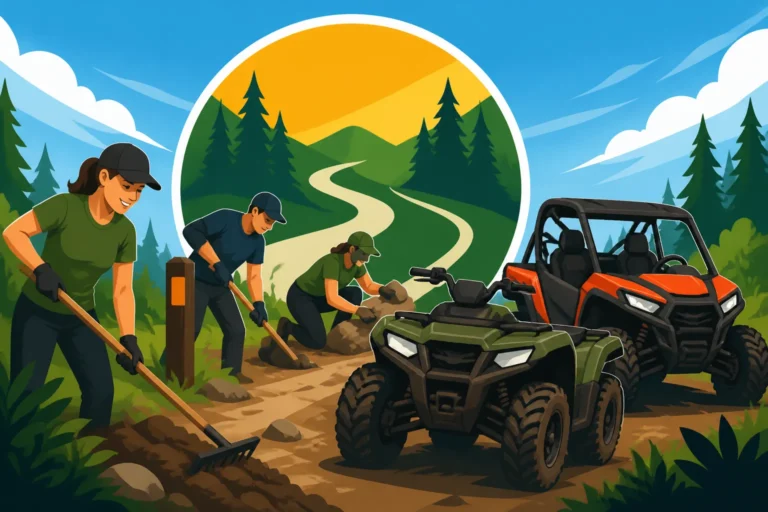
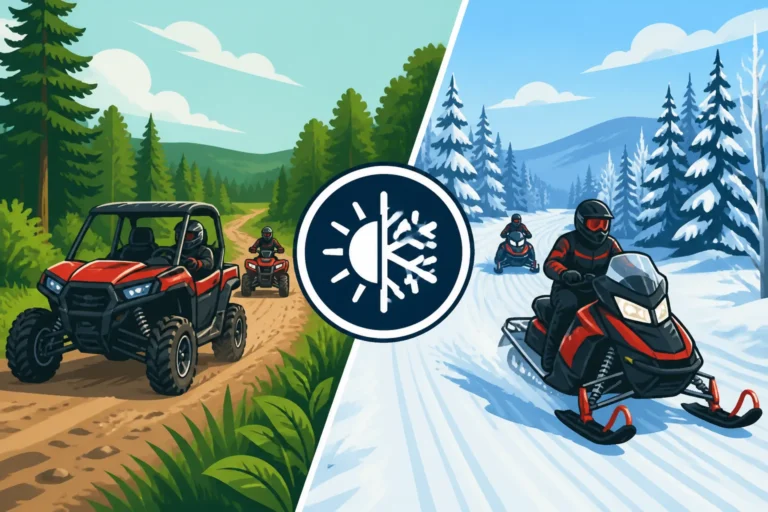
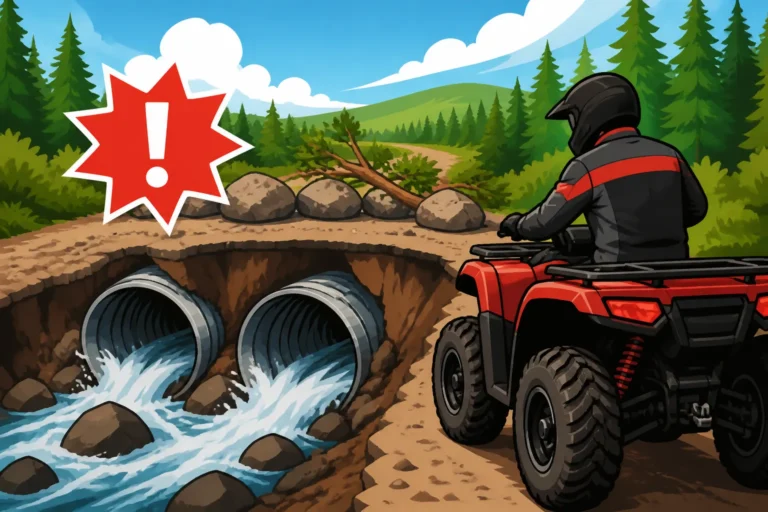
A route that looked straightforward at home may be affected by rain, a washout, trail work, or a seasonal closure. Spring thaw and heavy rain can make some sections especially vulnerable. Riding around a wet or damaged spot can widen the disturbance, so follow posted detours and do not create your own bypass through the woods.
Build a Plan B before you arrive. It might be a shorter loop, a different approved access point, or a non-riding activity if the trails are closed or unsafe. This is especially helpful when the trip is tied to a lodging reservation or a group schedule: having an alternative can prevent pressure to ride a route that local information says to avoid.
Check [New Brunswick Trail Conditions Before You Go] and [New Brunswick Trail Closures After Rain] close to departure, then check again with a local club or other reliable local contact. If your group expects to rely on phone navigation, review coverage in advance as well. onX Offroad may help you keep track of a planned route, but a downloaded map does not replace checking closures, access permissions, or trail signage.
Sort out permits, access, and the rules before you ride
A weekend plan should include more than a route and a place to sleep. Riders need to confirm the permits and documents that apply to their machines and trip, and they should make sure the planned route is open to the kind of riding they intend to do. Requirements can differ according to the machine, location, and circumstances, so verify the details rather than relying on what a friend did on a previous visit.
Check trail permits and machine paperwork
Before you travel, confirm that each machine has the required registration, insurance, and trail permit for the ride. Do not assume that one rider’s permit covers another person’s machine, or that a permit from another province automatically gives access to every New Brunswick trail. If you are visiting from elsewhere, check the applicable reciprocity and visitor rules before setting out.
Keep required documents accessible and protected from water. A sealed pouch or another secure, easy-to-reach storage spot is more practical than leaving papers in a truck that may be miles away. For a clearer pre-trip checklist, see [Four Things to Carry on a New Brunswick Trail] and [New Brunswick Insurance Proof at a Trailhead].
Confirm that your group understands what kind of trail permit is appropriate for the planned ride. Groomed and non-groomed trail access can involve different permit choices, and some routes have seasonal limits. [New Brunswick Groomed vs Non-Groomed Permits] can help you understand the distinction; confirm the current options and rules with the relevant official or local source before buying.
Confirm the route is legal for your machine
A route being visible on a map does not automatically mean it is a legal trail for your ATV or UTV. Check that the route is part of an authorized trail network and that your machine is allowed on it. Do not assume that a woods road, rail bed, beach, private woodlot, or road through a village is open to off-road vehicles just because it looks passable.
Local rules matter. Road access can depend on municipal bylaws or permits, and permission to use private land should be obtained from the owner. If a planned ride includes any road section, verify the exact access and riding rules before you go. The guides [New Brunswick ATV Road Rules Explained] and [New Brunswick Local Bylaws and Where to Find Them] are good starting points for understanding why a route needs more than a map check.
For a UTV, pay particular attention to route width and posted restrictions. A side-by-side may not fit comfortably through a narrow passage or around a tight turn, even when the trail itself is open. Ask the local club or trail contact whether the route is suitable for your machine, and respect barriers, signs, and closures. If an access point is blocked, do not go around the obstruction to continue.
Prepare your machine and group for a full weekend
A little preparation can prevent the familiar trailhead scramble: someone forgot a permit, a phone is nearly dead, or a machine has a small problem that stops the whole group. A short inspection and a shared packing plan make the trip easier for everyone, particularly when you are travelling a long distance to ride.
Make a practical pre-trip checklist
Before loading, check the machine’s tires, brakes, lights, controls, fluids, and general condition. Pack the tools and supplies appropriate to the machine, including any commonly needed repair items for your model. If your group will be far from services, agree on how you will handle a breakdown and whether anyone is carrying recovery equipment.
For navigation, save the route information before leaving reliable coverage. Keep your phone charged, bring a backup power source, and consider carrying a paper map or another navigation option. Mark your intended start point, route, turnaround point, and a reasonable fallback. Do not rely on one person’s phone as the group’s only way to navigate.
Pack for conditions rather than the forecast alone. A cool morning can feel very different from a sunny afternoon, and rain can make a long day uncomfortable quickly. Bring water, food, basic first aid supplies, weather-appropriate layers, and any personal medication. For more detailed packing ideas, see [Packing for a Full Day in the Woods] and [Cell Dead Zones in the New Brunswick Interior].
Keep the group together without rushing
Agree on simple group habits before the engines start. Decide who leads, who rides at the back, where you will stop, and what everyone should do if the group gets separated. At a junction, wait until the last rider has arrived and understands the direction. If a rider needs a break or has a machine issue, stop somewhere safe and make sure the group knows the plan.
Keep a pace that suits the slowest rider and the trail conditions. Dust, poor visibility, wet ground, and fatigue can all make close following risky. Leave space between machines, slow down near homes and other trail users, and follow posted signs. If you encounter a logging operation or work crew, give them room and follow any instructions or temporary traffic controls.
A good weekend is not measured by how many kilometres you cover. It is the one where everyone returns with their machine, gear, and patience intact—and where the trail remains in good shape for the next group. Confirm access before travelling, carry the required documents, use current local trail information, and be willing to change plans when conditions call for it.
Disclaimer
This article is for general informational purposes only and does not constitute professional advice. Laws, prices and regulations vary by location and change over time. Consult a qualified professional for guidance on your specific situation.