New Brunswick Permits Sold at Service Centres
If you’re heading to a New Brunswick trail and want to buy your permit at a Service New Brunswick counter, the main challenge is knowing what to ask for and what to bring. A counter purchase can be convenient, but it doesn’t replace registration, insurance or checking that the trails you plan to ride are open. Here’s how to prepare and avoid a wasted trip.
What a Service Centre Can Help You Buy
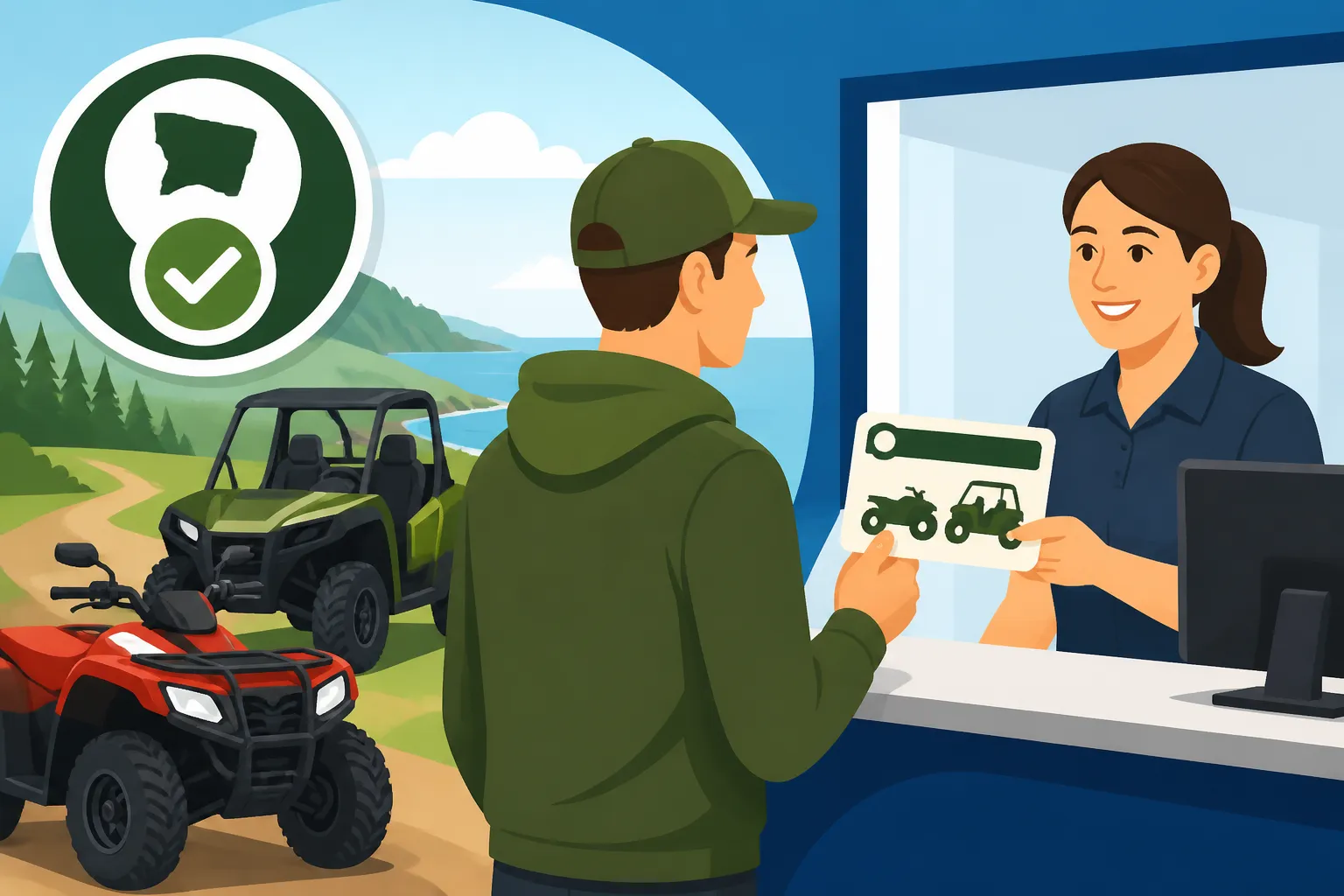
Service New Brunswick centres are one place riders may be able to purchase a New Brunswick off-road vehicle trail permit. Clubs and dealers may also sell permits, so a service centre is an option rather than the only route. Availability can differ by location or season. Before making a special trip, contact the centre you plan to visit and confirm that it sells the permit you need.
A counter can be useful if you prefer to speak with someone, want to ask questions before choosing a permit, or are already visiting the centre for other business. It may be less convenient if you are travelling on a tight schedule, if the location does not sell permits, or if you need a specific permit type that is not available there.
Use the counter visit to confirm the practical details, not just to complete a purchase. Ask which permit types are available, how the permit is issued, what information the centre needs, and whether the permit is intended for the machine you will ride. If you are buying close to a planned ride, also ask when the permit becomes valid and how to proceed if the physical sticker is not available immediately.
A trail permit is separate from vehicle registration. Registration identifies the machine for provincial purposes; a trail permit is for access to the participating trail network under the applicable rules. One does not automatically take the place of the other. Before riding, review New Brunswick ORV Registration Explained and New Brunswick Requires Insurance on Trails so you know which requirements apply to the machine and the route.
The words “Service Centre” can also lead to a common misunderstanding: not every counter visit covers every step of getting trail-ready. Staff may be able to sell a permit, but that does not mean they can confirm a particular trail is open, resolve a land-access question, or decide whether a road is legally open to ATVs. Treat the permit purchase as one task in a larger preparation checklist.
| Before you go | What to confirm |
|---|---|
| The location | Does this centre sell trail permits? |
| Permit choice | Which permit types are available for your planned use? |
| Machine details | What information should you bring about the machine? |
| Payment and issue method | What payment methods are accepted, and will you receive a sticker or other proof? |
| Timing | When does the permit become valid, and can you buy it before your ride date? |
| Trail plans | Are the routes you want to use open and covered by the permit? |
If the centre cannot sell the right permit, ask whether a nearby club or dealer offers them, or check the available purchase options in How to Buy a New Brunswick Trail Permit. That can save time compared with arriving at a trailhead and discovering that your paperwork is incomplete.
Choose the Permit for the Ride You Plan to Make
Before you visit a counter, work out what sort of riding you expect to do. New Brunswick has permit options associated with different trail seasons and uses, along with options for some shorter-term or youth situations. The right choice depends on who is riding, how long you will be in the province, and what trails you intend to use.
Do not select a permit just because its name sounds close to your plan. In particular, make sure you understand the difference between a permit for groomed trails and one for non-groomed trails. The labels describe trail use, not simply whether the surface looks smooth or whether a trail happened to be groomed recently. If you are unsure, ask the counter staff to explain the available choices and confirm the current terms before paying. You can also read [New Brunswick Groomed vs Non-Groomed Permits] before you go.
A short visit does not always mean the shortest-duration permit will fit your plans. Consider the dates you will ride, whether you might add a day, and whether your group’s plans could change. For a visitor, a day or week option may be worth asking about. For a rider who expects to return or ride throughout a longer period, compare the applicable longer-term options. Current availability and terms should be confirmed with the seller or the relevant permit provider.
A youth permit question deserves particular care. Check whether the young rider needs a separate permit and what conditions apply to the permit type. A youth permit is not a substitute for following age, supervision, training, machine-size, helmet and route rules. Those are separate requirements. For related preparation, read [New Brunswick Youth Permit Rules] and New Brunswick Quad Safety Course Explained.
Some situations call for more than one permit. If a household has two machines, for example, do not assume a permit bought for one can be moved to the other. Likewise, if you borrow a quad, rent a side-by-side or switch machines midway through a trip, check what the permit is attached to and what the operator expects. Ask the seller directly before purchase rather than relying on a friend’s experience with a different permit or season. [New Brunswick Permit for a Second Machine] explains why this is worth checking.
A useful way to prepare is to write down the details of your planned ride:
- The dates you expect to ride.
- The number and type of machines in your group.
- Who will operate each machine, including any youth riders.
- Whether you expect to use groomed trails, non-groomed trails, or both.
- Whether you are visiting from outside New Brunswick.
- Whether you may change machines or add riders during the trip.
Bring that list to the counter and use it to ask focused questions. If you are uncertain between two permit types, ask the staff member to explain the difference in terms of your actual itinerary. A clear answer before purchase is better than finding out on the trail that you bought a permit that does not match your intended use.
Be cautious about relying on an old sticker, an earlier season’s advice, or a photo of someone else’s permit. Permit conditions and interprovincial arrangements can change. Confirm the current rules for the time and place you plan to ride.
Prepare for the Counter Visit
A little preparation makes a counter purchase smoother, especially if you are buying for someone else or arriving as a visitor. There may be specific information the seller needs to issue a permit correctly. Requirements can vary, so confirm them with the service centre before travelling rather than assuming that every location follows the same process.
It is sensible to have the machine’s identifying details available, along with registration information if applicable. Bring identification and a way to pay, and be ready to say who will ride and which permit type you are seeking. These are practical items to have on hand; check with the centre to learn what it actually requires. If a machine is newly purchased, borrowed, rented or registered in someone else’s name, explain that situation before the sale is completed.
For a purchase involving several riders, make sure everyone’s plan is clear. A parent buying for a youth rider should ask what applies to that rider rather than assuming an adult permit is sufficient. A group organizer should not treat one person’s permit as covering the whole group. Each rider and machine should meet the applicable requirements, and the group should know who is responsible for carrying the necessary documents.
Use the following list as a preparation aid:
- The make, model and identifying information for the machine.
- Registration information and any documents that clarify ownership or use.
- The names or ages of riders if relevant to the permit option.
- Your planned ride dates and intended trail type.
- Payment method, after confirming what the centre accepts.
- Any current permit or membership details you want staff to check.
If you are travelling from another province, mention that at the outset. Reciprocity can affect whether an out-of-province permit is accepted, and arrangements differ by jurisdiction. Do not assume that an out-of-province registration, membership card or permit automatically grants access to every New Brunswick trail. Ask the seller what applies to your specific permit and then verify the details before you set out. The overview of New Brunswick Reciprocity With Nova Scotia is useful for one common visitor question; riders coming from Quebec should check New Brunswick Riders Visiting Quebec for the separate cross-border context.
At the counter, take a moment to check the permit information before leaving. Make sure the permit type matches the machine and use you described. Confirm what proof you should carry and where any sticker belongs. If the information appears wrong, raise it while the transaction is still fresh. Keep any receipt or confirmation with your riding documents until you have checked that the permit is properly issued.
If you are buying for another person, make sure the rider knows what was purchased and what conditions apply. A permit in a pocket or glove box does not help much if the rider thinks it covers a different machine or a different trail category. Send them the details and keep a photo of the relevant paperwork as a backup, while still carrying the required original or accepted proof where applicable.
There is no need to buy extra gear just to make the counter visit. However, after you have the documents, a small waterproof pouch can help keep papers together on a wet ride. If you choose one through Amazon, check that it closes securely and fits the documents without folding or damaging them. A simple resealable waterproof bag can also work; the important thing is that the papers remain readable and easy to produce.
After You Buy the Permit
Buying a permit is not the final step. Check that you understand how it must be displayed or carried, and follow the instructions provided with it. If you receive a physical sticker, attach it as directed rather than placing it wherever it is easiest to see. Placement matters because the permit needs to be visible in the way required. See [New Brunswick Permit Placement on a Machine] before mounting it.
Do not move a sticker to a different machine just because your plans have changed. If you switch machines, sell the ATV, borrow another one, or discover the original machine will not be used, contact the permit seller or the relevant organization to ask what is allowed. Replacement and transfer questions can depend on the permit’s conditions. [New Brunswick Permit Replacement If Lost] is helpful if a sticker goes missing or becomes unusable.
Keep your permit information with the other documents you need while riding. Depending on the rules and circumstances, a rider may need to produce more than a trail permit. Registration and proof of insurance are separate concerns, and an officer may ask to see applicable documents. For a practical checklist, read Four Things to Carry on a New Brunswick Trail.
A document pouch can make that easier, particularly on a long ride where papers may be exposed to rain, mud or dust. If you look on Amazon, choose a pouch that you can open with gloves off and that stays secured to the machine or your riding gear. Do not leave important documents loose in an open cargo area. A paper copy may be useful, but do not assume a phone photo will replace any document that the rules require you to carry.
Also check the trail status before leaving. A valid permit does not guarantee that a particular trail is open, passable or available for your type of machine on a given day. Seasonal closures, maintenance, weather and local conditions can affect access. Use current trail information and respect signs, gates and reroutes. If a route is closed, riding around the barrier can damage the trail or take you onto land where access is not permitted.
The permit does not give general permission to ride on roads or private property. Road access is governed separately, and local rules may affect whether an ATV can use a particular street or crossing. Property access also depends on permission and the route’s status. If your ride involves connecting from a trail to a road, check the applicable road rules and local bylaws in advance rather than treating the trail permit as road authorization.
Finally, keep your permit details somewhere you can find them after the ride. Take a photo of the sticker and receipt, note the seller and purchase date, and store the paperwork with the machine’s registration documents. That can help if the sticker fades, paperwork is misplaced, or you need to ask a question later. A second copy kept at home is useful, but it does not replace anything you must carry while riding.
When the Counter Is Not the Best Option
A Service New Brunswick counter may be convenient, but there are situations where another sales channel or a quick call first makes more sense. If you are already near a club or dealer that sells permits, compare the time and availability. If you are arriving late in the day or travelling a long distance, confirm that the counter is open and can complete the specific sale before you leave. Public-facing services can have different hours and processes from one location to another.
If your question is about trail conditions, a local club may be a better contact. Clubs can often provide practical information about local routes, closures, trailhead access and what riders should expect. That does not make a club’s informal advice a replacement for official permit conditions, but it can help you plan a realistic route.
If you are a visiting rider, buying a New Brunswick permit may not be necessary in every situation. Reciprocity agreements can determine whether a permit from another jurisdiction is accepted, but do not rely on an old post, an expired sticker or a past trip as proof that the same arrangement still applies. Confirm the current agreement for the province or state where your permit was issued and the New Brunswick trails you intend to use.
If you cannot get a clear answer at the counter, pause before purchasing. Ask which organization can confirm the permit rule, and contact that organization with the exact details: your home jurisdiction, permit type, machine, intended trail and travel dates. A few minutes of checking can prevent buying the wrong permit or assuming you have access that you do not.
A good rule is to separate your questions into three categories:
- Permit sale: Where can you buy it, and which option matches the ride?
- Machine compliance: Is the machine properly registered and insured for the use planned?
- Trail access: Are the specific trails open and permitted for your machine?
Different people or organizations may answer each category. A sales counter can help with the first; registration and insurance questions may need their own confirmation; trail access often requires current local information. Keeping those questions separate makes it easier to get a reliable answer.
If you are purchasing a permit for a group, do not leave the details until the morning of the ride. Confirm each rider’s status, each machine’s paperwork, permit type and sticker placement in advance. A single missing document or unsuitable permit can delay the whole group at the trailhead. Keep a simple checklist, and have each rider verify their own machine rather than assuming the group leader’s purchase covers everyone.
An Amazon pouch or document organizer may help keep paperwork together, but organization is not compliance. Check the actual permit instructions, carry what is required, and make sure every rider understands the limits of the permit. The best counter purchase is the one that fits the ride you have planned and leaves no guesswork about what to do next.
Disclaimer
This article is for general informational purposes only and does not constitute professional advice. Laws, prices and regulations vary by location and change over time. Consult a qualified professional for guidance on your specific situation.