Carrying a Spare Belt in the Woods
A broken CVT belt can turn a great New Brunswick ride into a long, frustrating walk back to the truck—especially when your group is deep in the woods and cell service has disappeared. Carrying the correct spare and knowing how to change it can save the day. This guide covers what to pack, how to prepare, and when a trail-side repair is unsafe.
Why a Spare Belt Belongs on a New Brunswick Ride
A belt problem can leave you stranded far from help
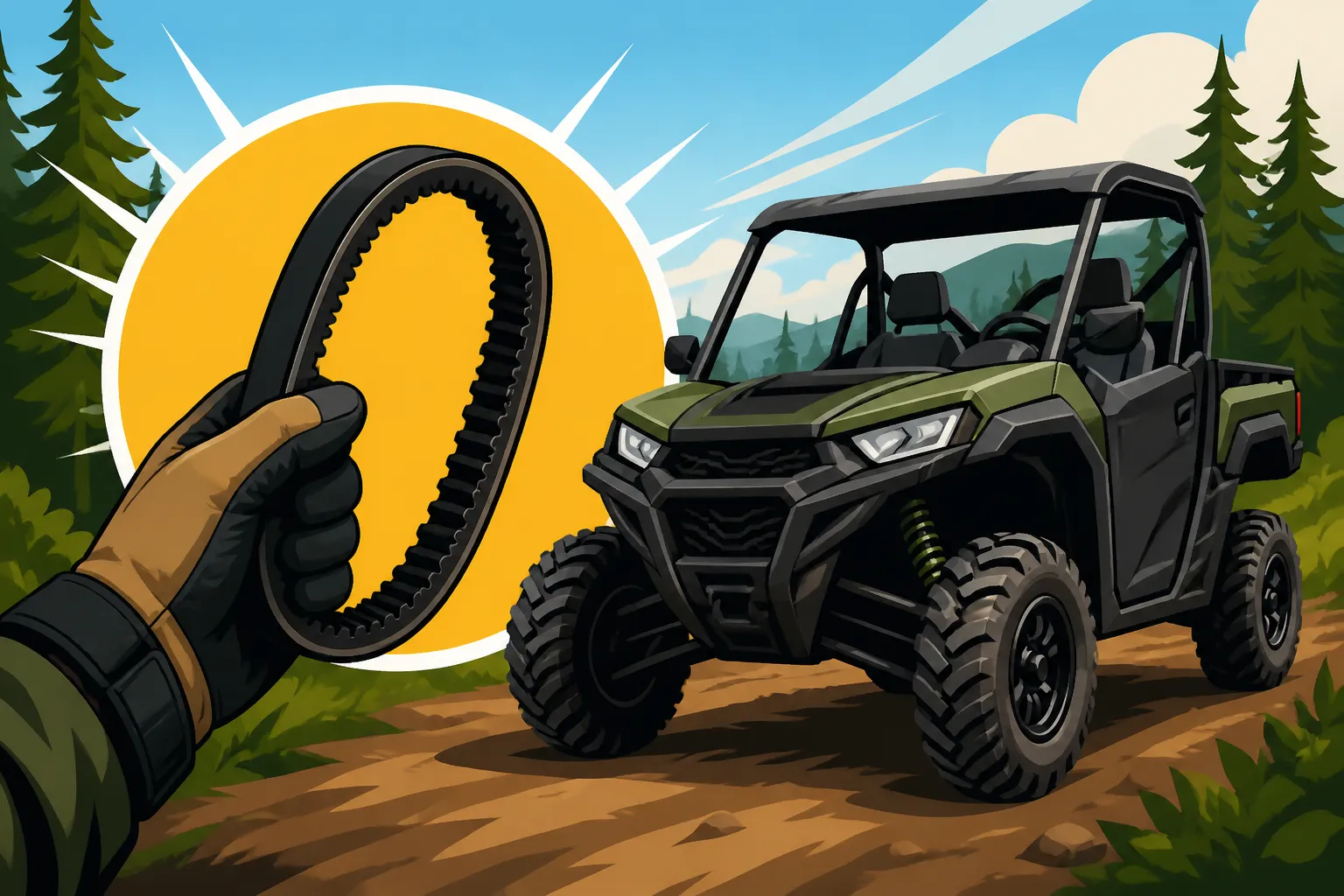
Many ATVs and side-by-sides use a continuously variable transmission, or CVT, with a belt transferring power between the clutch components. If that belt breaks or slips badly, the machine may lose drive or behave unpredictably. You might still have lights and a running engine, but that does not mean you can ride out safely.
On a short ride close to a parking area, a breakdown may be an inconvenience. On a longer loop near Miramichi, Bathurst, or the Restigouche, it can mean waiting for a tow or asking another rider to help move the machine. A spare belt is not a guarantee against every mechanical problem, but it can address one failure that is difficult to improvise around.
New Brunswick conditions make a little preparation worthwhile. Mud, hills, repeated stops, heavy loads, and slow technical riding can put extra demand on a drivetrain. A machine used for plowing or farm work may also have a different history from one that only sees occasional trail use. The practical question is not whether every belt will fail; it is whether you want to be prepared if yours does.
Before a trip, review Carrying a Spare Belt in the Woods alongside your machine’s maintenance needs and the route you intend to ride. If your group is planning a remote outing, also think about recovery gear, first aid, fuel range, and communication. A spare belt helps with one kind of problem, while a broader plan helps the group handle the rest.
Warning signs are worth taking seriously
A belt can wear gradually before it fails. Possible warning signs include slipping under load, a burning rubber smell, unusual noise from the clutch area, shuddering during takeoff, or a change in how the machine accelerates. These symptoms can have other causes, so treat them as reasons to inspect the machine rather than proof that the belt is definitely the problem.
Pay attention to changes before you leave home. If a machine starts smelling hot after a hill climb or feels different when pulling a trailer, do not assume it will be fine for a full day in the woods. Check the owner’s manual for the manufacturer’s inspection and service guidance, and have a qualified powersports technician diagnose persistent or unfamiliar symptoms.
A belt that has already been exposed to serious heat or damage may not be dependable as a spare. Keep your replacement belt protected from oil, fuel, sharp edges, and direct heat. If you are unsure whether a belt is the right type or condition for your machine, confirm the part number and fitment with the manufacturer or a parts professional before relying on it.
Choosing and Packing the Right Spare
Match the belt to the exact machine
A belt that looks close is not necessarily the correct belt. Fit can vary by make, model, year, and drivetrain configuration, including between machines that appear similar. Use the owner’s manual, manufacturer parts information, or a trusted dealer to identify the correct replacement. If the machine has been modified, ask whether those changes affect belt selection.
Check the part number before the ride, not at the trailhead. A common frustration is discovering that the spare has been in the garage for months but belongs to another machine—or that the package was opened and the belt is damaged. Label the spare with the machine it fits if you maintain several ATVs or UTVs.
Keep the belt in its packaging or in a clean protective bag inside a secure storage compartment. Avoid storing it loose beside tools that could cut or pinch it. Do not bend, twist, or compress it in a way the manufacturer warns against. If you carry a used belt as an emergency backup, mark it clearly and do not mistake it for a new replacement when packing for the next trip.
Pack the tools and information that make the spare useful
A spare belt does little good if you cannot access the clutch cover or safely complete the replacement. The required tools differ among machines, so use the owner’s manual as your packing list. Depending on the model, the job may require specific sockets, a belt-removal tool, a clutch tool, or other equipment. Do not assume the compact tool kit under the seat is enough.
| Item | Why it helps | Check before leaving |
|---|---|---|
| Correct replacement belt | Provides the right part for your machine | Confirm fitment by model and year |
| Required hand tools | Lets you open and service the belt area | Compare tools with the owner’s manual |
| Gloves and eye protection | Help protect your hands and eyes during work | Pack clean, intact gear |
| Owner’s manual or saved instructions | Supports model-specific procedures | Make instructions available offline |
| Flashlight or headlamp | Helps when the cover area is shaded or the repair runs late | Check batteries or charge |
| Clean storage bag | Keeps the belt and small parts protected | Keep it away from fuel and sharp tools |
A phone may be useful for looking up saved instructions, but do not make an internet connection part of your repair plan. Download or save the relevant manual pages before you go. Navigation is also important if the group has to stop or reroute. Apps such as onX Offroad can be one part of a navigation setup, but check what maps are available for your route and do not assume an app display proves that a road or trail is open to your machine.
For New Brunswick club trails, plan around the route information and conditions provided by the relevant club or trail organization. A mapping app can help orient you, but it should not replace local trail guidance, signs, or permission requirements. Before a remote ride, review New Brunswick Trail Conditions Before You Go and New Brunswick Cellular Reception Maps, and save any essential information while you still have service.
Changing a Belt Safely on the Trail
Stop, assess, and choose a safe place to work
If the machine loses drive or begins making unusual noises, stop as soon as you can do so safely. Continuing to throttle a machine with a suspected belt problem may add heat or cause further damage. Move out of the travel path if possible, make the machine visible to other riders, and have someone watch for approaching traffic while the group assesses the situation.
Choose a stable, reasonably level spot away from water, loose traffic, and a steep slope. Shut the machine down and follow the manual’s safety instructions before opening the clutch area. Components may be hot, and dirt or debris can complicate a repair. Let the machine cool if needed, and avoid placing tools or loose parts where they could fall into the drivetrain.
Think about the conditions as well as the repair. If daylight is fading, the machine is on unstable ground, or the rider does not know the procedure, it may be safer to wait for assistance than to rush. A trail-side belt change is only a sensible option when the machine and people can be kept secure throughout the work.
Follow the machine-specific procedure
There is no single belt-replacement sequence that applies to every ATV or UTV. Clutch designs and procedures vary. Use the instructions for the exact machine, and do not force a belt over components or use improvised tools if the manual calls for a specific method. If the belt is shredded, inspect carefully for pieces around the clutch area before installing anything new, following the manufacturer’s guidance.
Keep dirt, water, oil, and grease away from belt and clutch surfaces. Avoid touching the belt with dirty hands after handling fuel, lubricant, or greasy tools. If the procedure requires loosening or spreading a clutch component, use the correct tool and method. A shortcut that damages a clutch or causes an injury can turn a manageable breakdown into a much bigger problem.
After installation, confirm that everything is reassembled as specified before starting or moving the machine. Follow the manual’s break-in or operating guidance for a new belt, if applicable. If the belt does not sit correctly, the clutch appears damaged, or the machine still behaves abnormally, stop and arrange recovery rather than trying to “see if it clears up” on the trail.
For a group ride, agree in advance who will stay with the disabled machine and who will seek help. Keep the group together where practical, and avoid leaving a rider alone in a remote area. A loaded phone, offline map, first-aid kit, and clear plan for contacting help matter just as much as the spare itself. Packing for a Full Day in the Woods is a useful companion when you are deciding what else belongs in the machine.
Building a Better Breakdown Plan
Match your preparation to the route and group
A quick ride near a familiar trailhead calls for a different level of preparation than a long loop through remote woods roads. Before setting out, share the intended route with someone who is not riding, agree on a check-in plan, and make sure at least one person in the group can use the navigation tools. If you use onX Offroad, save the map or route information you may need before leaving reliable service, and carry a separate way to navigate if the phone battery dies.
Also check whether the route is open to your type of machine and whether the ride requires particular registration, insurance, or trail documentation. A belt repair will not solve a problem caused by riding on a closed or unsuitable route. For more on preparing paperwork, see New Brunswick Documents You Must Carry and New Brunswick Registration Before Your First Ride.
Tell the group what you are carrying and where it is stored. In a UTV, a belt packed in a rear compartment may be easy to reach; on a smaller quad, it may be secured under a rack or inside a storage box. If only one person knows where the tools are, a simple breakdown can become more stressful than it needs to be.
Make routine checks part of the habit
Inspect the belt and clutch area according to the manufacturer’s schedule, especially before a demanding ride or after unusual heat, mud, or water exposure. Look for visible wear, contamination, or damage only as directed by the manual. If the machine has had a recent belt failure, recurring slipping, or unexplained heat, have it checked before taking it back into a remote area.
A useful pre-ride routine is simple: confirm the spare fits, check that the required tools are present, make sure your instructions are accessible offline, and review the route and expected conditions. Add a quick look at fuel, tires, lights, and recovery equipment. These small checks are easy to skip when everyone is eager to get moving, but they are much easier to do in the driveway than beside a disabled machine.
For route planning, onX Offroad may help you keep track of your position where its available map information suits your needs. Use it alongside official or club-provided trail information, and avoid treating any map as a substitute for signs, closures, or permission. If the route will take you beyond dependable cell coverage, plan for that from the start rather than hoping your phone will find a signal later.
When you prepare properly, carrying a spare belt becomes part of a practical riding system: the right part, the right tools, clear instructions, and a sensible plan for stopping or getting help. That preparation cannot prevent every breakdown, but it can make a common drivetrain problem less likely to end the day for everyone.
Disclaimer
This article is for general informational purposes only and does not constitute professional advice. Laws, prices and regulations vary by location and change over time. Consult a qualified professional for guidance on your specific situation.