Snorkels for Brook Crossings
A brook crossing can look harmless from the trail and still hide a soft bottom, a sudden drop, or deeper water than your ATV or UTV can handle. A snorkel can help protect selected intake and driveline openings, but it does not make a machine waterproof. This guide explains what snorkels do, what they cannot do, and how to approach New Brunswick water crossings more safely.
What an ATV or UTV snorkel does
Which parts a snorkel protects
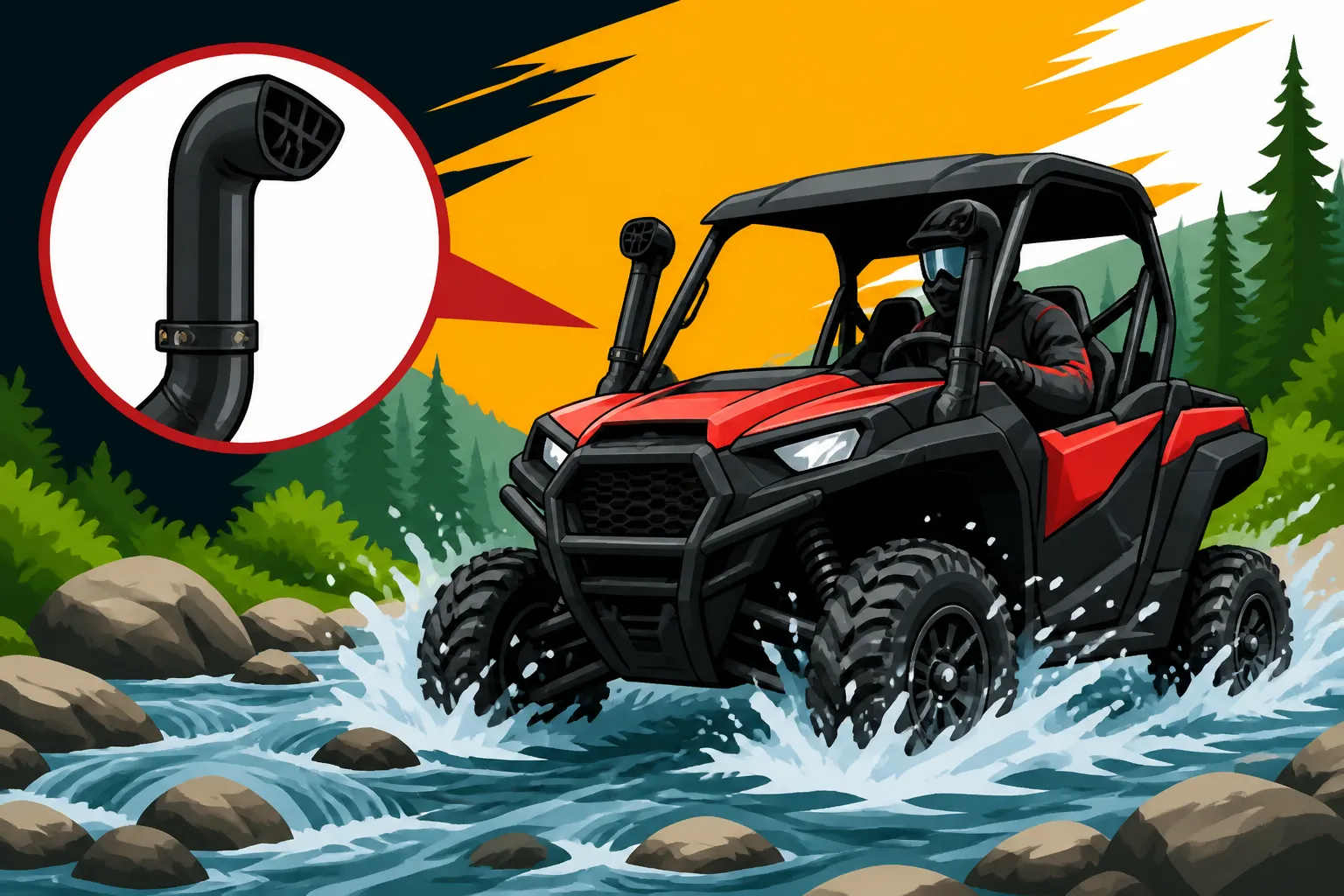
On many machines, the engine air intake and the continuously variable transmission, or CVT, draw air through openings that sit relatively low on the vehicle. During a water crossing, splashes or rising water can reach those openings. A snorkel relocates one or more intake points higher, often using raised ducts or pipes.
The engine intake and CVT intake are separate systems, even if both are raised as part of one kit. Water entering the engine intake can cause severe damage, including hydrolock, where water prevents the engine from turning normally. Water in the CVT housing can affect belt traction and operation. A snorkel kit may address these specific risks, but it does not automatically seal every opening or protect every component.
A snorkel’s height is not a safe-water-depth rating. A machine can have raised intake openings and still be vulnerable if water reaches the electrical system, connectors, vents, bearings, brakes, or other low-mounted parts. The machine’s design, the installation, water movement, and the bottom surface all matter. A snorkel should be treated as one modification within a broader water-crossing plan, not permission to ride into deeper water.
What a snorkel does not make safe
A snorkel cannot tell you whether a brook is too deep, whether the bottom is firm, or whether a current will push your machine sideways. It also cannot prevent water from entering through a poorly sealed joint or an unprotected opening elsewhere. Even a carefully installed kit may not protect against a wave that washes over the seat, water forced into openings by a bow wave, or a machine that becomes partially submerged.
There are practical trade-offs, too. Raised ducts can affect how the machine sounds, and their routing may influence where you can mount cargo or how easily you can access certain components. Installation quality matters: loose fittings, cracked hose, badly placed openings, or weak seals can undermine the protection you expected. Before modifying a newer machine, check the manufacturer’s guidance and ask a qualified powersports technician whether the changes could affect warranty coverage or servicing.
Think of a snorkel as additional protection for specific air pathways. It is not a substitute for a known route, a shallow crossing, a suitable machine, or the decision to turn around. If the water looks fast, deep, unusually cloudy, or difficult to assess, skipping the crossing is often the soundest choice.
How to assess a brook crossing before riding in
Check the water and the route, not just the snorkel height
Stop before the bank and look for the safest available crossing point. Water that appears calm near the edge may move faster in the middle, particularly after heavy rain or a rapid thaw. Check for a firm, gradual entry and exit, and look for hazards such as submerged rocks, branches, washed-out edges, or a sudden channel drop. If you cannot see enough to judge the route, do not assume it is shallow.
A map helps with orientation, but it cannot confirm the brook’s depth or conditions at the moment you arrive. onX Offroad can be useful for reviewing your planned route and keeping track of your position, especially when a ride includes unfamiliar woods roads. Use it as a navigation aid rather than a water-level report; conditions on the ground still need to be assessed in person.
Check the trail information before setting out, particularly if rain or spring thaw may have affected the route. A brook crossing that was manageable on a previous ride can change after a storm, and an apparently convenient detour may lead off the marked corridor or onto private land. Reviewing New Brunswick Trail Conditions Before You Go and respecting New Brunswick Trail Closures After Rain can help you avoid arriving at a route that has become unsafe or is no longer open.
Know when to turn around
A crossing is a poor choice if you cannot identify a clear entry and exit, the current is pushing debris along, or the water is moving quickly enough to make footing uncertain. Do not wade into a crossing to test it if the current, depth, or bottom makes that unsafe. A machine’s weight and tires can also churn a soft bottom, leaving you stuck or damaging the trail.
Consider what happens if the machine stalls halfway across. If there is no safe way to recover it without entering dangerous water, attaching a tow line from an unstable bank, or putting another rider at risk, the crossing may not be worth attempting. A recovery plan is not simply having a tow strap; it means having a safe place to stand, a suitable anchor or recovery vehicle, and a route out.
This is especially important on remote rides where help may be far away. Before heading into an unfamiliar area, check your route and communications plan. onX Offroad can help you keep track of your route, but it does not replace telling someone where you are going or carrying suitable emergency equipment. For a broader preparation list, see Packing for a Full Day in the Woods and First Aid on a Remote Woods Loop.
Preparing your ATV or UTV for water crossings
Inspect the snorkel installation and the machine
Before a ride, inspect snorkel ducts and fittings for cracks, loose connections, and signs of rubbing against bodywork or moving parts. Check that openings are clear and that the routing has not shifted since the last trip. If a fitting looks damaged or a duct has come loose, do not count on it to protect the intake system.
Also check the other parts of the machine that a snorkel may not protect. Pay attention to electrical connectors, vent lines, seals, and low-mounted components. Follow the machine’s owner’s manual for inspection and maintenance, and ask a qualified mechanic if you are unsure where its intake, CVT vents, or other vulnerable openings are located. Designs vary, so advice that applies to one model may not apply to yours.
Tires and ground clearance affect how a machine behaves on a wet approach, but aggressive modifications do not remove the risk of a slippery bank or hidden hole. Choose tires appropriate for the terrain and keep the machine maintained. Tires for New Brunswick Clay offers related guidance for riders dealing with the province’s often-soft trail surfaces. For creek or brook crossings, though, grip cannot make an unknown bottom predictable.
Carry recovery gear and protect the trail
A tow strap can be useful if a machine becomes stuck, but it must be used with care. Know where the manufacturer-approved recovery points are and avoid attaching a strap to a rack, bumper, or other part not designed to take a pulling load. Keep people clear of a taut line, and do not attempt a recovery that would put someone in the water or in the path of a moving machine. Tow Straps on a Muddy Miramichi Loop covers useful recovery considerations for a remote ride.
Do not widen the crossing by riding around a wet or muddy section. That can damage vegetation, loosen the bank, and create new ruts that make the route worse for the next rider. Stay on the marked corridor, use an established crossing where permitted, and follow any closure or reroute instructions. The same care applies when a route crosses private land or a managed trail; Staying on a Marked New Brunswick Corridor is a useful reminder to keep the ride on the authorized route.
If the crossing looks unsafe, turn around and use an approved alternative route if one exists. Do not create a new bypass across a brook bank or through brush simply because the established route is difficult. Where a bridge or other designated structure is available, use it only if the route is open and the structure is suitable for your machine. Trail information such as New Brunswick Bridges on Club Trails can help riders think ahead about structures along a planned route.
Choosing the right approach for a crossing
A snorkel-equipped machine, a machine without a snorkel, and a planned detour each present different trade-offs. The safest choice depends on conditions and the limits of the vehicle, not on one modification alone.
| Situation | Sensible approach | What to keep in mind |
|---|---|---|
| Shallow, slow water with a visible firm bottom and clear exit | Proceed only if the route is open and the machine is suitable | Keep a steady, controlled pace and avoid creating a large bow wave |
| Water is cloudy, deeper than expected, or the bottom cannot be judged | Turn around or find an approved alternative | A snorkel cannot reveal submerged hazards |
| Current is strong, water is rising, or the bank is unstable | Do not cross | A machine can be pushed, swept off line, or become difficult to recover |
| Crossing is closed, damaged, or outside the marked route | Follow the closure or reroute | Do not create a new track around the obstacle |
| Machine stalls or water reaches vulnerable openings | Stop and assess safely; avoid restarting until checked | Restarting an engine that may have taken in water can worsen damage |
If you do choose to cross a suitable, shallow brook, approach slowly and deliberately. Use a line that gives you a clear exit, keep the machine balanced, and avoid abrupt throttle changes or sharp turns on a slippery bottom. Do not follow another rider so closely that you cannot stop if they lose traction. Riders in a group should take turns, leaving enough space for each machine to clear the crossing before the next enters.
After crossing, pause somewhere safe and inspect the machine if you noticed unusual sputtering, loss of power, warning lights, belt slip, or water reaching higher than expected. Follow the owner’s manual for post-water inspection and maintenance. If you suspect water has entered the engine or another critical system, do not keep riding in the hope that the problem will clear itself; seek qualified service.
A snorkel can be a useful part of preparing an ATV or UTV for wet terrain, but the best crossing is still one you can assess clearly and complete without putting the machine or riders at unnecessary risk. In New Brunswick, where weather and trail conditions can change between rides, check the route, respect closures, and be willing to turn back when the water gives you a reason.
Disclaimer
This article is for general informational purposes only and does not constitute professional advice. Laws, prices and regulations vary by location and change over time. Consult a qualified professional for guidance on your specific situation.