Why Riding Around a Wet Section Makes It Worse
A wet patch on a New Brunswick ATV trail can look like a small inconvenience, especially when the ground beside it seems firm. But riding around the mud often creates a second, wider trail, damages plants and soil, and makes drainage problems worse. This guide explains why it happens, what to do instead, and how to make a safer choice when a trail section is soaked.
Why riding around a wet section causes more damage
One muddy line can turn into several
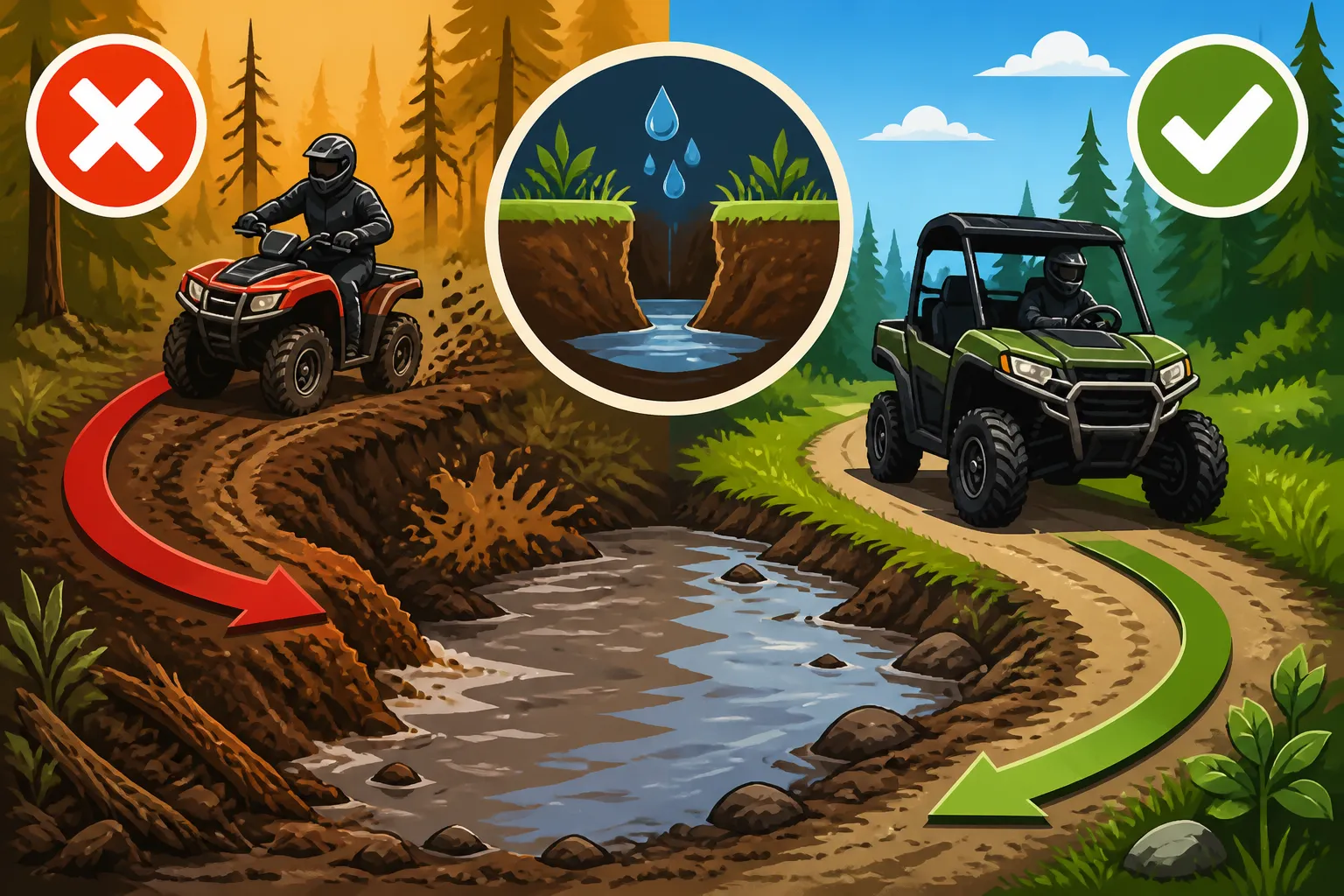
When riders detour around a puddle or muddy rut, their tires press down on ground that may look solid but is still soft underneath. The first machine can leave a shallow track. The next machines follow it, and soon a narrow strip of vegetation has become a second route. If another group takes a different line around the same wet area, the damage spreads even farther.
That is how one obstacle can turn into a wide, churned-up stretch with multiple tire tracks. On a busy trail, those small decisions add up. Riders may think they are avoiding damage by staying out of the deepest mud, but they can instead disturb a much larger area than the original trail section.
The impact is not limited to plants. Tire ruts can hold water, and repeated traffic can loosen soil that would otherwise help support the trail edge. Once a detour becomes visible, it may look like an acceptable route to the next rider—even if it crosses soft ground, private land, or an area that a club is trying to protect.
Wet ground can make drainage problems worse
A trail’s shape and drainage features affect where rain and snowmelt go. When riders cut around a wet area, they can flatten vegetation, create new channels, or push loose soil toward a ditch or watercourse. The next rainfall may then follow the new tracks, carrying soil with it or leaving a deeper, wider rut.
The original wet spot may have formed because water is collecting in a low area, because a culvert is blocked or damaged, or because the ground is saturated after rain or thaw. A detour does not fix any of those causes. In some cases, it lets water spread across more of the surrounding ground, making the wet section harder for a club to maintain.
This is one reason spring conditions deserve special care. During a thaw, the surface may look firm in places while the soil below remains soft. A tire can break through that thin crust and leave a rut that grows with every pass. Check local updates and learn about New Brunswick Trail Closures in Spring Thaw before heading out when temperatures and trail conditions are changing quickly.
What to do when you reach a wet section
Pause and assess before choosing a line
Do not follow the tire tracks automatically. Stop before the muddy area, leave room for other riders, and take a moment to judge what you can see. Look for trail markers, signs, a designated route around the obstacle, or a closure notice. If the trail is marked closed, or a club has posted a detour, follow that instruction rather than making your own route.
If there is no marked bypass, do not assume the firm-looking shoulder is part of the trail. A few feet of grass or brush can conceal soft soil, a ditch, a watercourse, or an unstable edge. From the safe, established trail, consider whether the wet section can be crossed without leaving the corridor and without risking a stuck machine or an uncontrolled slide. If you cannot tell, turning around is often the least damaging decision.
Check trail-condition information before your ride, especially after heavy rain, during spring thaw, or following a storm. A route map can help you understand where you are and where the trail goes, but it may not show a closure that was posted recently. A tool such as onX Offroad can be part of your route-planning setup; still, verify conditions with the relevant local club or trail operator before relying on a route line. For more planning context, see New Brunswick Trail Conditions Before You Go.
If crossing is appropriate, stay on the established route
When the trail is open and a safe crossing is clear, keep to the existing trail rather than widening it. Approach at a controlled pace and use a smooth, steady input. Sudden acceleration can spin the tires, dig deeper ruts, and throw mud or debris. Hard braking or sharp steering can also make a slippery section harder to manage.
Leave enough space between machines to avoid crowding and to give each rider room to respond. If the first rider gets stuck or needs to turn back, the next machine should not be committed to the same line. A group leader can help by stopping riders well before the obstacle and explaining what the group will do, rather than letting everyone make separate decisions at the edge.
Do not ride through water if you cannot judge its depth, the condition of the ground beneath it, or what lies under the surface. A puddle can conceal a rut, a washed-out edge, or debris. If the safe line is unclear, do not probe the unknown area by driving across vegetation or along an unmarked shoulder. Staying within the route is a basic part of Staying on a Marked New Brunswick Corridor.
How to make a safer decision on the trail
Use a simple decision check
Wet trail decisions are easier when you slow down and ask the same questions each time. This helps resist the common group-ride pressure to keep moving just because the machines ahead have continued.
| What you see | A sensible next step |
|---|---|
| A posted closure or marked detour | Follow the closure or the signed detour |
| A wet section with a clear, established trail line | Assess whether it is safe for your machine and skill level before proceeding |
| A firm-looking shoulder with no marked route | Do not treat it as a bypass; stay on the corridor or turn back |
| Water hiding the surface or possible trail damage | Do not guess at depth or footing; wait, turn around, or seek current local guidance |
| Fresh tire tracks spreading into vegetation | Avoid adding another line and report the widening or damage |
| Conditions that have changed since your last ride | Check current club or trail information before continuing |
The table is a decision aid, not a guarantee that a crossing is safe. Your machine, tires, load, experience, visibility, and the condition of the ground all matter. If a rider in the group is unsure, the group should stop and discuss options rather than treating hesitation as a reason to push through.
When planning a longer ride, use a map to understand the route and identify sensible places to turn back. onX Offroad may help you review your planned route, but do not assume that a mapped trail is open or passable on the day you ride. Temporary closures, washed-out areas, and weather-related changes may not appear on a map right away. Check current information from the trail organization, and consider learning how New Brunswick Trail Closures After Rain can affect a planned outing.
Know when to turn around
Turning around can feel frustrating after you have driven to a trailhead, organized a group, or planned a full day out. But continuing into uncertain conditions can turn a minor inconvenience into a stuck machine, damaged trail, or difficult recovery. If the only way forward seems to require crossing an unmarked soft area, pushing through unsafe water, or cutting a new route, stopping is a reasonable choice.
Think about the return trip, too. A section that seems manageable in one direction may be harder when you come back with tired riders, changing light, or more rain. If the trail is already deteriorating, added traffic can make it worse for the group behind you. A short pause to check conditions—or a decision to take a different open route—can prevent a much larger problem.
For groups, agree on a turn-around point before setting out, and make sure riders know that turning back is an acceptable decision. A route-planning app such as onX Offroad can help you keep track of your intended route, but the group should also know how to regroup and retrace its path if conditions change. Good planning reduces the temptation to invent a shortcut around a wet section.
Helping protect New Brunswick trails
Report damage and follow club guidance
If you see a widening muddy area, a washed-out section, a damaged culvert, or signs that riders have created a bypass, report it to the trail club or organization responsible for that route. Give a clear location and describe what you observed. A map pin or a careful note about the nearest trail marker can be more useful than a general message saying that “the trail is bad.”
Do not attempt repairs unless the club or land manager has asked you to help and you have the right equipment and permission. Moving debris, digging drainage channels, or driving repeatedly over the area can create more damage, even when the intention is to improve it. If the section appears unsafe, treat that information as something to pass along rather than a repair project to take on during your ride.
Clubs and volunteers often need timely reports to assess closures, maintenance needs, and reroutes. If you want to understand how riders can help without causing additional wear, Reporting Damage to a Club is a useful next step. You can also review New Brunswick Trail Etiquette Locals Expect for the everyday habits that help keep shared routes usable.
Ride with the season and surface in mind
The same trail can behave differently after rain, during thaw, or after a dry spell. Clay, gravel, exposed roots, and low-lying sections each respond differently to water. A stretch that was easy last weekend may be slick or deeply rutted today. If conditions are wet, shorten the ride, choose a more suitable open route, or postpone the trip rather than assuming the trail will hold up.
Spring is a particularly easy time to underestimate the ground. Frost can leave a hard-looking surface above soft soil, and repeated tire traffic can break through that surface. In those conditions, even a detour that looks harmless can widen the damaged area. Frost Heaves on a Spring Trail and Mud Season and Club Closures explain why seasonal conditions can change what a route can safely handle.
Good trail etiquette is not about avoiding every puddle at all costs. It is about recognizing when a trail is vulnerable, not creating a new route without permission, and accepting that an alternate plan may be the responsible choice. When riders stay on established corridors and respect closures, they reduce avoidable damage and help keep trails available for the next ride.
Disclaimer
This article is for general informational purposes only and does not constitute professional advice. Laws, prices and regulations vary by location and change over time. Consult a qualified professional for guidance on your specific situation.