Importing a Machine From Maine
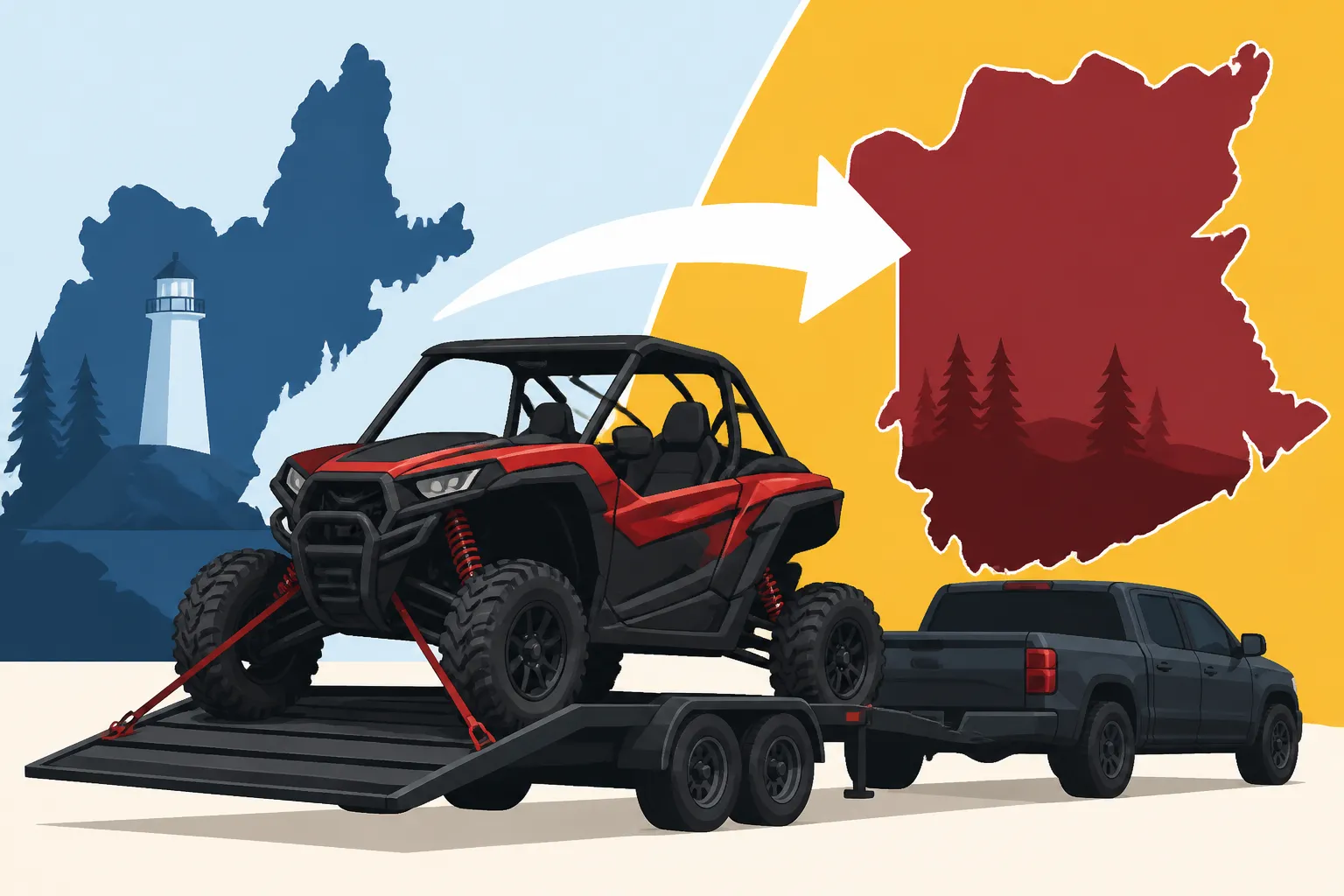
So, you've been scrolling through online marketplaces or visiting dealers south of the border, and you've found the perfect ATV or side-by-side in Maine. It's often tempting to snap up what looks like an incredible deal, only to realize that bringing it across the border and getting it legally registered here in New Brunswick can feel like a mountain of paperwork. But don't you worry, because this guide is here to walk you through every step of importing your off-road vehicle from Maine, making sure you understand the customs process, the taxes, and how to get that shiny new-to-you machine properly registered for our beautiful trails.
The Unique Journey of Importing an ATV or UTV from Maine
Bringing an off-road vehicle (ORV) across the international border isn't quite the same as buying one from a neighbour in Sussex or a dealer in Moncton. There are distinct federal hoops you need to jump through before your machine even touches provincial registration. Many folks get excited about a good price tag in Maine and overlook these crucial initial steps, which can lead to headaches, delays, and unexpected costs down the road. It's not just about getting the machine here physically; it's about legally declaring it, paying the appropriate duties and taxes, and ensuring it meets Canadian import standards.
Why Cross-Border Purchases Add Complexity
When you buy an ATV or UTV within New Brunswick, the taxes are straightforward – you pay provincial HST on the purchase price, and a bill of sale usually covers the transfer of ownership. But bringing a machine in from another country, even our friendly neighbours in Maine, introduces an entirely different layer of bureaucracy. First, you're dealing with federal border services, which means import duties and federal taxes come into play. Then, there's the consideration of vehicle admissibility – making sure the machine itself is allowed into Canada based on its manufacturing standards. Finally, before you can even think about hitting a local trail, that machine needs to be officially imported and cleared, a process that might involve specific forms and inspections not required for domestic purchases. It’s a multi-stage process, and missing a step at the border can cause significant delays.
Understanding Import Duties and Taxes
This is where many riders get caught off guard. While you might save a few dollars on the initial purchase price in Maine, you need to factor in the costs of importing. When you cross the border with your new (or used) ATV or UTV, you'll generally be required to pay import duties. The amount of duty can vary based on the vehicle's country of origin and specific trade agreements, so it's always wise to research this ahead of time. On top of duties, you'll be paying the federal Goods and Services Tax (GST) on the declared value of the machine, which includes the purchase price plus any duties. Once the machine is cleared federally and you proceed to register it in New Brunswick, you'll also be subject to the provincial portion of the Harmonized Sales Tax (HST). This means you effectively pay the full HST on the machine, but it’s often split between the border (GST) and the Service New Brunswick counter (provincial sales tax portion). It’s critical to understand these stacked costs so you don't have any nasty surprises when you get to the border or when it's time to register. Remember, [New Brunswick HST on an ATV Purchase] still applies, even if the machine comes from away.
The Paperwork Trail: Navigating Customs and Beyond
Successfully importing your ATV or UTV from Maine hinges on having your paperwork in order. This isn't a situation where "good enough" cuts it. Border Services officers need specific documentation to ensure the vehicle isn't stolen, that you're the rightful owner, and that all duties and taxes are correctly assessed. Failing to provide accurate or complete documentation can lead to significant delays, potential fines, or even having your vehicle denied entry. It can be a bit daunting, but breaking it down into manageable steps makes it much clearer. For instance, knowing what customs paperwork to prepare before you even leave Maine can save a ton of stress. You can even use resources like LawDepot to help create a robust bill of sale if you're buying from a private seller and want to ensure all the necessary details are captured for both Canadian customs and later, for [New Brunswick Registration Without a Bill of Sale] if issues arise.
Essential Documents for Border Crossing
Before you even load up your new machine and head for the border, gather these critical documents. Think of it as your passport for the ATV or UTV itself.
- Proof of Ownership: This is paramount. If buying new from a dealer, you'll need the Manufacturer's Statement of Origin (MSO) or Certificate of Origin, along with the bill of sale. For a used machine purchased privately, a detailed bill of sale signed by both parties is essential. This document should clearly state the buyer's and seller's full names and addresses, the purchase date, the agreed-upon price, and a full description of the ATV/UTV, including its make, model, year, and crucially, the Vehicle Identification Number (VIN).
- Title/Registration from Maine: If the machine was previously registered in Maine, having its old title or registration papers can help confirm the seller's ownership and the machine's history. While not always mandatory for ATVs in the same way it is for cars, it's excellent supporting documentation.
- Recall Clearance Letter (if applicable): For newer vehicles, particularly those manufactured for the U.S. market, you might need a recall clearance letter from the manufacturer. This confirms there are no outstanding safety recalls on the specific VIN that would prevent its importation into Canada. It’s always best to check with the manufacturer directly using the VIN.
- Your Personal Identification: Don't forget your own passport or other valid identification, as you'll be crossing the border yourself!
Having these ready when you arrive at a crossing like [Customs Paperwork at Woodstock] will streamline the process immensely.
The Border Crossing Process at a Glance
When you arrive at the Canadian border with your newly acquired ATV or UTV, you'll need to declare it to the Canada Border Services Agency (CBSA) officer. Be prepared to provide all your documentation. The officer will review your papers, assess the value of the machine, and calculate any applicable duties and the federal GST.
- Declaration: Be honest and upfront about the purchase price. Attempting to undervalue the machine can lead to fines and penalties.
- Payment: You'll pay the duties and GST directly at the border. They typically accept credit cards, debit cards, or cash.
- Temporary Import Status: Once cleared and paid, the CBSA will provide you with paperwork, often a Form B15, or similar documentation that confirms the machine has been imported and all federal requirements met. Keep this document safe, as you'll need it for provincial registration. Without this federal clearance, Service New Brunswick cannot process your registration.
This process is generally smooth if you have all your ducks in a row. It’s a good idea to research specific requirements for vehicle importation on the CBSA website before you go, as regulations can sometimes be nuanced based on vehicle type and age.
Getting Your Maine Machine Registered in New Brunswick
So, you've successfully navigated the border, paid your duties and GST, and your ATV or UTV is now officially imported into Canada. Fantastic! But your journey isn't over yet. The next crucial step is to get that machine legally registered with Service New Brunswick so you can actually ride it on our provincial trails. This involves a trip to a Service New Brunswick centre and a few more pieces of paperwork. Remember, you'll need to understand [New Brunswick ORV Registration Explained] before you can confidently hit the trails.
Post-Customs Paperwork for Service New Brunswick
Once you're back home in New Brunswick with your imported machine, you'll need to assemble a new set of documents for the provincial registration.
- Proof of Federal Importation: That paperwork you received from the CBSA at the border (e.g., Form B15 or similar) is absolutely essential. It proves that the machine has been properly imported and that federal taxes were paid. Service New Brunswick will not register the vehicle without this.
- Bill of Sale: Your original bill of sale from the Maine seller is still needed. It confirms the purchase price and serves as proof of your ownership for the provincial registration purposes. Ensure it clearly identifies the machine's VIN.
- Application for Vehicle Registration: You'll fill out the standard New Brunswick application form for off-road vehicles. This form requires details about you, the machine, and its intended use. You can often get these forms online or at any Service New Brunswick centre.
- Proof of Identity: Bring your valid New Brunswick driver's license or other government-issued ID.
- Proof of New Brunswick Address: A recent utility bill or other official document showing your current New Brunswick address may be required.
It's a good practice to make copies of everything before you head to a [New Brunswick Service Centres That Register ORVs].
The Registration Appointment and Final Costs
With all your documents in hand, you'll head to your nearest Service New Brunswick centre. The process will usually involve these steps:
- Document Review: The agent will review all your submitted documents, including the federal importation papers and the bill of sale. They will verify the VIN on the machine matches the paperwork.
- Provincial Tax Assessment: This is where the provincial portion of the HST comes in. Even though you paid GST at the border, you will likely pay the remaining provincial sales tax on the declared purchase price at Service New Brunswick. They will look at your bill of sale and the federal import documents to calculate this.
- Registration Fee: You'll pay the annual registration fee for your specific type of ORV. For example, [New Brunswick Charges $41 for an ATV], while dirt bikes have a different fee. Remember, [New Brunswick Registrations Expire December 31] every year, regardless of when you register it, so plan accordingly.
- Plate and Sticker Issuance: Once everything is processed and paid, you'll be issued your New Brunswick ORV plate and the current year's validation sticker. The agent will also provide you with your official registration certificate.
- Insurance: Don't forget that [New Brunswick Requires Insurance on Trails]. You'll need valid third-party liability insurance for your ATV or UTV before you can legally ride it on designated trails. While not always required at the registration counter, you must have it to comply with the Off-Road Vehicle Act.
After all this, your imported Maine machine will finally be a fully legal New Brunswick ORV!
Common Pitfalls and How to Avoid Them When Importing
Even with all the right information, the process of importing an ATV or UTV from Maine can still have a few unexpected bumps. Being aware of these common pitfalls ahead of time can save you a lot of grief, time, and potentially money. Proactive preparation is always your best defence against bureaucracy.
Issues with Missing or Incomplete Paperwork
This is perhaps the most frequent issue people face. A private seller in Maine might not have a perfectly crafted bill of sale, or they might have lost the original title.
- Private Sale Bill of Sale: Always insist on a comprehensive bill of sale, even from a casual seller. Ensure it includes the VIN, make, model, year, sale price, and full contact information for both buyer and seller. If a seller is hesitant, you can suggest drafting one up together, perhaps using a template from a service like LawDepot to ensure all necessary fields are covered. A poorly executed bill of sale can cause Service New Brunswick to refuse registration, leading to frustrating delays. This is especially true when it comes to [New Brunswick Registration After a Private Sale].
- Manufacturer's Statement of Origin (MSO): For new machines, the MSO is critical. Without it, you cannot prove the machine is new and legally yours. Ensure you receive it from the dealer.
- Lost or Missing Titles/Registrations: If buying a used machine and the seller doesn't have a title (which is more common for ATVs than cars in some states), ensure the bill of sale is robust and that you get a clear indication of previous ownership. For older machines, sometimes proving continuous ownership can be tricky, but a strong bill of sale is your best bet.
Always make copies of all documents before you submit originals, and keep them organized. A [New Brunswick Registration Paperwork Checklist] can be a lifesaver.
Understanding Vehicle Admissibility and Standards
While ATVs and UTVs are generally less complex than cars in terms of Canadian import standards, there are still considerations.
- "US Spec" vs. "Canadian Spec": Most major manufacturers produce machines that meet similar safety and emissions standards in both countries. However, very old or very niche machines might occasionally pose an issue. Always check if the vehicle was originally manufactured to meet Canadian Motor Vehicle Safety Standards (CMVSS) or if it's considered admissible through other means. The CBSA typically has resources on their website regarding vehicle admissibility.
- Safety Recalls: As mentioned, a recall clearance letter is a good idea, especially for newer machines. An open safety recall could prevent successful importation. Do your homework by checking the VIN with the manufacturer prior to purchase.
It's better to verify these details before you buy, rather than finding out at the border that your machine can't be imported.
Unexpected Costs and Delays
Budgeting accurately is key to avoiding financial surprises.
- Fluctuating Exchange Rates: The "great deal" in USD might not be as great if the Canadian dollar takes a dip between when you find the machine and when you buy it. Always factor in the current exchange rate.
- Brokerage Fees: While you can handle the customs process yourself at the border, some people opt to use a customs broker, especially for more complex imports or if they're shipping the machine. Brokers charge a fee, so factor that in if you choose that route.
- Transportation Costs: Don't forget the cost of fuel for your trip to Maine and back, or the cost of hiring a transport company if you're not picking it up yourself.
- Unexpected Repairs: Buying used always carries a risk. Factor in potential maintenance or repair costs for your "new" imported machine.
Being prepared for [New Brunswick Registration Payment Methods] and having extra funds for the unexpected will make the process much smoother. While it might seem like a lot of steps, with careful planning and attention to detail, importing that perfect ATV or UTV from Maine into New Brunswick can be a rewarding experience, opening up a world of new riding adventures for you!
| Step | Key Action | Documents Needed | Estimated Cost Point |
|---|---|---|---|
| Before Leaving Maine | Research duties/admissibility, secure paperwork | Bill of Sale, MSO/Title, ID, Recall Letter (if new) | Purchase Price, Fuel |
| At the Canadian Border | Declare machine, present documents, pay federal taxes | All above, plus any CBSA forms requested | Duties, Federal GST |
| After Crossing (at home) | Gather provincial registration paperwork | CBSA Import Papers, Bill of Sale, ID, Proof of Address | N/A |
| At Service New Brunswick | Submit documents, pay provincial taxes & fees | All above, plus filled-out application for registration | Provincial Sales Tax, Reg. Fee |
| Final Step (Before Riding) | Obtain ATV/UTV Insurance | N/A (Contact Insurance Provider) | Insurance Premium |
Disclaimer
This article is for general informational purposes only and does not constitute professional advice. Laws, prices and regulations vary by location and change over time. Consult a qualified professional for guidance on your specific situation.