Tax on a Private Purchase
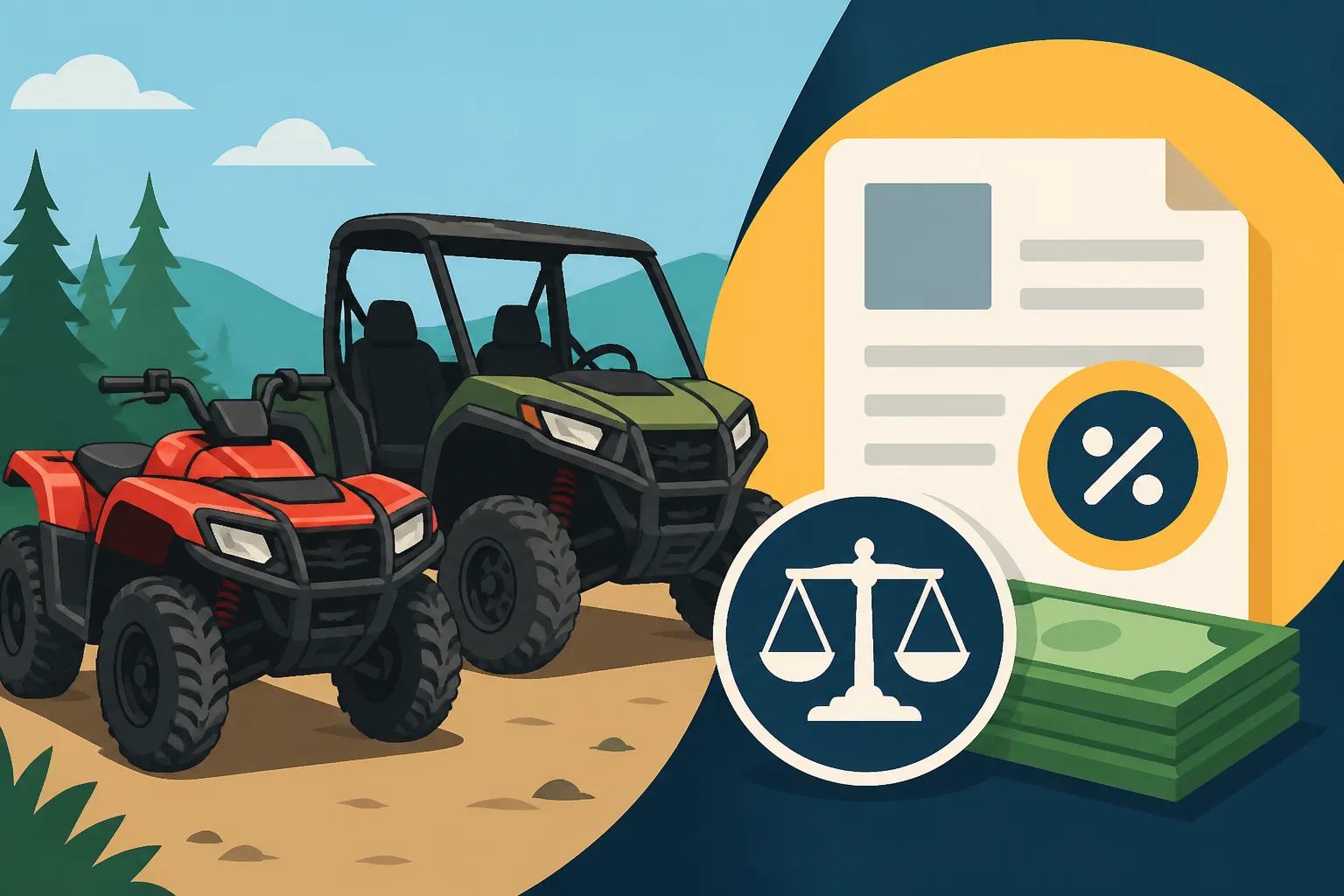
It’s a common misconception, especially if you’ve dealt with private car sales, that when you buy an ATV or side-by-side from a private seller here in New Brunswick, you can simply shake hands, exchange cash, and be done with it. Many folks mistakenly believe that private transactions are somehow exempt from sales tax. However, when it comes to off-road vehicles (ORVs), that simply isn't the case. This guide will clarify the ins and outs of Harmonized Sales Tax (HST) on privately purchased ATVs and UTVs in New Brunswick, explaining why and how it’s collected, and what you need to know to avoid any unwelcome surprises or fines down the road.
The Reality of HST on Private ATV Sales in New Brunswick
Let’s get right to it: the Harmonized Sales Tax (HST) absolutely applies to the purchase of an ATV or UTV from a private seller in New Brunswick. I know, I know, it catches a lot of people off guard. You might have heard tales of people buying used cars privately without paying sales tax, and you’d be right – that’s generally the rule for passenger vehicles in many provinces. But off-road vehicles like our beloved quads and side-by-sides operate under different rules when it comes to sales tax collection.
The provincial government sees ORVs, even used ones bought from your neighbour, as a taxable item for which the tax needs to be collected. This isn't just a quirk; it’s a specific part of the tax framework that ensures consistency in revenue collection, regardless of whether you're buying a brand-new machine from a dealer or a well-loved one from an individual down the road. The frustration often comes because the seller doesn't collect this tax from you directly, unlike a business would. Instead, the responsibility for paying the HST falls squarely on the buyer at the point of registration.
When you purchase an ORV from a licensed dealer, they handle the collection of HST directly from you at the time of sale, just like any other retail transaction. They then remit that tax to the government. It’s a clean, straightforward process. However, in a private sale, your neighbour isn’t set up to collect and remit sales tax. So, to ensure the tax is paid, Service New Brunswick steps in as the collection agent when you go to register the machine in your name. If you bought an ORV privately and thought you dodged the tax bullet, you’re in for a surprise when you show up at the counter to get your plate and registration certificate. This is why understanding [New Brunswick Registration After a Private Sale] is so crucial.
How the HST is Calculated and Collected on Private ATV Sales
Understanding how the HST is calculated and collected during a private ATV or UTV sale is key to avoiding sticker shock at Service New Brunswick. It’s not simply a matter of paying tax on whatever price you wrote on the bill of sale. Service New Brunswick has its own method, and it often revolves around what they determine to be the "fair market value" of the machine.
When you bring your bill of sale and other documents to Service New Brunswick to register your newly acquired ORV, the staff will review your purchase. While they will certainly look at the price you paid as indicated on your bill of sale, they also have access to valuation guides for various makes and models of ATVs and UTVs. These guides help them determine the estimated fair market value of your machine based on its year, make, model, and sometimes even general condition.
Here's where the potential for frustration often arises: if the price you paid, as listed on your bill of sale, is significantly lower than Service New Brunswick's assessed fair market value for that specific ORV, they generally reserve the right to charge you HST based on the higher fair market value, not your lower purchase price. Imagine you found an incredible deal on an older quad for $1,500, but Service New Brunswick’s guide values a machine of that vintage and type at $2,500. In many cases, you would be assessed HST on the $2,500 valuation. This policy is in place to prevent people from artificially lowering the declared sale price on paper just to reduce the tax amount.
The HST is then collected at the Service New Brunswick counter when you complete the registration process. It's an additional cost over and above the registration fees and plate charges. So, when budgeting for a private purchase, it's wise to factor in the potential HST based on a realistic market value, not just the "bargain" price you might have negotiated. Always be prepared for this conversation at the counter. Having a clear and detailed bill of sale, perhaps one created using a template from a reputable service like LawDepot, can certainly help document your transaction, but ultimately, the final tax assessment rests with Service New Brunswick.
What to Do If You Didn't Pay HST on a Private Purchase
So, you bought a quad or side-by-side from a private seller, and maybe you weren't aware of the HST requirement. You’ve been enjoying rides on the trails around Miramichi or exploring the woods near Woodstock, perhaps for weeks or even months, without realizing you still need to officially register your machine and pay the tax. Don't fret, you're not alone, and there's a straightforward path to correct this.
The biggest issue with not having paid HST (and by extension, likely not having properly registered the machine) is that your ORV isn't legally on the books. This means you could be riding an unregistered machine, which carries its own set of risks and potential penalties. An officer checking documents on a trail near Florenceville-Bristol could issue a fine for an unregistered machine, which is something nobody wants. For more information on what officers look for, check out [Carrying Four Documents at Once].
The good news is that Service New Brunswick is there to help you get compliant. Your best course of action is to gather all your paperwork and head to your nearest Service New Brunswick centre. Bring your bill of sale, your personal identification, and the completed application for vehicle registration. Be ready to pay the HST on the fair market value of the machine, as determined by Service New Brunswick, along with the standard registration and plate fees. It might feel like a pinch to pay a lump sum that you hadn't anticipated, but it's far better than facing fines or legal issues for operating an unregistered ORV. They are generally understanding that people sometimes make honest mistakes about the rules, especially with private sales.
What if it’s been years? Even if you've owned the machine for an extended period without registering it, the HST will still be due. There isn't typically a statute of limitations on provincial sales tax for a vehicle acquisition that hasn't been properly recorded. The sooner you address it, the better. It also means you haven't been able to fully enjoy all the benefits of proper registration, such as having a [New Brunswick Trail Permit] which requires a registered machine. Taking care of this now ensures your machine is fully legal, giving you peace of mind on every adventure.
Common Pitfalls and Best Practices for Private ATV Transactions
Navigating a private ATV or UTV purchase can feel like a bit of a wilderness trek itself, but with the right preparation and knowledge, you can avoid common pitfalls and ensure a smooth transaction. Beyond the HST, there are several other critical aspects to consider to protect yourself as a buyer.
The Importance of a Solid Bill of Sale
This document is your legal cornerstone. It's not just a scrap of paper with a price on it; it's proof of ownership, the declared value, and a record of the transaction. A good bill of sale should include:
- The full names and addresses of both buyer and seller.
- The make, model, year, and crucially, the Vehicle Identification Number (VIN) of the ORV.
- The purchase price agreed upon.
- The date of the sale.
- A statement that the seller has the right to sell the machine and that it is free of liens or encumbrances.
- Signatures from both parties.
Services like LawDepot offer excellent templates for a bill of sale, ensuring all the necessary legal jargon and details are covered. Using such a template can prevent headaches down the line, especially if there’s ever a dispute or a question about ownership. This document is absolutely essential for [New Brunswick Transfer of Ownership Explained] and for Service New Brunswick to process your registration.
Verifying Ownership and Liens
Before you hand over your hard-earned cash, always verify that the seller is the legal owner of the ATV or UTV. Ask to see their current registration certificate and their photo ID. Do the names match? This seems basic, but you’d be surprised how often it's overlooked. You can also request a record search from Service New Brunswick for a small fee, which can reveal if there are any liens against the machine. Buying a machine with an undisclosed lien can lead to a world of trouble, as the financer could repossess it.
Understanding Fair Market Value Before You Buy
As we discussed, Service New Brunswick uses fair market value to calculate HST. Do a little research on your own before you commit to a purchase. Look at classifieds for similar machines, check online valuation tools, or consult with local dealers. This due diligence will give you a realistic expectation of the HST amount you’ll need to pay and can help you negotiate a fair price. Knowing the approximate fair market value can prevent a nasty shock when you finally go to register.
Gathering All Necessary Paperwork for Registration
Make it a habit to collect all required documents at the time of purchase. This includes the completed bill of sale, the seller's registration certificate (if they have it), and your own identification. For a comprehensive overview, refer to [New Brunswick Registration Paperwork Checklist]. Don't leave the seller's property without everything you need, as it can be incredibly difficult to track them down later if a document is missing or incorrect. A properly filled out [Filling Out the Application for Vehicle Registration] will also expedite your visit to Service New Brunswick.
By following these best practices, you can make your private ATV or UTV purchase a much smoother, more transparent experience, leaving you free to focus on the joy of hitting the trails across our beautiful province.
Here's a quick checklist of considerations for your private ATV/UTV purchase:
| Item | Buyer's Responsibility | Importance |
|---|---|---|
| Bill of Sale | Ensure it's detailed, signed by both parties, and includes VIN. | Legal proof of purchase; required for registration and tax assessment. |
| HST Payment | Be prepared to pay HST at Service New Brunswick based on fair market value. | Mandatory provincial sales tax on all ORV private sales. |
| Registration | Complete promptly at Service New Brunswick after purchase. | Required by law to operate your ORV on trails and public land. |
| Fair Market Value Research | Estimate the value of the ORV before purchase. | Helps anticipate the HST amount; prevents surprises at registration. |
| Lien Search | Consider requesting a record search for liens. | Protects against buying a machine with outstanding debts. |
| Seller's Documents | Verify seller’s ID and current registration certificate. | Confirms legal ownership and smooth transfer. |
| VIN Verification | Cross-reference VIN on machine with bill of sale. | Ensures you're buying the correct machine and prevents fraud. |
| Proof of Insurance | Arrange insurance coverage before your first ride. | [New Brunswick Requires Insurance on Trails] before use. |
| Trail Permit | Purchase a [New Brunswick Trail Permit] if riding club trails. | Required for access to the QuadNB network. |
Disclaimer
This article is for general informational purposes only and does not constitute professional advice. Laws, prices and regulations vary by location and change over time. Consult a qualified professional for guidance on your specific situation.