Two Names on One New Brunswick Certificate
It's a common scenario in New Brunswick: you and your partner, a buddy, or even a family member decide to go in on an ATV or side-by-side together. Maybe it's for shared adventures on the trails, or perhaps it's a practical machine for a camp or woodlot that multiple people will use. But then the paperwork comes, and you start wondering, "Can we put two names on one New Brunswick certificate?" This guide is here to walk you through exactly how that works, what it means for you, and how to navigate the practicalities of co-ownership, so you can focus on hitting those beautiful New Brunswick trails together.
Why Register an ORV in Two Names?
Purchasing an off-road vehicle (ORV) is often a significant investment, whether you're talking about an ATV, a dirt bike, or a side-by-side. When more than one person contributes to that investment, or intends to share the machine's use and responsibilities, it makes perfect sense to consider having both names appear on the registration certificate. It's about more than just convenience; it's about clear legal standing and protecting everyone involved.
Shared Financial Responsibility and Enjoyment
For many couples, friends, or family members, buying an ATV together is a way to pool resources. Maybe one person handles the upfront cost, and the other agrees to cover the insurance and maintenance. Or perhaps both contribute equally to the purchase price. When the machine is registered in both names, it formally acknowledges this shared financial commitment. It reflects the reality that this isn't just one person's toy, but a joint asset. This can be especially important if you're splitting the costs of annual items like the registration renewal or a trail permit.
Beyond the money, there's the shared enjoyment. Many people dream of exploring New Brunswick's vast trail network with a loved one. When both names are on the registration, it solidifies that shared dream. It's a statement that this machine is for us, not just me. It can simplify discussions around who uses the machine when, as there's an inherent understanding that both parties have a right to it. Of course, this also means [New Brunswick Rules for Two Riders on a Quad] are something you'll want to review to ensure everyone rides safely and legally.
Legal Clarity and Protection
One of the biggest advantages of dual registration is the legal clarity it provides. Should any dispute arise, or if something unexpected happens down the road (which, let's be honest, can happen even with the best intentions), having both names on the certificate makes it explicitly clear who the legal owners are. This clarity can prevent a lot of headaches, especially if emotions are running high. It's a foundational piece of documentation that proves both parties have a legitimate claim to the machine.
Imagine a scenario where only one name is on the registration, but two people paid for it. If the registered owner were to suddenly decide they wanted to sell the ATV without consulting the co-owner, the co-owner might have a very difficult time proving their stake in the machine. Having both names on the [New Brunswick ORV Registration Explained] helps to avoid such unfortunate situations by establishing clear legal ownership from day one.
The Mechanics of Joint Registration at Service New Brunswick
Registering an off-road vehicle with two names in New Brunswick is a straightforward process, handled through Service New Brunswick (SNB). They are accustomed to these kinds of requests, as it's common for vehicles of all types to be jointly owned. It’s essentially the same process as a single owner, but with a few key differences in how the paperwork is filled out.
How Names Appear on the Certificate
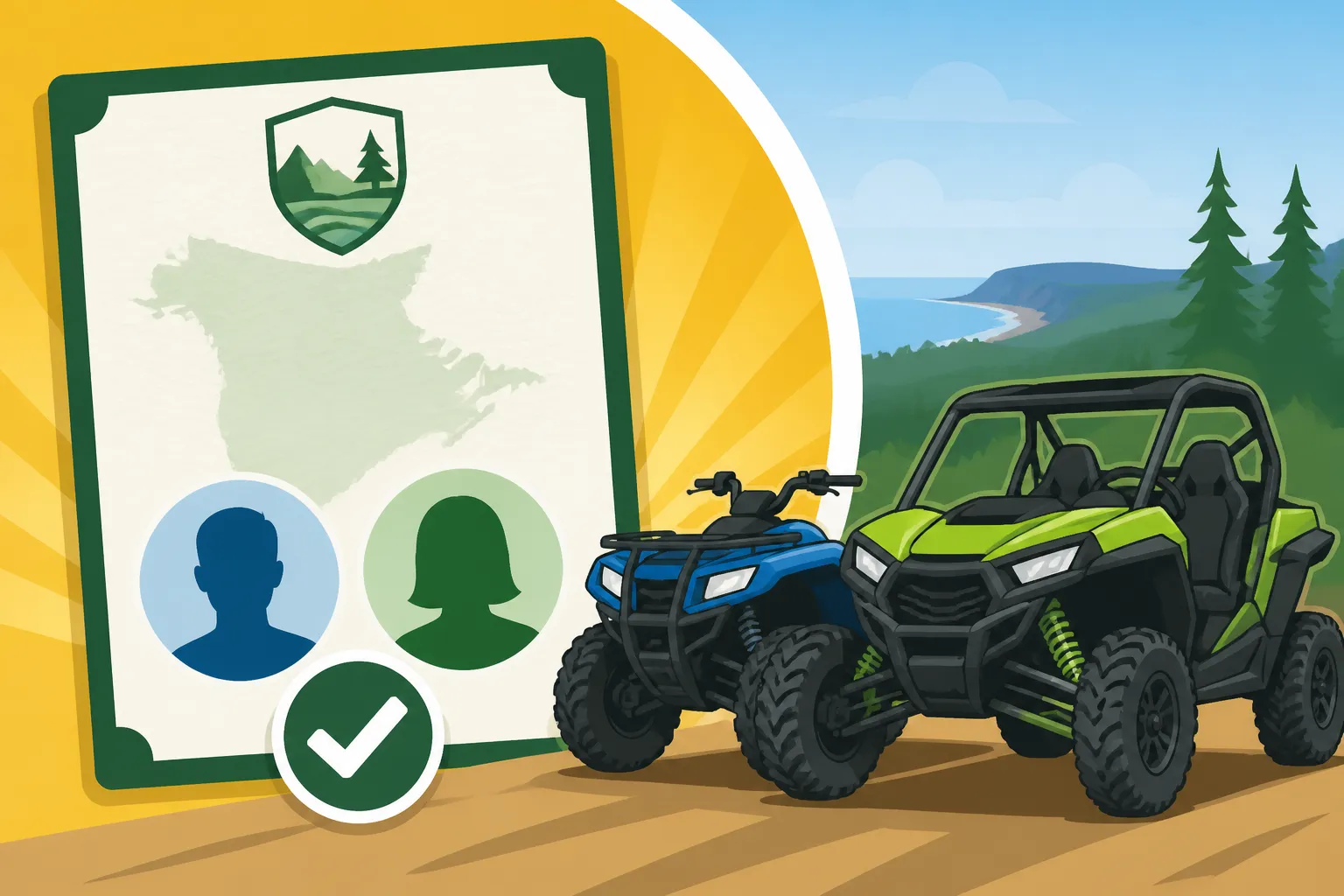
When you register an ORV with two names, both names will appear on the Certificate of Registration. Typically, you'll see "JOHN DOE AND JANE DOE" or "JOHN DOE OR JANE DOE" on the document. The exact wording here is incredibly important because it dictates how future transactions, like selling the machine or changing ownership, will need to be handled. "AND" usually means both parties must sign off on any future dealings, while "OR" can sometimes allow either party to act independently, though this is less common for ORV registration and often defaults to "AND."
The [New Brunswick Registration Paperwork Checklist] will include the Application for Vehicle Registration. On this form, you'll clearly indicate both owners' names and addresses. It's a good idea for both registered owners to be present at a Service New Brunswick centre when initially registering the machine, especially if it's a first-time registration or [New Brunswick Registration After a Private Sale], to ensure all information is correct and any questions can be answered immediately. If one owner cannot attend, they will likely need to provide written consent or a power of attorney for the other owner to complete the registration on their behalf.
What Happens with Official Mail and Notifications
When an ORV is registered in two names, Service New Brunswick will typically send all official correspondence, such as renewal notices, to the mailing address provided on the registration. This address can be one of the owner's homes or a shared address. It's crucial to designate a primary mailing address that both owners can easily access and monitor. This ensures that important documents like the annual registration renewal notice don't get missed. [New Brunswick Registrations Expire December 31], so keeping track of these notices is important to avoid riding an unregistered machine.
If you ever change your address, it's vital to update Service New Brunswick promptly. Even if only one owner moves, if that's the designated mailing address, future communications could be missed. Updating your address is a simple process, but one that is often overlooked in the hustle and bustle of moving. Ignoring these updates can lead to missed renewals or other critical information, which in turn can lead to fines if you're found operating an unregistered vehicle.
Navigating Ownership Changes and Responsibilities
While the initial act of putting two names on a certificate is fairly simple, the true test of joint ownership often comes when circumstances change. Life happens, and understanding how to navigate ownership changes or individual responsibilities becomes paramount.
Selling a Jointly Owned Machine
If you and your co-owner decide to sell your ATV or side-by-side, the process for transferring ownership will involve both of you. Both registered owners will need to sign the transfer of ownership section on the back of the Certificate of Registration. This is where the "AND" on your certificate really matters – it means both parties must agree to and execute the sale. This measure is in place to protect both owners from one party selling the asset without the other's consent.
When selling a machine, you'll also need to consider the financial aspect. How will the proceeds of the sale be divided? Will it go back into a joint fund, or will each owner receive a portion based on their initial investment or agreed-upon terms? These are discussions best had before the machine is put up for sale. Remember that in New Brunswick, [New Brunswick Tax on a Private ATV Sale] will apply to the buyer, but the seller's responsibilities primarily involve correctly completing the transfer paperwork.
What Happens When One Owner Dies?
This is a sensitive but incredibly important aspect of joint ownership to consider. If one of the registered owners passes away, the process for updating the registration will depend on how the ownership was originally structured and the laws governing estates. In many cases, if the ownership was structured as "joint tenancy with right of survivorship" (which is common for married couples or partners), the surviving owner may simply need to provide a death certificate to Service New Brunswick to have the deceased's name removed.
However, if the ownership was structured differently, or if there's no clear agreement, the ATV might become part of the deceased's estate, requiring probate or other legal procedures to transfer full ownership to the surviving party or other heirs. This is precisely why having a clear, written co-ownership agreement from the start, or ensuring your estate planning documents address jointly owned assets, is so crucial. If you're unsure about the implications, consulting with a legal professional who can advise on [New Brunswick Registration After the Owner Dies] is highly recommended.
Important Considerations for Co-Owners
Joint ownership of an ATV can be a fantastic way to share the costs and fun of the sport, but it works best when both parties are on the same page from the outset. Taking the time to discuss potential issues and document your agreements can save a lot of grief down the line.
Crafting a Co-Ownership Agreement
While not legally required to register your ATV, a formal co-ownership agreement is arguably the most important step you can take when registering a machine in two names. This document, signed by both parties, outlines everything from financial contributions (purchase price, insurance, maintenance, upgrades, [New Brunswick ORV Plate Costs]) to usage rules, dispute resolution, and what happens if one owner wants out or passes away. It's like a prenuptial agreement for your ATV.
You don't need a high-priced lawyer to draft something basic. Resources like LawDepot offer templates for co-ownership agreements that you can customize to fit your specific situation. This can be an affordable and effective way to formalize your understanding and ensure both parties have a clear reference point. Even simple points like "who pays for repairs if someone breaks it?" or "how will we split the cost of [New Brunswick Requires Insurance on Trails]?" are worth discussing and putting in writing.
Insurance and Liability for Joint Owners
When two names are on the registration, it's absolutely critical that both owners are properly covered by insurance. The insurance policy should reflect all registered owners and, if applicable, any regular operators of the machine. If only one owner is listed on the insurance policy and the other has an accident, there could be significant coverage issues. This is a conversation you need to have directly with your insurance provider to ensure comprehensive protection.
Liability is another huge consideration. If an accident occurs while either owner is operating the ATV, both registered owners could potentially face liability, regardless of who was driving. This reinforces the need for robust insurance coverage and a clear understanding of safe riding practices. Always make sure you understand [New Brunswick Insurance Cost for an ATV] and what your policy covers. It’s not just about covering the machine, but protecting yourselves from potential legal claims.
The Value of Clear Communication
Ultimately, the success of jointly owning an ATV, or any asset, comes down to clear and consistent communication. Regular check-ins about the machine's use, maintenance needs, upcoming costs, or any changes in your personal circumstances can prevent misunderstandings from escalating into larger problems. Before you even get to the Service New Brunswick counter, sit down and have an open, honest discussion about all aspects of co-ownership.
This open dialogue should cover everything from how frequently each person plans to use the machine, to who is responsible for cleaning and basic maintenance, to what kind of trails you'll be riding. It’s a partnership, and like any good partnership, it thrives on mutual respect and open lines of communication. If you find yourselves needing a more formal approach, remember that tools like LawDepot can help you formalize these discussions into a written agreement, giving both parties peace of mind and clarity moving forward.
Registration and Co-Ownership Table
Here’s a quick overview comparing aspects of single versus joint ownership for your New Brunswick ORV:
| Feature | Single Owner Registration | Joint Owner Registration |
|---|---|---|
| Certificate Naming | Only one name appears. | Two (or more) names appear, typically with "AND". |
| Signatures for Sale | Only the single owner's signature is required for sale. | All registered owners' signatures are required for sale. |
| Official Mail | Sent to the registered owner's address. | Sent to the designated primary mailing address for co-owners. |
| Insurance Coverage | Typically covers the registered owner and permitted users. | Must explicitly cover all registered owners and regular operators. |
| Liability Exposure | Primarily the registered owner. | Shared among all registered owners. |
| Estate Implications | Becomes part of the owner's estate upon death. | Depends on ownership structure (e.g., joint tenancy) and agreements. |
| Dispute Resolution | Less likely internally, but still possible with others. | Benefits greatly from a formal co-ownership agreement. |
| Upfront Documentation | Bill of sale, application form. | Bill of sale, application form, plus optional co-ownership agreement. |
Remember, while Service New Brunswick will register the machine with both names, they won't enforce any personal agreements you have about usage or finances. That's where a separate agreement, perhaps created with help from a LawDepot template, becomes invaluable. This ensures that you and your co-owner are fully aligned and protected, allowing you to enjoy countless hours on the trails of New Brunswick without unnecessary worries.
Disclaimer
This article is for general informational purposes only and does not constitute professional advice. Laws, prices and regulations vary by location and change over time. Consult a qualified professional for guidance on your specific situation.