Keeping a Copy of the Registration on the Machine
It’s a common scenario: you’re out enjoying a beautiful New Brunswick trail, miles from anywhere, when you’re approached by an officer. Suddenly, the simple pleasure of riding turns into a scramble for paperwork you might have left at home. This guide is here to walk you through why it’s not just a good idea, but essential, to keep a copy of your ATV or UTV registration right there on your machine, covering everything from legal necessities to practical safety measures.
The "Why" Behind Carrying Your Registration
Riding an ATV or UTV in New Brunswick is a fantastic way to experience our stunning outdoors, but it comes with responsibilities. One of the most often overlooked, yet crucial, aspects is having your machine's registration readily accessible. It might seem like a small detail, but it can save you a world of trouble.
Meeting Legal Requirements and Avoiding Fines
First and foremost, carrying your registration isn't just a suggestion; it's a legal requirement for riding on designated trails and most other public lands in New Brunswick. Think about it: when you're driving your car, you always have your driver's license and vehicle registration in the glove compartment, right? The same principle applies to your off-road vehicle. Our provincial laws are clear that riders must be able to produce specific documents if requested by a law enforcement officer or conservation officer.
Imagine you're stopped on a trail near Sussex or in the northern reaches of the Restigouche region. An officer will expect you to provide proof that your ATV or UTV is properly registered. If you can't, even if you know for a fact it's registered back home, you could face a fine. These aren't just minor penalties either; a fine for operating an unregistered vehicle can certainly put a damper on your riding season. It's a preventable headache, and having that piece of paper on hand is the easiest way to ensure a smooth interaction and keep your wallet happy. For a deeper dive into all the documents you should have, check out [New Brunswick Documents You Must Carry].
Essential for Identification and Emergency Situations
Beyond the legal obligations, having your registration on your machine serves several practical purposes, especially in unforeseen circumstances. Consider a scenario where your ATV breaks down on a remote section of the Skedaddle Ridge trails, or worse, you're involved in a minor incident. If you need assistance, having the registration details right there can help identify your machine quickly and accurately. This is incredibly important for roadside assistance, or if you need to report a theft to the RCMP.
Your registration certificate contains vital information like the Vehicle Identification Number (VIN), the make and model of your machine, and your ownership details. This information is invaluable for insurance claims or for communicating specifics to emergency services. In the unfortunate event of an accident, having this data readily available can significantly expedite the reporting process and ensure that all necessary details are accurately captured. You can learn more about what to do in such situations by reading [New Brunswick Accident Reporting Rules]. It’s about being prepared not just for legal checks, but for any curveball the trail might throw at you.
What "Keeping a Copy on the Machine" Really Means
When we talk about "keeping a copy on the machine," it's not just a casual suggestion to throw a crumpled paper into a storage box. It's about intentional and practical measures to ensure that this crucial document is safe, accessible, and protected from the elements.
Physical vs. Digital Copies – Pros and Cons
This is where riders often pause. "Do I need the original?" "Can I just have it on my phone?" The official stance typically leans towards having a physical copy. While modern technology allows for digital images of documents on smartphones, relying solely on your phone can be risky. What if your phone battery dies? What if it gets wet or damaged in a fall? What if there's no cell service in the remote area you're riding, making it impossible to retrieve from cloud storage? These are all very real possibilities on New Brunswick trails.
A physical copy, even if it's a laminated photocopy rather than the original, offers more reliability. It doesn't need a battery, it won't suffer from signal loss, and with proper waterproofing, it's quite resilient. While you might use services like LawDepot for other important legal forms that you keep securely at home, the ATV registration requires a different kind of on-the-go accessibility. Many riders choose to keep the original registration at home in a safe place, bringing a high-quality, laminated photocopy on the trail. This way, if the on-machine copy gets lost or damaged, you still have the pristine original untouched. For a comprehensive look at all the documents you should carry, including the often-forgotten ones, check out [Carrying Four Documents at Once].
Safe and Accessible Storage Solutions
So, you've decided on a physical copy – excellent! Now, where exactly do you keep it on your machine? The key is a spot that's both secure and accessible. You don't want it flying out on a bumpy section, nor do you want to have to dismantle half your quad to retrieve it when an officer asks.
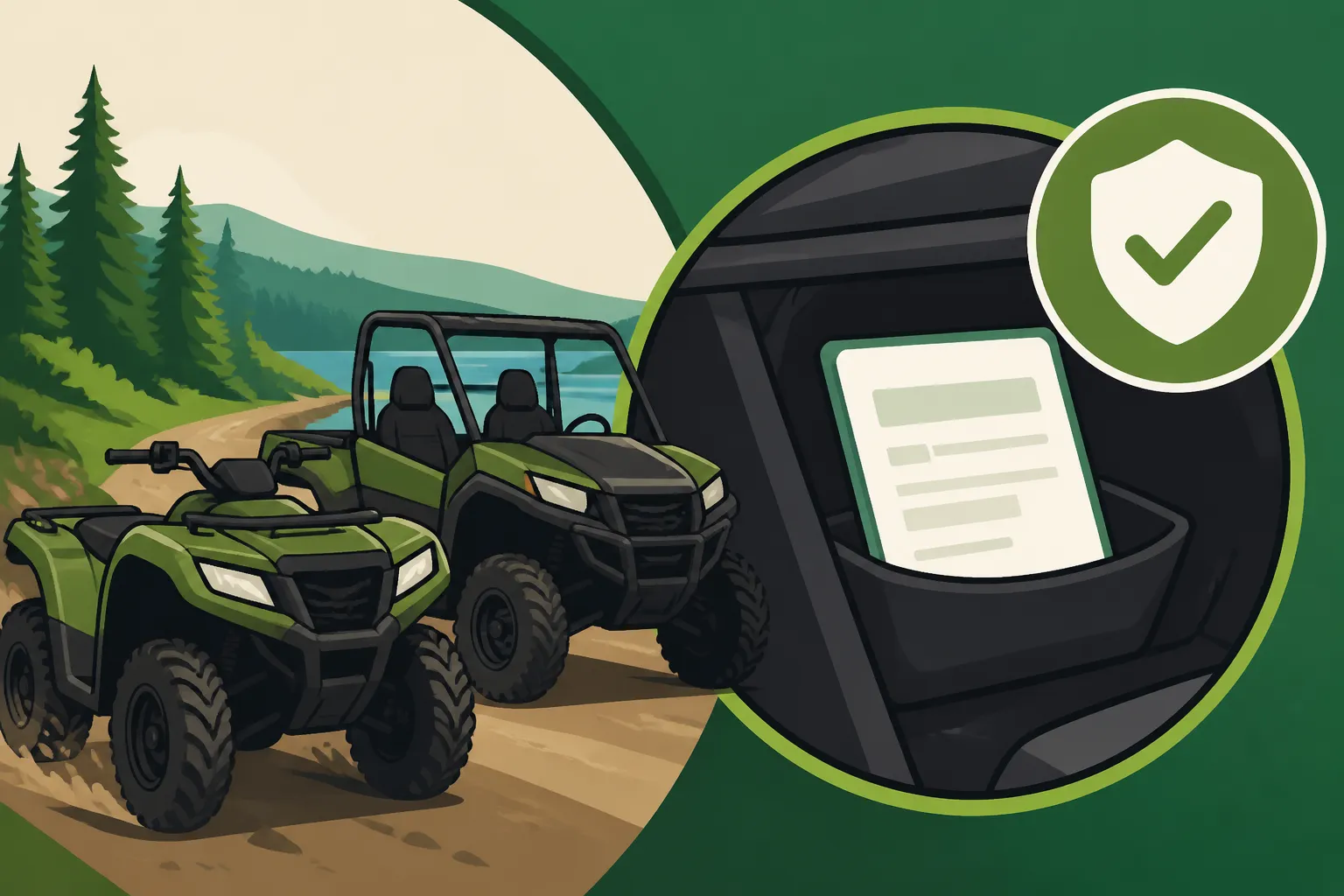
Many ATVs and UTVs come with small, integrated storage compartments. These are often ideal. Look for a dry box under the seat, in a fender well, or in a front storage bin. The crucial step is to ensure this compartment is waterproof. Even if it claims to be, an extra layer of protection for your documents is always a good idea. A heavy-duty Ziploc bag, a small dry bag, or a specialized waterproof document holder designed for outdoor use can provide that peace of mind. Some riders even go as far as to secure a small, waterproof Pelican case directly to their machine for all their important papers.
The location also matters for accessibility. Imagine an officer is standing by your machine. You should be able to retrieve your registration within a minute or so without a major ordeal. Placing it deep under the engine shroud or taped inside an inaccessible part of the frame might keep it hidden, but it makes it impractical for quick checks. A saddlebag or a front cargo box, secured properly, can also be a good spot. Just remember to consider the elements and how much vibration and jostling the documents will endure. Think about how you keep your [Proof of Insurance in a Saddlebag]; the same principles apply here.
Practical Tips for Protecting Your Important Documents
It's one thing to remember to bring your registration; it's another to ensure it survives the rugged environment of a New Brunswick trail. Our weather can be unpredictable, and trails can be dusty, muddy, and wet. Taking a few proactive steps can make all the difference.
Lamination and Waterproofing
This is arguably the most important step for preserving your physical registration copy on the machine. A simple paper copy, no matter how carefully placed, will degrade quickly from moisture, dirt, and friction. Lamination offers a fantastic protective barrier. You can get documents laminated at many office supply stores, or even purchase a small home laminator if you have several documents to protect. Once laminated, the paper is sealed, making it impervious to water, mud splashes, and tears.
Even with lamination, an additional layer of waterproofing is a smart move. Place your laminated registration into a heavy-duty, sealable plastic bag. A high-quality freezer bag or a specialized waterproof pouch designed for electronics or documents offers excellent protection. This double-layer approach ensures that even if your storage compartment gets unexpectedly wet, your registration remains dry and legible. Remember, a faded or illegible document can be just as problematic as not having one at all. When compiling your [New Brunswick Registration Paperwork Checklist], always include laminating and waterproofing as key steps.
Redundancy and Backup Plans
No matter how careful you are, accidents happen. Documents can get lost, torn, or otherwise rendered unusable. That's why redundancy is a golden rule for important papers. Consider having a backup. This could mean:
- A second physical copy: Keep another laminated photocopy in your truck or tow vehicle, or even in your riding jacket's inside pocket.
- A digital backup: While not sufficient on its own, a clear photo of your registration stored securely on your phone (perhaps in a waterproof case) or in a cloud service that you can access when signal permits, can be a useful secondary backup. Just ensure any digital copies are secured with a password to protect your personal information.
- Knowing where the original is: Always keep the original, pristine registration certificate in a safe and dry place at home. This way, if all your trail copies are compromised, you can easily get another photocopy or request a replacement if needed. While companies like LawDepot provide robust templates for creating legal documents, the physical registration certificate is issued by Service New Brunswick, and it's essential to protect that original.
Having these backup plans in place means that even if your on-machine copy goes missing or is damaged, you're not completely out of luck. It might mean a trip back to your truck or home, but it prevents you from being caught entirely unprepared. If you ever find yourself needing a new certificate, knowing [What to Do If You Lose Your Registration Certificate] is invaluable.
Common Misconceptions and Best Practices
There are a lot of informal rules and personal habits when it comes to ATV riding, but when it comes to documentation, it's best to stick to the established guidelines. Overlooking small details can lead to big hassles.
The "Why Bother" Mentality vs. Reality
It's easy to fall into the "why bother" trap. "I've been riding these trails for years, and I've never been stopped." "Everyone knows my machine; I'm just going a short distance." We hear these sentiments all the time. But the reality is that enforcement can happen anywhere, anytime. Conservation officers and RCMP regularly patrol our extensive trail network, from the Acadian Peninsula to the Fundy coast. Their job is to ensure everyone is riding safely and legally, and that includes checking for proper registration.
The moment you're stopped and can't produce the required paperwork, that "why bother" attitude quickly turns into regret. It's not just about getting a ticket; it's about the time lost, the potential embarrassment, and the interruption to your enjoyable ride. A common [New Brunswick Registration Mistakes New Brunswick Riders Make] is assuming they won't be checked. Preparing your documents is a quick, one-time task that offers year-round peace of mind, allowing you to focus on the trail ahead, not on what might be in your glove box at home. Remember, the value of your machine, even if it's a [New Brunswick Charges $41 for an ATV], makes it worth the effort to keep its paperwork in order.
Regular Checks and Updates
Your registration isn't a "set it and forget it" item. It has an expiration date, usually December 31st each year for New Brunswick ATVs and UTVs, and needs to be renewed annually. This means your on-machine copy needs to be updated too. Just like you'd update important legal documents created through a service like LawDepot, your registration requires current information.
Make it a habit at the start of each riding season, or after every renewal, to check the registration copy on your machine. Is it still legible? Has the lamination peeled? Is it the current year's registration? There's no point in carrying an expired registration, as it won't satisfy an officer's request. When you renew your ATV or UTV registration, make a fresh copy, laminate it, and replace the old one in its waterproof pouch. It's a small task that takes minutes but ensures you're always in compliance. For details on how to keep your registration current, check out [New Brunswick ATV Registration Renewal]. A quick check of your registration copy on your machine should be as routine as checking [Checking Your Plate Sticker Is Still Valid].
By taking these simple yet effective steps, you ensure that you're not only adhering to New Brunswick's regulations but also safeguarding yourself against potential frustrations and delays while enjoying our incredible trail system.
Here's a quick comparison of methods for carrying your registration documents on your ATV or UTV:
| Method | Pros | Cons | Best For |
|---|---|---|---|
| Original Paper Certificate | Undeniably official, always current. | Easily damaged, lost, or stolen; difficult to replace quickly. | Riders with secure, waterproof, lockable storage. |
| Laminated Paper Copy | Waterproof, durable, easily replaced if lost (original safe at home). | Still a physical document; can be misplaced if not secured. | Most riders looking for practical, reliable on-machine storage. |
| Digital Photo on Smartphone | Convenient, easy to access (if phone works). | Battery-dependent, signal-dependent, prone to theft/damage, not always accepted. | Secondary backup, not recommended as primary. |
| Waterproof Document Pouch/Case | Excellent protection from elements, secure. | Adds bulk, requires dedicated mounting or storage space. | Riders in very wet or harsh conditions, or those with multiple documents. |
Disclaimer
This article is for general informational purposes only and does not constitute professional advice. Laws, prices and regulations vary by location and change over time. Consult a qualified professional for guidance on your specific situation.