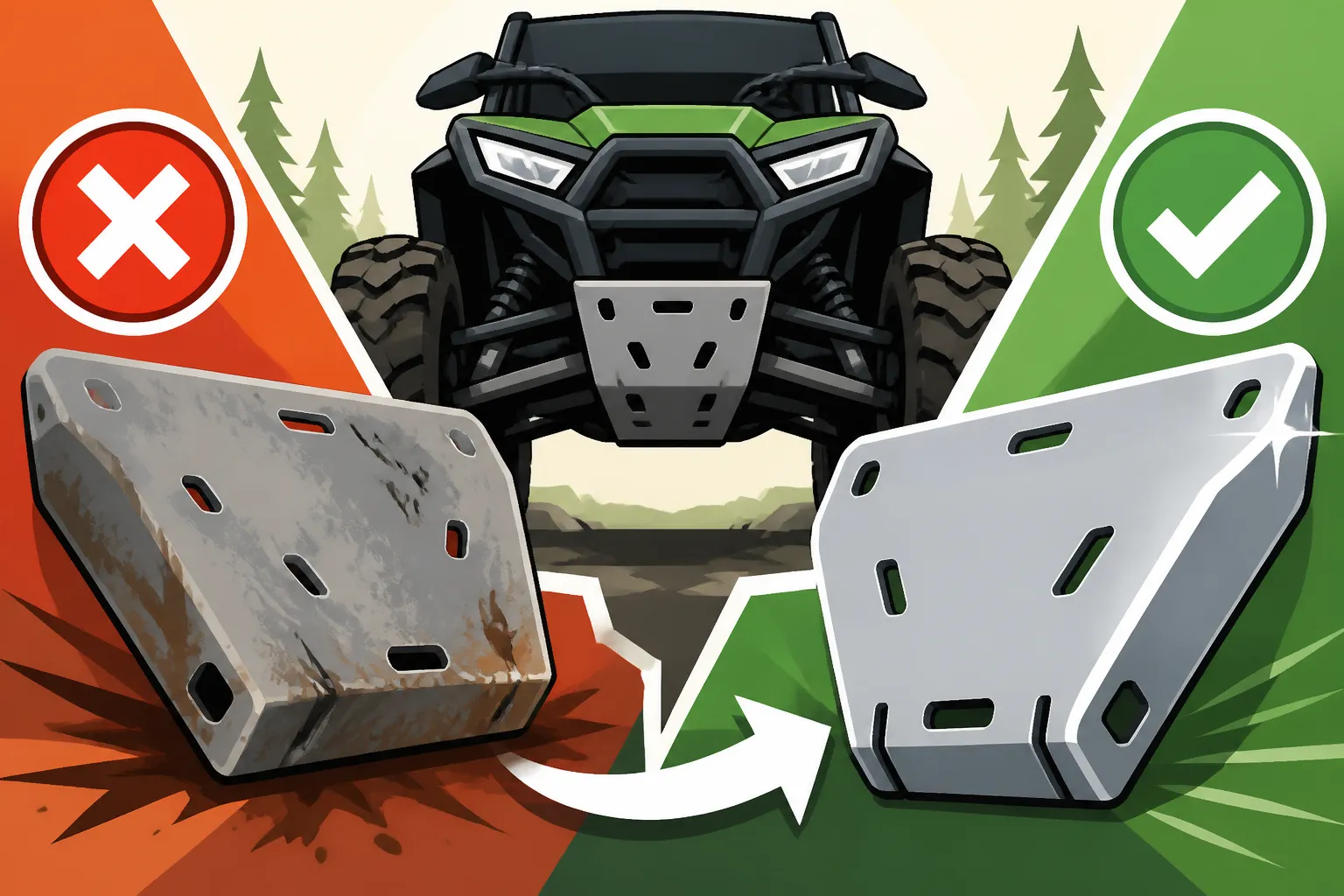
When a Bent or Faded Plate Needs Replacing
It's incredibly frustrating when you're all set for a ride on the amazing trails here in New Brunswick, only to notice that your ATV or side-by-side's license plate is looking pretty rough. Maybe it's taken a few too many hits from branches, or the sun has just been relentless. This guide is here to walk you through exactly when that bent or faded plate crosses the line from "character" to "needs replacing," and what to do about it to keep your adventures legal and worry-free.
Why ATV and UTV Plates Take a Beating
Let's be real, our off-road machines are built for rugged environments, and the license plates often bear the brunt of that reality. It's not like a car plate that mostly sits behind a bumper on paved roads. Your ATV plate is out there, exposed to everything the New Brunswick wilderness throws at it.
The Wear and Tear of the Trail
Think about the last time you navigated a tight, brushy section of trail near Miramichi or pushed through some overgrown path in the Restigouche. Branches whip past, rocks get kicked up, and mud splashes everywhere. All these elements can quickly degrade your plate. A stray branch can easily bend a corner or even tear through the aluminum. Rocks, especially on gravel-heavy trails, act like tiny projectiles, chipping away at the paint or making small dents. It's just part of the off-roading experience, but it means your plate needs a little extra attention compared to your car's.
Sun, Weather, and Time
Even if you're a meticulous rider who avoids dense brush, Mother Nature herself can be surprisingly harsh on your plate. The intense New Brunswick sun, particularly during those long summer days, can cause the reflective coating and printed numbers to fade over time. Rain and snow, combined with freeze-thaw cycles, can also contribute to the degradation, leading to peeling or cracking. Over years of enjoyment, even a well-protected plate might start to show its age, losing its vibrancy and legibility. It's not an overnight thing, but a gradual process that can sneak up on you.
Accidental Damage and Minor Bumps
Sometimes, it's not the trail's fault at all. Loading your machine onto a trailer after a great day out can sometimes result in an accidental scrape against the ramp or the truck tailgate. A low-speed bump while backing up in the yard, or even equipment shifting around in your shed, can cause a bend or a crease. These minor incidents, while seemingly small, can be enough to compromise the plate's integrity or make a crucial number harder to read. We’ve all had those “oops” moments, and sometimes they affect the things we least expect, like our registration plate.
Recognizing a Plate That Needs Replacing
So, how do you know if your plate has gone from "well-loved" to "needs intervention"? It’s not always about a giant hole or a complete snap. Often, it’s a subtle degradation that might not seem like a big deal to you, but could definitely catch the eye of an enforcement officer. The key here is clarity and adherence to the law.
Legibility Is Key
This is the absolute most important factor. If the numbers or letters on your plate are no longer clearly visible from a reasonable distance, it needs to be replaced. This includes fading, chipping paint, mud that's impossible to clean off, or bends that distort characters. An officer needs to be able to read your plate easily to identify your machine, whether they're checking for [New Brunswick No-Registration Fine of $172.50] or confirming ownership. If you have to squint, or guess, chances are it's not legible enough. Imagine an officer trying to read it in low light or from a moving vehicle; if they can’t, you’re potentially looking at an issue.
Structural Integrity Matters
Beyond legibility, the physical condition of the plate itself is important. Is it bent so severely that it's creased or torn? Is it flapping loosely because the mounting holes are compromised? Is there a significant chunk missing? A plate that's not securely attached or is physically falling apart not only looks bad but also presents a hazard. It could fall off entirely on the trail, leaving you without a plate, which is a definite no-no. It also makes it difficult to ensure your [New Brunswick Permit Stickers on the Left Side] and other decals are properly affixed alongside it.
| Sign Your Plate Needs Replacing | Description | Why It's an Issue |
|---|---|---|
| Faded Numbers/Letters | Characters are pale, washed out, or indistinguishable. | Prevents easy identification by law enforcement. |
| Deep Bends/Creases | Plate is significantly bent, especially through numbers, or folded. | Distorts characters, affects mounting, can lead to breakage. |
| Peeling/Chipped Paint | Paint or reflective coating is coming off, obscuring parts of the plate. | Reduces legibility and reflectivity, especially at night. |
| Cracks or Tears | Physical breaks in the metal, particularly near mounting holes. | Weakens the plate, risks it falling off, can make it unreadable. |
| Heavy Pitting/Corrosion | Surface is heavily pitted, rusted, or corroded, obscuring characters. | Reduces legibility and overall visibility. |
| Missing Pieces | Any part of the plate, especially where numbers or letters should be, is gone. | Clearly makes the plate incomplete and illegal. |
| Uncleanable Grime | Stains, paint, or permanent discoloration that cannot be washed off. | Makes identification impossible, regardless of underlying condition. |
The Officer's Perspective
Ultimately, the decision of whether your plate is acceptable often comes down to the discretion of an enforcement officer. They are looking for clear, unambiguous identification. If your plate requires them to stop you, get off their machine, and closely examine it to discern the numbers, it's likely they'll consider it deficient. It's always best to err on the side of caution. A clear, legible plate helps ensure smooth interactions if you're ever stopped for a routine check, whether on a club trail or a designated road section. Remember, they're looking for [New Brunswick Documents You Must Carry], and a clearly visible, valid plate is the first piece of that puzzle they'll see.
The Process of Replacing Your Plate
Alright, you’ve looked at your plate, you’ve checked the legibility, and you’ve decided it’s time for a new one. Don’t fret, the process for getting a replacement is fairly straightforward here in New Brunswick. It’s a common request, so Service New Brunswick is well-equipped to help you out.
Gathering Your Documents
Before you head out, make sure you have the right paperwork in hand. You'll definitely need your current ATV or UTV registration certificate. This document links you directly to the machine and its existing plate number. Having your driver's license or another form of government-issued photo identification is also essential, as it verifies your identity as the registered owner. It’s always a good idea to have these readily available, just like when you're preparing for [Registering an ATV With Service New Brunswick] for the first time. Keeping all your vital vehicle documents in an organized file, much like you might use a service like LawDepot for other important personal or business agreements, can save you a lot of hassle in situations like these.
Visiting Service New Brunswick
The most reliable way to get a replacement plate is to visit a Service New Brunswick centre in person. While some other services might be available online or by phone, a physical plate replacement usually requires an in-person visit. This allows the staff to verify your documentation, collect the old plate (if required, though often not for a simple bend or fade, but bring it just in case), and issue you a brand new one on the spot. You can find their locations across the province, from Fredericton to Saint John, Bathurst to Edmundston. Be prepared for a brief wait, especially during peak hours. They're very used to handling requests for [New Brunswick Replacement Plates and Decals], so the process itself is generally quick once you're at the counter.
The Replacement Fee
Yes, there is a fee for replacing a license plate. While I can't give you the exact, up-to-the-minute cost, understand that it's a relatively modest administrative charge. It covers the cost of manufacturing the new plate and the processing involved. It’s a small investment to ensure your machine remains compliant with provincial regulations and avoids potential fines for an illegible or damaged plate. Always check the official Service New Brunswick website or call ahead for the most current fee information before you visit. This ensures you're not caught off guard and have the correct payment method ready.
What Happens Next
Once you've paid the fee and received your new plate, you'll also get a new registration decal. Make sure to affix the new decal to your new plate in the designated area. Remember that [New Brunswick Plate Placement on a Quad] is typically on the rear, clearly visible. It's your responsibility to ensure the new plate is securely mounted on your ATV or UTV as soon as possible. Don't ride with the old, damaged plate once you have the replacement in hand. Dispose of the old plate responsibly, perhaps by cutting it up to prevent misuse if it's no longer recognizable as a plate. This quick action ensures you're fully legal for your next adventure.
Preventative Measures and Best Practices
Getting a new plate is a good fresh start, but why not take a few steps to protect it from enduring the same fate as its predecessor? A little preventative care can go a long way in extending the life and legibility of your ATV or UTV plate, saving you time and the replacement fee down the road.
Mounting Your Plate Securely
How you attach your plate makes a big difference. Don't just slap it on with two flimsy bolts. Use all four mounting holes if your machine allows, and consider using locking nuts or thread locker to prevent bolts from vibrating loose on rough trails. Rubber washers can also help absorb some of the shock and vibration, reducing stress on the plate itself. You might also want to look into aftermarket plate brackets that offer more rigidity or position the plate in a slightly more protected spot, while still ensuring it adheres to the [New Brunswick Plate Placement on a Quad] rules. A securely mounted plate is less likely to bend or tear when subjected to trail forces.
Regular Checks and Cleaning
Make it a habit to glance at your plate as part of your pre-ride checklist, perhaps when you're [Checking Your Plate Sticker Is Still Valid]. A quick visual inspection can spot early signs of wear or damage. If it's covered in mud, spray it off. If you notice a minor bend, you might be able to gently straighten it out before it becomes a major crease. A little bit of regular cleaning, especially after muddy rides, will prevent dirt and grime from permanently staining the reflective surface or obscuring the numbers. This simple routine adds only a minute to your prep time but can save you a lot of future hassle.
Consider a Plate Protector
For extra peace of mind, many riders invest in aftermarket license plate protectors or frames. These are often made of durable plastic or even metal, designed to absorb impacts and keep your plate from bending or getting scratched. Some are designed as a full enclosure, while others are reinforced frames. Just make sure that any protector you choose doesn't obstruct the view of the numbers, letters, or the registration decal. It needs to be fully visible at all times, just like any other legal document related to your machine. Thinking proactively about protecting your assets, whether it's your ATV itself or important documentation, is always a smart move. In a broader sense, this is the same kind of foresight that leads people to prepare documents like bills of sale or ownership transfers using reliable platforms such as LawDepot, ensuring everything is legally sound and protected.
What to Do If You Lose Your Registration Certificate
Sometimes, it's not the plate itself that gets damaged, but the accompanying paperwork. Losing your registration certificate can feel like a major setback, especially if you suddenly realize it's missing just before a big trip. Fortunately, Service New Brunswick can issue a replacement certificate as well, usually for a small fee like [New Brunswick Replacement Certificate at $20]. You'll follow a similar process: present your identification at a Service New Brunswick centre. While they can't print you a new physical plate from a phone call, they can certainly help you replace the paper certificate, which is just as vital for legal riding. Having all your paperwork in order is crucial, and knowing how to replace it swiftly ensures your off-road adventures don't get sidetracked by missing documents.
Disclaimer
This article is for general informational purposes only and does not constitute professional advice. Laws, prices and regulations vary by location and change over time. Consult a qualified professional for guidance on your specific situation.