New Brunswick Registration and the Trail Permit
It can feel like a maze trying to figure out all the paperwork required for riding your ATV or UTV in New Brunswick. You’ve heard whispers about registrations and trail permits, and it's easy to get them mixed up, leaving you wondering what exactly you need to hit the trails legally and avoid any unwelcome fines. This guide will untangle the difference between your machine's registration and your trail permit, clarify when and why you need each, and help you navigate the process smoothly so you can focus on enjoying the ride.
Understanding the Two Key Documents: Registration and Trail Permit
When you own an Off-Road Vehicle (ORV) in New Brunswick, whether it's an ATV, UTV, or dirt bike, you're entering a world of regulations designed for safety and trail maintenance. It’s easy to feel overwhelmed by the need for multiple pieces of paper, but understanding the distinct roles of your machine’s registration and your trail permit is the first step to riding worry-free.
The Registration: Your Machine's ID
Think of your ORV’s registration as its official birth certificate and identity card rolled into one. It’s the legal proof that your machine belongs to you and that it's properly recorded with the provincial government. This document is issued by Service New Brunswick and is absolutely fundamental to operating any ORV on public lands, including road shoulders, ditches, or any designated public area, even if you’re just crossing a highway. Without it, your machine is essentially invisible to the authorities, and that's a recipe for fines and headaches.
The registration certificate typically lists essential details like your name as the owner, the machine's make, model, VIN (Vehicle Identification Number), and the license plate number assigned to it. It’s a crucial document for proving ownership, especially if you ever need to sell your machine or report it stolen. Many riders find keeping track of these physical documents a bit of a nuisance, but having an up-to-date and accessible copy is non-negotiable for legal operation. You can learn more about what's involved by reading [New Brunswick ORV Registration Explained].
The Trail Permit: Your Access Pass
Now, if the registration is your machine’s ID, the trail permit is your access pass to the incredible network of managed trails across New Brunswick. This permit isn't issued by the provincial government directly, but by QuadNB, the New Brunswick All-Terrain Vehicle Federation, through its member clubs. Its purpose is singular: to fund the construction, maintenance, and signage of the trails you love to ride. Without a current trail permit, you are not authorized to be on any of the designated QuadNB trails, no matter how perfectly registered your machine might be.
The trail permit comes in the form of a sticker that you affix to your machine, typically on the left-front fender, making it easily visible to trail wardens and other riders. There are different types of permits – annual, day, week, and youth – reflecting different access levels and needs. This system ensures that the riders who use the trails are directly contributing to their upkeep, fostering a sustainable network for everyone. It can feel a bit redundant to need both, but they serve entirely different, yet equally important, functions in keeping our riding community thriving.
The Interconnection and Common Confusion
The biggest source of confusion for many riders is exactly where registration ends and the trail permit begins, and why you need both. The simplest way to think about it is this: your registration grants you the legal right to own and operate your ORV on public access points (like ditches or road crossings), while your trail permit grants you the legal right to use the managed trail network.
Imagine buying a house: the deed proves you own the house (like registration proves you own the ORV), but if you want to use the neighbourhood pool, you need a separate membership pass (like a trail permit for the trails). You can own the house without a pool pass, and you can have a pool pass without owning the house (if you're visiting a friend, for example), but for most regular use, you'll need both in different contexts. For almost all trail riding adventures in New Brunswick, you will need both a valid registration and a valid trail permit. Omitting one or the other can lead to inconvenient stops by enforcement officers and, unfortunately, fines.
The Nuts and Bolts of Registration in New Brunswick
Getting your ORV registered in New Brunswick might seem like a daunting bureaucratic task, but once you understand the steps and required documents, it becomes much simpler. It's about ensuring your machine is legally recognized and that you, as the owner, are compliant with provincial regulations.
The Application Process and What You Need
The journey to registration typically begins at a Service New Brunswick centre. You’ll need to bring a few key documents to prove ownership and identity. The most critical piece of paper is usually a bill of sale, especially if you've purchased your machine privately. This document needs to clearly state the seller's and buyer's information, the date of sale, the purchase price, and a detailed description of the ORV, including its Vehicle Identification Number (VIN). If you're buying from a dealership, they usually handle a lot of this paperwork for you, providing you with the necessary manufacturer's statement of origin (MSO) and sales documents.
For private sales, it’s vital to have a robust bill of sale. Many riders find it helpful to use templates from reputable sources, like those you can find through services such as LawDepot, to ensure all the necessary information is included and legally sound. Without proper documentation, Service New Brunswick can't process your registration, which means no plate for your machine. It’s also important to have personal identification, such as a driver's license, to verify your identity as the new owner. For a full rundown, refer to our guide on the [New Brunswick Registration Paperwork Checklist] and [Filling Out the Application for Vehicle Registration].
Costs, Renewals, and Keeping it Current
While I can't provide exact figures as they can change, registering an ORV in New Brunswick involves a fee, which is typically due at the time of initial registration and annually upon renewal. It's a modest investment that ensures your machine is legally on the books.
One of the most important things to remember about New Brunswick ORV registrations is their renewal cycle. Unlike some other vehicle registrations that might expire on your birthday, all ORV registrations in New Brunswick expire on December 31st each year, regardless of when you initially registered your machine. This uniform expiry date is a critical detail that often catches riders off guard. Forgetting to renew by this deadline means your registration is invalid come January 1st, potentially leading to fines if you’re caught riding. Many choose to renew online, a convenient option that saves a trip to a service centre. You can delve deeper into this by checking out [New Brunswick Registrations Expire December 31].
Common Registration Pitfalls
Even with the best intentions, it's easy to stumble into common registration pitfalls. One of the most frequent issues arises after a private sale: the buyer fails to transfer the registration into their name promptly. When you buy an ORV from a private seller, you are responsible for initiating the transfer of ownership at Service New Brunswick. The seller should provide you with a properly completed bill of sale, and it’s your job to take that, along with your ID, to get the registration changed over. Delaying this can cause major headaches down the road, especially if the previous owner accrues tickets or if there are issues with the machine's history. Services like LawDepot can assist in ensuring your private sale agreement is clear and watertight, reducing disputes during transfer.
Another common pitfall involves machines brought in from out of province. If you’re a new resident or you've purchased an ORV from another jurisdiction, the process might involve a bit more documentation to verify its origin and ensure it meets New Brunswick standards. Always consult Service New Brunswick for the specific requirements for imported machines. For details on transferring ownership, see [New Brunswick Transfer of Ownership Explained].
| Feature | Description | Issued By | Frequency & Cost | Purpose |
|---|---|---|---|---|
| Registration | Official document proving ownership and legal identification of your ORV, including plate number. | Service New Brunswick | Annually (expires Dec 31). Costs vary. | Legal operation on public lands (ditches, road crossings), ownership proof. |
| Trail Permit | Sticker affixed to your ORV, granting access to managed trail networks. | QuadNB (via local clubs) | Annually (or day/week passes). Costs vary per type (groomed/non-groomed). | Funds trail maintenance, signage, and infrastructure for network use. |
Navigating the New Brunswick Trail Permit System
Once your ORV is properly registered with Service New Brunswick, your next step to fully enjoy the vast network of trails is to secure a trail permit. This system is crucial for the sustainability and enjoyment of our incredible outdoor spaces.
Why Trail Permits Exist and Who Benefits
The New Brunswick trail permit system is fundamentally a user-pay model. The fees collected from these permits are the lifeblood of the province's extensive managed trail network. They directly fund the incredible work done by QuadNB and its 57 member clubs. This work includes everything from grading and culvert repair to clearing brush, maintaining signage, and even building bridges over challenging terrain. Without these funds, many of the trails we take for granted would quickly become impassable or simply cease to exist.
When you purchase a permit, you’re not just buying a sticker; you're investing in the future of ORV riding in New Brunswick. You’re supporting the volunteers who dedicate countless hours to keep the trails safe and enjoyable for everyone. This collective effort ensures that New Brunswick continues to boast one of the best and most extensive trail systems in Canada, offering thousands of kilometres of adventure. For more insight into the network, check out [New Brunswick ATV Trails: The QuadNB Network].
Types of Permits and Where to Buy Them
QuadNB offers a variety of trail permits designed to suit different rider needs. The most common are the annual permits: the "Groomed Trail Permit" and the "Non-Groomed Trail Permit." As their names suggest, the groomed permit grants access to all trails, including those that are actively groomed, which is particularly relevant for winter riding or sections that receive more intensive maintenance. The non-groomed permit typically covers the majority of the network, but often excludes groomed sections during specific seasons. There are also youth permits for younger riders, as well as convenient day and week permits for those who might only ride occasionally or are visiting from out of province.
Purchasing a permit is straightforward. You can usually buy them at Service New Brunswick centres when you register your machine, or often directly from QuadNB member clubs and various powersports dealerships across the province. Buying from a local club is a great way to directly support the people who maintain the trails you ride. It’s always a good idea to check QuadNB's website or contact your local club for the most current information on permit types, prices, and points of sale. Understanding the difference is key, as explained in [New Brunswick Groomed vs Non-Groomed Permits].
Permit Placement and Enforcement
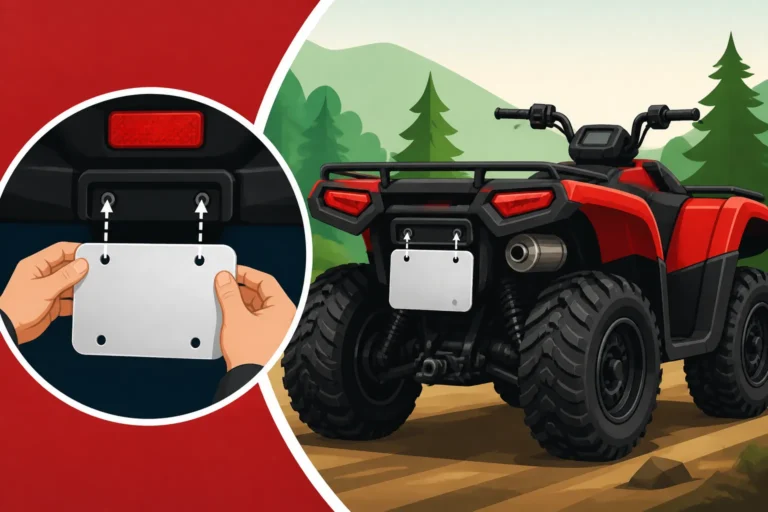
Once you’ve got your trail permit sticker, it’s critical to affix it correctly to your ORV. New Brunswick regulations specify that the permit sticker must be displayed on the left side of the machine, clearly visible. This placement allows trail wardens and enforcement officers to easily verify that you have a valid permit without needing to stop you or ask for paperwork. Common spots include the left-front fender or the left side of the machine’s bodywork, as long as it’s unobstructed.
Enforcement of trail permits is taken seriously by QuadNB and provincial authorities. Trail wardens, often volunteers from member clubs, and RCMP officers regularly patrol the trails. If you're caught riding on a managed trail without a valid permit, you could face significant fines. These fines are designed not just to punish, but to emphasize the importance of contributing to the trail system's upkeep. It's a simple, visible check that helps ensure everyone is playing by the rules and supporting the network. Always make sure your permit is correctly displayed; further details on placement can be found in [New Brunswick Permit Placement on a Machine], and information about fines is in [New Brunswick Penalties for No Trail Permit].
Practical Scenarios: When Both, One, or Neither Apply
Understanding when you need both a registration and a trail permit, just one, or neither, is crucial for legal and responsible ORV use in New Brunswick. This often depends on where you're riding and the specific circumstances.
Riding Club Trails and Public Lands
This is the most common scenario for ATV and UTV enthusiasts in New Brunswick, and it's where both your machine's registration and a valid trail permit are almost always required. If you plan on exploring any part of the QuadNB network, which includes thousands of kilometres of designated trails, you absolutely need that trail permit sticker proudly displayed on your machine. Furthermore, because these trails often cross public property, utilize public right-of-ways, or might require you to briefly use a road shoulder or cross a highway to access different trail sections, your ORV also needs to be properly registered with Service New Brunswick.
Failure to have either document on these routes can lead to fines. Enforcement officers can check for both at any point on the trail or at a trailhead. It’s not uncommon for riders to be stopped, and they'll expect to see not just the visible plate and permit sticker, but also your registration certificate, proof of insurance, and your driver's license (or appropriate youth license) on hand. Think of it as a complete package for legal trail access. Remember that places like LawDepot can provide forms for essential documents, but the physical registration and permit must come from the official sources. For a full list of documents, review [New Brunswick Documents You Must Carry].
Private Land and Closed Courses
Things get a little different when you’re riding exclusively on private land or within a designated closed course. If your ORV never touches public land, including ditches, road shoulders, or designated trails, then you do not need a QuadNB trail permit. This is a key distinction for those who primarily ride on their own large properties, private woodlots with explicit permission, or at organized events on private tracks.
However, even on private land, the question of registration can still arise. If your private land requires you to cross any public road, ditch, or access point to get to your riding area, your machine must be registered. The moment your wheels touch public ground, even for a brief crossing, provincial regulations for ORVs typically kick in. If you're truly operating 100% within a fenced, private property that never intersects with public access, then neither a trail permit nor a registration would be strictly required for that specific context. This specific exemption is outlined in [New Brunswick Owner-Only Private Land Exemption].
The Ditch-Riding Dilemma
Ah, the classic New Brunswick ditch-riding scenario! This is often a point of confusion and frustration for many rural riders. In New Brunswick, ditches alongside public roads are generally considered part of the highway right-of-way, which means they are public land. Therefore, if you are riding in a ditch, even to get from one section of your property to another, your ORV must be registered with Service New Brunswick and display a valid plate.
The question of whether a trail permit is required for ditch riding is a bit murkier but generally, if that ditch riding is effectively acting as an access route to a managed trail, or if it runs parallel to and is integrated with the trail network, enforcement might expect you to have a permit. While riding strictly in a ditch to bypass a short road section might not always trigger the need for a trail permit, it’s a grey area that can lead to being stopped. The safest bet, especially if there's any ambiguity, is to have both if you plan to be off your private property. It's always better to be over-prepared than under-prepared. For broader rules on road use, see [New Brunswick ATV Road Rules Explained].
Disclaimer
This article is for general informational purposes only and does not constitute professional advice. Laws, prices and regulations vary by location and change over time. Consult a qualified professional for guidance on your specific situation.