New Brunswick Penalties for Riding Uninsured
It's an absolute joy to hit the trails here in New Brunswick, isn't it? The sheer freedom, the stunning scenery, the camaraderie with fellow riders – it’s what we live for. But nothing can put a damper on that joy faster than being stopped by an officer and realizing you're not fully compliant with the rules, especially when it comes to something as crucial as insurance. Many riders feel a knot in their stomach wondering, "What really happens if I'm caught without ATV insurance?" This guide is here to untangle that worry, clearly laying out the penalties and what you can do to avoid those unwelcome surprises.
The Harsh Reality of Uninsured Riding in New Brunswick
Let's face it, nobody wants to think about accidents or fines, but they're a part of life. When you're out on an ATV or UTV, the stakes can be surprisingly high. New Brunswick has clear rules for a reason, and riding uninsured isn't just a minor infraction; it carries some pretty serious consequences that can impact your finances and your peace of mind for a long time. It’s not just about getting caught; it’s about the very real risks you’re taking every time you turn the key without proper coverage.
Why Insurance Matters Beyond Just the Law
It’s easy to view insurance as just another hurdle, another expense, or another box to check. We often think, "I'm a careful rider, it won't happen to me." But the truth is, even the most cautious operator can encounter unforeseen circumstances. What if a deer suddenly darts out onto the trail, causing you to swerve and collide with another machine? Or what if you accidentally damage someone's private property while navigating a tight turn? These aren't far-fetched scenarios; they're very real possibilities on our diverse New Brunswick trails.
Beyond the legal requirement, having ATV insurance is fundamentally about protecting yourself and others from potentially devastating financial repercussions. Without it, you are personally responsible for any damage you cause to other vehicles or property, and for any injuries to other people. Imagine the medical bills, the repair costs, or even legal fees if someone decides to sue you after an incident. These figures can quickly climb into the tens or even hundreds of thousands of dollars, a burden that could financially cripple most individuals. This isn't just a minor inconvenience; it's a potential life-altering event that a simple insurance policy is designed to prevent.
The Immediate Financial Hit: The First Fine
When an officer pulls you over and discovers you don't have the required insurance, the first thing you'll face is a substantial fine. This isn't a friendly warning; it’s a non-negotiable financial penalty that hits your wallet immediately and hard. For many riders, this can feel like a punch to the gut, especially when you consider that money could have been used for fuel, trail permits, or even an upgrade for your machine. It’s a bitter pill to swallow, knowing that a few minutes spent arranging proper insurance could have prevented such a costly setback.
The specific amount for riding an uninsured ATV in New Brunswick is not trivial. You're looking at a significant three-figure fine that aims to deter such actions. To be precise, you can be handed a [New Brunswick Uninsured ATV Fine of $604.50]. This isn't pocket change, and it's enforced rigorously across the province to ensure trail safety and compliance. This single penalty can quickly outweigh the cost of an entire year's insurance premium, making the decision to skip coverage a financially unsound one from the get-go.
Beyond the Fine: Compounding Consequences
While the initial fine is certainly painful, the repercussions of riding uninsured don't stop there. Many riders mistakenly believe that once they pay the ticket, the problem is solved. However, the legal system and your future riding privileges in New Brunswick often have a much longer memory. There are additional, often overlooked, consequences that can truly complicate your life and empty your bank account, proving that the initial savings from skipping insurance are almost never worth the risk.
Impoundment and Towing Fees
One of the most immediate and frustrating consequences, beyond the fine itself, is the potential for your machine to be impounded. When an officer determines your ATV or UTV is being operated without valid insurance, they have the authority to remove it from the trail. This isn't a gentle suggestion; your machine will be towed away, leaving you stranded and scrambling to arrange transport for yourself. The inconvenience alone is enough to ruin any ride, but the financial implications can be even more substantial.
Towing services aren't free, and neither is the storage of your machine at an impound lot. These charges begin accumulating the moment your ATV or UTV is hooked up, and they continue every single day until you can prove you have acquired valid insurance and pay all outstanding fees to retrieve it. What might start as a $604.50 fine can quickly balloon into an additional few hundred dollars, or even more, just for the towing and storage. It’s a frustrating and costly process that adds insult to injury, transforming a fun day out into a logistical nightmare that could take days or even weeks to resolve.
Potential Impact on Your Driving Record and Future Insurance
Many ATV and UTV riders consider their off-road activities separate from their regular driving habits. However, a serious infraction like riding uninsured in New Brunswick can absolutely bleed over into other aspects of your life, particularly your general driving record and your future insurance rates. While an ATV infraction might not always directly add demerit points to your driver's licence, insurance companies often view such violations with extreme seriousness. They see it as a reflection of your overall risk profile as a policyholder.
Being flagged as someone who operates a vehicle (any vehicle!) without mandatory insurance can cause your regular car insurance premiums to skyrocket. Insurers might classify you as a "high-risk" client, leading to higher rates across all your policies, not just for your ATV. This penalty isn't a one-time payment; it's a continuous drain on your finances that can last for years, potentially costing you thousands more in insurance payments over time. It’s a hidden, long-term consequence that often catches people by surprise and serves as a stark reminder of the broader [New Brunswick Insurance Requirements for Riders].
Understanding New Brunswick's Insurance Requirements
Navigating the world of insurance can sometimes feel like trying to understand a new language. You hear terms like "liability," "comprehensive," and "deductible," and it can get confusing quickly. But when it comes to riding your ATV or UTV in New Brunswick, understanding the basic insurance requirements is absolutely essential. It’s not just about avoiding fines; it’s about having the right protection for yourself and everyone else sharing the trails.
What Kind of Insurance Do You Actually Need?
For recreational off-road vehicle use on managed trails and public lands in New Brunswick, the primary requirement is liability insurance. Think of liability insurance as your safeguard against the financial consequences of causing an accident. If you're involved in a collision with another machine, or if you accidentally damage someone's property—perhaps a fence or a piece of farm equipment along a trail—your liability insurance steps in to cover the costs for the other party. This is a non-negotiable safety net that ensures victims of an accident caused by you aren't left holding the bill.
While liability coverage is mandated, you'll also encounter options for additional coverage like collision and comprehensive insurance. Collision coverage helps pay for damages to your own ATV or UTV if it's involved in an accident, regardless of who is at fault. Comprehensive coverage, on the other hand, protects your machine from non-collision incidents such as theft, vandalism, fire, or even damage from hitting an animal. While these extra coverages aren't legally required for riding on trails, they are highly recommended for your financial peace of mind. Without them, any damage to your own machine comes directly out of your pocket, which can be a significant expense given the cost of parts and repairs for ATVs and UTVs. This comprehensive approach underscores why [New Brunswick Requires Insurance on Trails].
Who Needs to Be Covered?
The simple answer is: anyone operating the machine, and the machine itself. Your ATV or UTV must have a valid insurance policy tied to it, and that policy needs to cover the operator. Typically, a personal ATV insurance policy will cover the named policyholder and anyone else you permit to legally operate your machine, provided they meet any specific requirements outlined in your policy (like age or licensing). However, this isn't a universal guarantee.
It's absolutely crucial to read your specific insurance policy document carefully or, better yet, call your insurance provider directly to confirm who is covered under what circumstances. Don't just assume! What if your buddy wants to take your side-by-side for a spin? Is he covered? What if your teenager, who has their Class 9 licence and has completed their safety course, takes it out? Are they protected? These are vital questions to ask before anyone else gets behind the handlebars. Making sure the actual operator is covered prevents a world of potential headaches and ensures you're upholding the [New Brunswick Insurance Requirements for Riders].
Proof of Insurance: What to Carry and How to Show It
Having insurance is one thing; being able to prove you have it when asked by an enforcement officer is another. Just like with your registration, you must be able to present valid proof of insurance at any time while operating your ATV or UTV on regulated trails or public lands. This isn't just a suggestion; it’s a strict requirement, and failure to provide proof can lead to the same penalties as not having insurance at all. Officers need to verify your compliance on the spot.
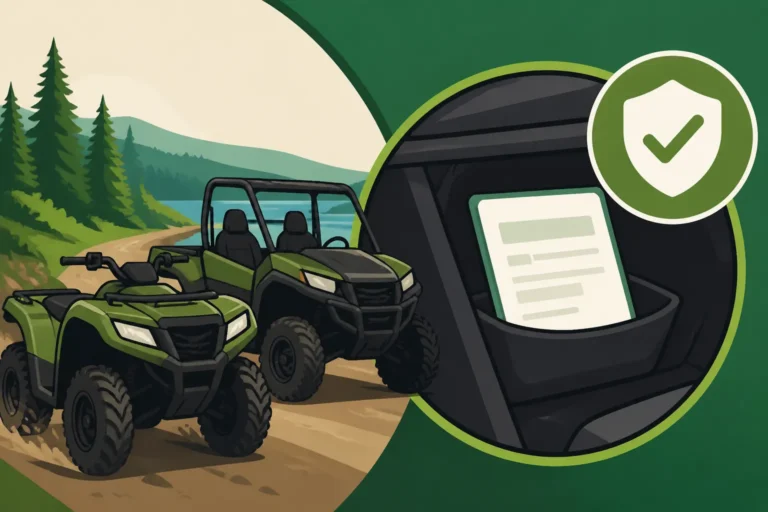
Most insurance companies provide a physical insurance card, much like the one you carry for your car. This card should contain your policy number, effective dates, and information about the insured vehicle. It’s a good practice to keep this card in a waterproof pouch on your machine—perhaps in a saddlebag, glove compartment, or securely attached to the machine itself. Many providers also offer digital proof of insurance through smartphone apps or downloadable PDFs. While a digital copy is often acceptable, remember that cell service can be spotty in remote areas of New Brunswick. A physical copy is always a reliable backup. Always ensure the document is clear, legible, and easily accessible. Having your [New Brunswick Proof of Insurance on the Machine] is just as important as having the insurance itself.
Avoiding the Penalties: Your Action Plan
Nobody wants to deal with fines, impoundment, or the stress of an accident. The good news is that avoiding these penalties is entirely within your control. It boils down to being proactive, organized, and informed. Taking a few simple steps now can save you a world of trouble and ensure your time on the trails is purely enjoyable, without any lingering worries about compliance.
Getting Proper Coverage Before You Ride
This might seem obvious, but it's the most critical step: secure your insurance before you even think about hitting the trail. Don't wait until the last minute or assume you'll "get around to it." The moment your tires touch a regulated trail without proper insurance, you're at risk. Start by researching insurance providers that offer ATV and UTV policies in New Brunswick. Many major insurance companies provide this type of coverage, and it's worth getting a few quotes to compare rates and coverage options.
When you're shopping for a policy, don't just focus on the price. Make sure you understand the liability limits, what specific situations are covered, and any exclusions. It's also a good idea to inquire about optional coverages like collision or comprehensive, even if they're not legally mandated. A few extra dollars a month for a higher level of protection could save you thousands in the event of an unforeseen incident. Remember, the goal isn't just to meet the minimum legal requirement, but to ensure you're adequately protected against all the potential bumps and surprises that come with off-road riding.
Regular Checks and Renewals
Just like your ATV or UTV registration, insurance policies have an expiry date. It’s easy to get caught up in the excitement of riding season and let administrative tasks slip, but letting your insurance lapse can quickly put you back into a risky, non-compliant situation. Make it a habit to check your policy’s expiry date well in advance. Set reminders on your phone, mark it on your calendar, or sign up for automated renewal notifications from your insurance provider.
Renewing your policy is usually a straightforward process, often doable online or with a quick phone call. Don't assume that because you were insured last year, you're automatically covered this year. Active, up-to-date insurance is required every time you ride. Many riders are diligent about their [New Brunswick ATV Registration Renewal], and the same vigilance should be applied to your insurance policy. Keeping all your essential documents current is a small effort for continuous peace of mind and protection on the trails.
Understanding Exemptions (and Why They're Rare for Most Riders)
While the general rule is that you must have insurance for your ATV or UTV in New Brunswick, there are a couple of very specific and limited exemptions. It’s crucial to understand these thoroughly, as they don't apply to the vast majority of recreational trail riding. Misinterpreting an exemption could land you in serious trouble.
One primary exemption is for machines operated exclusively on owner-only private land. If your ATV never leaves your own property, and you are the sole owner and operator, you may be exempt from the requirement to carry liability insurance. However, this exemption comes with a very narrow definition. The moment you cross a property line onto a neighbour's land, a public road, or a club trail, this exemption no longer applies. For most riders who enjoy exploring the extensive network of trails New Brunswick offers, this [New Brunswick Owner-Only Private Land Exemption] simply won't cover their typical riding activities.
Another specific exemption exists for certain types of off-road vehicles. For instance, sometimes dirt bikes that meet specific criteria might have different insurance requirements compared to ATVs and UTVs. While [New Brunswick Insurance Exemption for Dirt Bikes] can exist, it's vital to verify the exact rules for your specific machine and intended use. These exemptions are not a blanket pass to skip insurance, but rather very specific carve-outs in the legislation for limited scenarios. Always confirm with Service New Brunswick or an insurance professional if you believe an exemption might apply to you, rather than making an assumption that could prove costly.
| Violation | Immediate Fine | Other Financial Costs | Other Consequences |
|---|---|---|---|
| Riding Uninsured | $604.50 | Towing, impoundment | Higher future insurance premiums, legal fees |
| Riding Unregistered | $172.50 | Towing, impoundment | Delayed riding, administrative hassle |
| No Trail Permit | $340.50 | N/A | Membership loss, trail access denied |
| No Helmet | $172.50 | Medical costs from injury | Danger to self |
| No Safety Course | $340.50 | N/A | Restricted riding, further education needed |
| Missing Papers | Varies, up to $172.50 | N/A | Delay, frustration, potential fines |
As you can see from the table above, the penalties for not being insured are among the highest. It's a clear indication of how seriously the province takes this particular requirement. Beyond the fines, remember the crucial documents you must carry. An officer will often ask to see your proof of registration and proof of insurance, among other things. Make sure you have your [New Brunswick Registration Paperwork Checklist] completed and all your [New Brunswick Documents You Must Carry] readily available whenever you ride. Don't get caught unaware and face fines for [New Brunswick Penalties for No Safety Course] or for lacking a proper helmet, as required by [New Brunswick Helmet Law for Every Occupant]. Staying informed and compliant is key to enjoying all that New Brunswick's trails have to offer.
Disclaimer
This article is for general informational purposes only and does not constitute professional advice. Laws, prices and regulations vary by location and change over time. Consult a qualified professional for guidance on your specific situation.