New Brunswick Permit Stickers on the Left Side
It can be incredibly frustrating to get out on the trails, ready for a day of adventure, only to be stopped by an officer because of a simple, easily overlooked detail: your ORV permit sticker placement. Many riders in New Brunswick often wonder if there's a specific rule for where that little decal goes, or if "anywhere visible" is good enough. This comprehensive guide is here to clear up that confusion, explaining exactly why your permit sticker needs to be on the left side of your machine, what the regulations entail, and how to avoid those annoying, and often costly, infractions.
Why Sticker Placement Matters So Much in New Brunswick
You might think, "It's just a sticker, as long as it's on the machine, what's the big deal?" But in New Brunswick, when it comes to your off-road vehicle (ORV) registration and trail permit stickers, the placement isn't just a suggestion—it's a regulation. This specific rule exists for very practical reasons, designed to ensure clarity, efficiency, and safety for everyone involved. Ignoring it can lead to frustrating encounters and unnecessary fines, putting a damper on your riding experience. It's about more than just aesthetics; it's about adherence to provincial guidelines that help keep our trails organized and safe.
The Immediate Visual Check for Law Enforcement
Imagine you're an enforcement officer, responsible for patrolling miles of trails, ensuring all riders are compliant. You're checking dozens, maybe hundreds, of machines a day. If every rider had their stickers in a different spot – some on the front, some on the back, some tucked away near the engine – it would turn a quick visual check into a prolonged search. This is precisely why the province of New Brunswick has standardized the placement of ORV permit stickers. By mandating a specific location, officers can perform rapid, consistent checks, quickly confirming that a machine is properly registered and permitted without unduly delaying riders.
This standardization significantly streamlines the enforcement process. When an officer sees an ATV or side-by-side approaching, their eyes instinctively go to the designated area on the left side. If the sticker isn't there, or isn't clearly visible, it immediately raises a flag, prompting a more thorough stop. This isn't about being punitive; it's about making the system work efficiently for the vast network of trails and the sheer volume of riders out enjoying them. It ensures that those who are diligently following the rules can pass by with minimal interruption, while those who might be non-compliant can be identified more easily.
Think about it from a practical standpoint: if you're riding with a group, and an officer needs to check registrations, a standardized placement means less time spent waiting around for everyone to have their paperwork verified. It's a small detail that contributes to the overall smooth operation of the trail system. When every minute counts, especially on a long day of riding, these efficiencies are truly appreciated by both the riders and the enforcement agencies. It's a testament to the idea that clear rules make for clear trails.
Avoiding Misunderstandings and Delays on the Trail
Beyond the efficiency for law enforcement, correct sticker placement helps you, the rider, avoid unnecessary misunderstandings and frustrating delays. Picture this: you're on a multi-day trip, perhaps exploring the vast [Skedaddle Ridge Trails in New Brunswick] network, and you're stopped by an officer. If your sticker is not where it's supposed to be, even if you have it, it creates an immediate point of contention. The officer might assume, even for a moment, that you're attempting to hide it or that it's not valid, leading to a more intense questioning than necessary.
This can be incredibly inconvenient, especially if you’re trying to keep up with a group or have a tight schedule. A quick glance at the correct spot on your machine should be enough for an officer to see your valid sticker and send you on your way. If they have to search, it takes time, patience, and can frankly feel a bit like you’re being treated suspiciously, even if you’re completely legitimate. It’s an easy way to inadvertently draw unwanted attention to yourself simply by overlooking a minor regulation.
Furthermore, correct placement of your sticker, such as the New Brunswick Permit Stickers on the Left Side, contributes to the overall professional and responsible image of ORV riders in the province. When everyone adheres to these simple rules, it reflects positively on the entire riding community, reinforcing the idea that riders are respectful of regulations and contribute to safe trail usage. It’s about building trust and ensuring that the freedom to ride is preserved for everyone. These seemingly small details contribute to a larger narrative of responsible recreation, something we all want to uphold.
The Official Rule: Where Your New Brunswick Sticker Belongs
The province of New Brunswick is quite specific about where your ORV permit sticker needs to be affixed. This isn't a vague guideline but a clear mandate designed to prevent confusion and ensure consistent compliance across all types of off-road vehicles. Understanding this rule is fundamental to hassle-free riding, especially when you consider the penalties associated with non-compliance. It’s about more than just having the sticker; it’s about having it in the right place, for the right reasons.
Understanding the "Left Side" Mandate
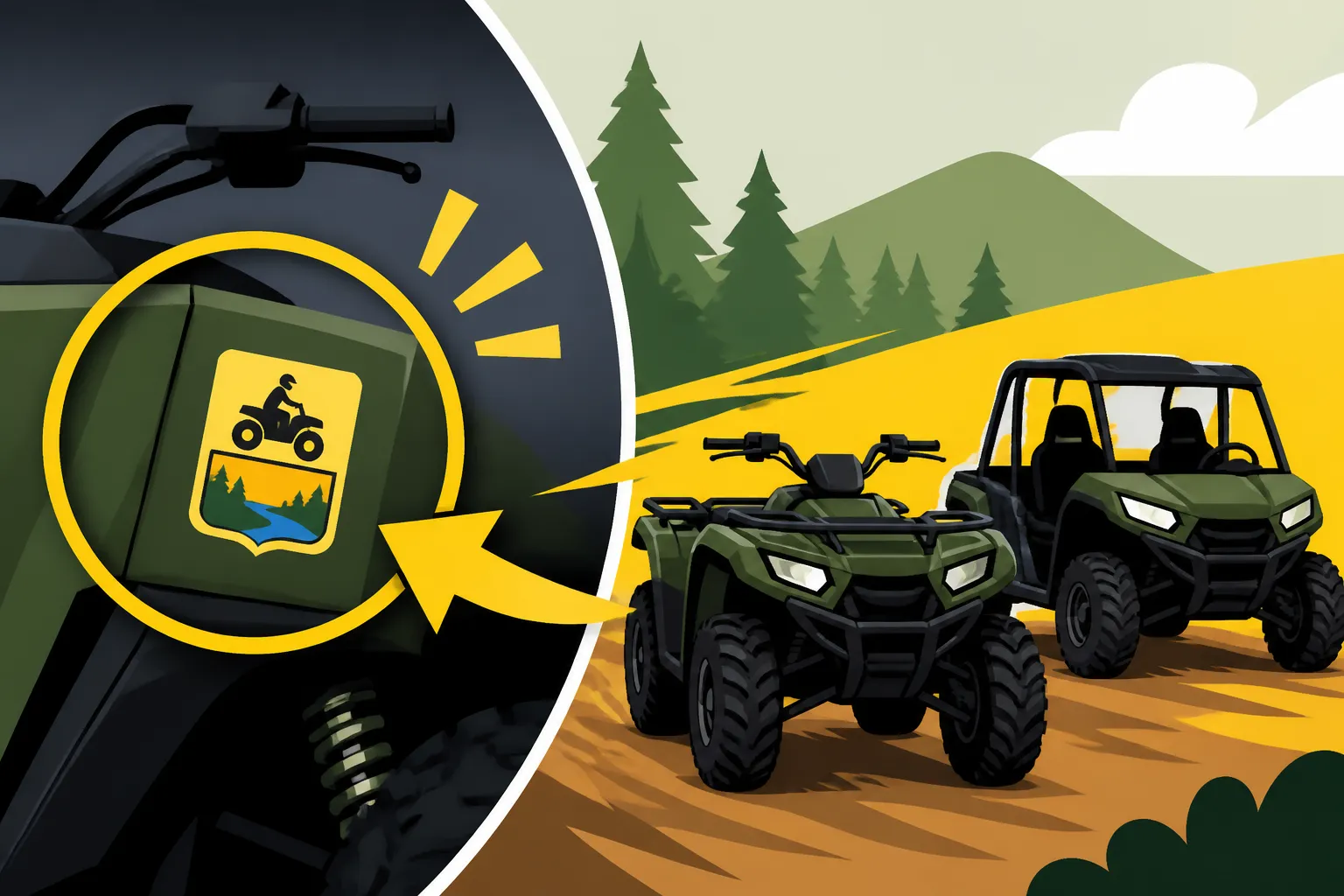
In New Brunswick, the official directive is that your ORV registration decal, and typically your trail permit sticker alongside it, must be prominently displayed on the left side of your machine. For most ATVs and side-by-sides, this means the left front fender. The reason for this is largely about visibility and consistency. When an enforcement officer or trail warden approaches a machine from the front or side, that left fender is generally one of the first and clearest places to spot the required documentation.
This "left side" rule isn't arbitrary. It provides a universal spot that applies whether you're riding a quad, a side-by-side, or a dirt bike (though dirt bikes have slightly different considerations for where on the left side, usually the fork). The key is that it's accessible and easily viewed without requiring an officer to walk completely around your machine or ask you to reposition it. This simple, clear instruction removes guesswork and ensures that every rider knows exactly what's expected of them. If you're ever in doubt, just remember: left is right for your sticker.
It’s also crucial that the sticker is applied directly to the machine itself, not on an accessory that could be easily removed or obscured. Some riders mistakenly put their stickers on toolboxes, windshields, or other attachments, which is technically non-compliant because these items might be temporary or could detach. The intention is for the sticker to be a permanent fixture on the primary body of the ORV, making it an undeniable part of the machine's identity. This robust approach ensures that your machine is always properly identified, regardless of how it's accessorized.
Different Machine Types and Sticker Adherence
While the "left side" rule is universal, how it applies can vary slightly depending on the type of ORV you own. For a typical ATV (quad), the left front fender is the most common and accepted spot. This area is usually flat, provides good visibility, and is less prone to damage from riding through brush or mud. Similarly, for [Registering a Side-by-Side in New Brunswick], the left front fender or a visible flat panel on the left side of the machine's body is generally suitable. The goal is clear, unobstructed visibility from a reasonable distance.
Dirt bikes present a slightly different challenge due to their design. While still adhering to the "left side" principle, the most practical and visible location is often on the left front fork, or sometimes on the left side panel near the airbox. The key consideration for dirt bikes is finding a spot that won't be easily obscured by handlebars, cables, or the rider's legs, and one that is sturdy enough to hold the sticker through aggressive riding conditions. What matters is that it's clearly on the left and immediately identifiable.
Regardless of your machine type, ensure the surface is clean, dry, and relatively flat for proper adhesion. A sticker that's peeling, cracked, or obscured simply isn't doing its job. Think about the longevity of your sticker; applying it to a smooth, clean surface will ensure it stays put and legible for the entire riding season. If you find your sticker isn't holding up, it's a good indication it might be time for a replacement, which can be acquired for a small fee, as discussed in articles like [New Brunswick Sticker Replacement at $11.50]. Taking these small steps can save you a lot of grief down the line.
Beyond the Left Side: Other Important Sticker & Plate Rules
It’s not enough to simply slap your sticker on the left side and call it a day. The regulations surrounding ORV identification in New Brunswick are comprehensive, designed to ensure that your machine is always legally identifiable and that you’re prepared for any checks you might encounter on the trails. Beyond the specific placement, the condition and validity of your stickers and plates are paramount. Understanding these additional requirements is crucial for any responsible rider.
Keeping Your Permit Sticker Visible and Legible
Having your permit sticker on the left side is only part of the equation; it also needs to be visible and legible. A sticker that's faded by the sun, caked in mud, or peeling off your fender might as well not be there at all in the eyes of an enforcement officer. The numbers and expiry date must be clear and easy to read without close inspection. Imagine an officer trying to read a tattered sticker in dim light or adverse weather conditions—it simply won't work, and it opens you up to potential issues.
This means regularly checking the condition of your sticker throughout the riding season. Mud, dust, water, and UV exposure can all take their toll. If you notice it starting to degrade, it's wise to consider getting a replacement. Replacing a faded or damaged sticker is a small investment compared to the potential fines or delays you could face if an officer deems it unreadable. You want to make it as easy as possible for officials to verify your compliance, so a crisp, clear sticker is in your best interest.
Beyond legibility, visibility also means not covering your sticker with accessories, cargo, or even mud flaps that might swing over it. The intent of the rule is that the sticker should be clearly viewable. Riders sometimes inadvertently obscure their decals when adding new gear or packing their machine for a trip. A quick check before you head out, specifically looking at your left fender, can prevent this oversight. It’s a simple pre-ride ritual that can save you a headache later.
The Importance of a Valid Registration Plate
In addition to your permit sticker, every registered ORV in New Brunswick must display a valid registration plate. This metal plate is your machine's unique identifier and is just as important as your sticker. While the sticker indicates your current permit status (and sometimes registration, depending on the type), the plate is the core identifier for your vehicle itself. [New Brunswick ORV Registration Explained] clarifies that this plate is issued by Service New Brunswick and signifies legal ownership and compliance with provincial registration requirements.
The placement of the registration plate is also stipulated, generally on the rear of the machine, affixed securely so it doesn't swing or get easily damaged. Like your sticker, it must be kept clean, visible, and legible. A bent, broken, or excessively muddy plate will invite the same scrutiny as an illegible sticker. It's the full package—plate and sticker—that demonstrates complete compliance. This is why it's always included in the [New Brunswick Documents You Must Carry] list.
It’s worth noting that if you buy a used machine, ensuring the plate is present and valid, and then properly transferring ownership, is critical. Websites like LawDepot can provide customizable bill of sale templates that ensure you have the necessary documentation for a smooth transfer with Service New Brunswick. Without a valid plate, your machine isn't legally on the road or trails, and you could face significant penalties. If you've lost or damaged your plate, [New Brunswick Replacement Plates and Decals] provides information on how to obtain a new one through official channels.
What to Do If Your Sticker Gets Damaged or Lost
Things happen on the trail. Branches snag, mud gets everywhere, and sometimes, despite your best efforts, your permit sticker gets damaged, becomes unreadable, or even falls off. It's not the end of the world, but it does require prompt action. Riding with an invalid or missing sticker is akin to riding without one at all, opening you up to fines and potential impoundment. Don't risk it.
The first step is to recognize the issue. As mentioned, regularly inspect your sticker for fading, peeling, or tears. If you find it's no longer legible or securely attached, you need to replace it. You can obtain a replacement sticker from Service New Brunswick locations or through official online channels. There's usually a nominal fee for a replacement, as detailed in [New Brunswick Sticker Replacement at $11.50], but it’s far less than a non-compliance fine. It's a quick, easy process that can prevent significant headaches.
When you get a replacement, remember to follow all the application best practices: clean the surface thoroughly, apply it firmly, and ensure it's in the correct "left side" position. If you're on a multi-day trip and your sticker gets damaged, it's a good idea to keep your paper registration certificate with you as proof, though this doesn't excuse the missing or damaged sticker. The certificate is important to carry anyway, as covered in [Carrying Four Documents at Once]. Always prioritize getting that replacement as soon as possible to ensure you remain fully compliant.
Common Misconceptions and Costly Mistakes
Despite the clear rules, it's surprising how many riders still fall victim to common misconceptions or make easily avoidable mistakes regarding their ORV stickers and plates in New Brunswick. These errors, often born of misunderstanding or simple oversight, can lead to frustrating encounters with law enforcement and result in financial penalties that no one wants to incur. Let's clear up some of these widespread myths and highlight the real consequences of getting it wrong.
The "Anywhere Visible" Trap
One of the most prevalent misconceptions among riders is the idea that as long as the permit sticker is somewhere visible on the machine, it's compliant. This is the "anywhere visible" trap, and it's a costly one. While the spirit of the rule is indeed about visibility, the letter of the law in New Brunswick specifies the left side of the machine, typically the front fender, as the designated placement. Sticking it on your helmet, the front rack, or the back of your side-by-side simply won't cut it.
Riders might mistakenly place their sticker in a spot they personally find more visible or aesthetically pleasing, only to discover too late that it doesn't meet the provincial standard. This misunderstanding can lead to an officer stopping you, questioning your compliance, and potentially issuing a fine, even if you had good intentions. It creates an unnecessary hassle for both you and the enforcement officer, simply because a specific rule was overlooked.
To avoid this trap, always refer back to the official guidelines, such as those found in [New Brunswick Permit Placement on a Machine]. When you receive your new sticker, whether it's for a fresh registration or a renewal, make the left fender (or appropriate left-side location for dirt bikes) its immediate home. Don't assume that because an officer let it slide once, it's acceptable. Consistent compliance is key to avoiding future issues and ensuring you're always riding within the legal framework.
Fines for Improper Sticker Placement
Let's talk about the consequences. Riding with an improperly placed, unreadable, or missing permit sticker in New Brunswick can absolutely lead to fines. These aren't just warnings; they are official citations that can quickly add up and take a significant chunk out of your riding budget. While specific fine amounts can change, rest assured that provincial regulations are backed by monetary penalties to ensure compliance. An officer isn't going to let you off with a verbal warning if your sticker is clearly not where it should be.
The fines associated with registration and permit violations are designed to be a deterrent. For example, riding without a valid registration can incur a fine, as can not having a valid trail permit, often detailed in [New Brunswick Penalties for No Registration]. While an improperly placed sticker might not always be treated as severely as a completely absent one, it still falls under the umbrella of non-compliance. An officer might choose to fine you for not displaying the sticker correctly, considering it a failure to adhere to equipment requirements.
It's a simple case of prevention being better than cure. Taking five minutes to ensure your sticker is correctly affixed to the left side of your machine, and that it's clean and legible, is a much better use of your time than dealing with a roadside stop, potential citation, and the subsequent payment of a fine. Always remember that enforcement officers are there to ensure safety and compliance, and clear, correct stickers make their job, and your ride, much smoother.
The Link Between Sticker and Trail Permit Validity
It's vital to understand that your ORV registration sticker and your trail permit sticker often work in tandem, especially when riding on designated QuadNB trails. While your registration sticker (issued by Service New Brunswick) confirms your machine is legally registered for ownership and operation, your trail permit sticker (issued by QuadNB) grants you access to the extensive network of managed trails. Both are essential for a truly compliant riding experience on many provincial trails.
Often, these two stickers are placed right next to each other on the left front fender. When an officer checks your machine, they're looking for both. If your registration sticker is missing or expired, even with a valid trail permit, you're not fully compliant. Conversely, if your registration is valid but you lack a valid trail permit sticker for the trails you're on, you could face fines related to unauthorized trail use, as mentioned in [New Brunswick Penalties for No Trail Permit].
The placement ensures that both pieces of crucial identification are easily visible and verifiable together. It signifies that you're not only a registered owner but also a responsible trail user who has contributed to the maintenance and upkeep of the trail system through your permit purchase. This integrated approach ensures that the beautiful New Brunswick trails, like those you can find by checking [New Brunswick ATV Trail Map Downloads], can be enjoyed by everyone responsibly.
Practical Tips for Sticker Application and Maintenance
Now that you understand why proper sticker placement is so critical, let's talk about how to do it right and keep your stickers in good condition. Applying a sticker might seem like a trivial task, but a few simple steps can make all the difference in its longevity and legibility, saving you time, money, and hassle in the long run. These practical tips will help ensure your machine is always compliant and ready for the trails.
Preparing Your Machine for Sticker Adhesion
The key to a long-lasting sticker lies in the preparation of the surface. You can't just slap it on a dirty, greasy, or cold fender and expect it to stay put. Just like any good adhesive application, cleanliness is next to stickiness.
First, identify the exact spot on the left side of your machine where the sticker will go. For most quads and side-by-sides, this will be a relatively flat, smooth area on the left front fender. Once you've chosen the spot, thoroughly clean it. Use a good quality degreaser or rubbing alcohol to remove all traces of dirt, oil, wax, and old adhesive residue. This step is critical; any leftover grime will prevent the sticker from bonding properly to the surface. After cleaning, wipe the area dry with a clean, lint-free cloth.
Second, ensure the surface temperature is appropriate. Vinyl stickers adhere best when applied to a surface that isn't too cold or too hot. Room temperature is ideal. If you're trying to apply a sticker in freezing temperatures, it simply won't stick effectively. If your machine has been sitting outside in the cold, bring it into a warmer garage for a while to allow the fender to warm up before application. Similarly, avoid applying stickers in direct, scorching sunlight, as this can cause air bubbles or rapid, uneven adhesion. LawDepot doesn't help with stickers, but it's all about following instructions!
Best Practices for Long-Term Durability
Once the surface is prepped, applying the sticker carefully will ensure its longevity. Peel the backing off slowly, starting from one corner. Try to avoid touching the adhesive side with your fingers, as oils from your skin can interfere with the bond. Position the sticker precisely in your chosen spot on the left side, then gently lay it down. Use a squeegee, a credit card, or even your thumb wrapped in a soft cloth to smooth out the sticker from the center outwards, pushing out any air bubbles as you go. This firm, even pressure ensures maximum contact between the adhesive and the fender.
After application, give the sticker some time to cure. Avoid washing your machine or exposing the sticker to harsh conditions for at least 24 to 48 hours if possible. This allows the adhesive to fully bond with the surface, making it much more resistant to water, mud, and vibration. During the riding season, make it a habit to periodically check your stickers. A quick wipe-down during your post-ride cleaning will keep them legible and help you spot any signs of peeling or fading early on.
If you notice a corner beginning to peel, sometimes a small drop of super glue or specialized vinyl adhesive can help re-secure it, but proceed with caution to avoid damaging the sticker itself. Ultimately, a properly applied sticker on a clean surface should last the entire season, especially if you apply it with care. This diligence is part of being a responsible ORV owner, ensuring your compliance with [New Brunswick Annual Registration Rule] is visually clear to everyone.
When to Replace Your Sticker and How
You've done everything right, but sometimes stickers simply don't last forever. Environmental factors, aggressive washing, or even accidental damage can lead to a sticker becoming illegible or peeling away. Knowing when to replace it is important. If you can't clearly read the expiry date or the registration number, or if it's more than 50% peeled, it's definitely time for a new one. Don't wait until you're stopped by an officer.
Replacing your sticker is a straightforward process. You can typically obtain replacement decals from Service New Brunswick. As mentioned previously in [New Brunswick Sticker Replacement at $11.50], there's usually a small administrative fee involved, but it's a worthwhile investment to remain compliant. Some QuadNB member clubs or dealerships might also assist with trail permit sticker replacements, or guide you through the process.
When you receive your new sticker, make sure you carefully remove any remnants of the old one first. Goo Gone or rubbing alcohol can help remove stubborn adhesive residue. Then, follow the surface preparation and application steps mentioned above to ensure your new sticker is perfectly placed on the left side, visible, legible, and ready for another season of New Brunswick adventures. Staying on top of these small details ensures your big adventures on the trails remain problem-free.
| Sticker Type | Purpose | Mandatory Placement (NB) | Key Detail |
|---|---|---|---|
| Registration | Proof of legal ownership and provincial registration | Left Side (usually front fender) | Must be current, expires December 31st annually |
| Trail Permit | Grants access to QuadNB managed trails | Beside registration decal, Left Side | Can be 3-season or 4-season, annual renewal |
Disclaimer
This article is for general informational purposes only and does not constitute professional advice. Laws, prices and regulations vary by location and change over time. Consult a qualified professional for guidance on your specific situation.