Registering a Side-by-Side in New Brunswick
It can feel a bit daunting when you first look at getting your side-by-side legally registered in New Brunswick. You've got this incredible machine, ready for adventure, but then there's the pile of paperwork, the trips to Service New Brunswick, and the nagging worry that you might miss something crucial. This guide is here to walk you through every step of the side-by-side registration process, helping you understand exactly what you need, where to go, and what to expect so you can hit the trails with confidence.
Why Your Side-by-Side Needs to Be Registered in New Brunswick
So, you've got your shiny new (or new-to-you) side-by-side, also known as a UTV or utility terrain vehicle. It's powerful, versatile, and looks like a ton of fun. But before you even think about hitting the incredible trails our province has to offer, there's a vital step you absolutely cannot skip: registration. Many riders new to the scene, or those coming from other types of off-road vehicles, often wonder why this is such a big deal, and if it's truly necessary for every machine. The short answer is a resounding yes, and understanding why it's required can help you appreciate the system in place.
Legal Requirements for Off-Road Vehicles
New Brunswick's Off-Road Vehicle Act is quite clear on this matter. If your side-by-side is going to be operated anywhere other than your own private, enclosed property, it needs to be registered. This isn't just a suggestion; it's a legal obligation designed to ensure accountability and safety within the off-road community. Think of it like registering your car – you wouldn't drive your car on public roads without a plate, right? The same principle applies, even if the "roads" are now off-road trails.
When you purchase a side-by-side, whether it's from a dealer or a private seller, the expectation is that you will register it in your name. This process formally links you, as the owner, to that specific machine. It's how the province keeps track of who owns what, which can be incredibly important in cases of theft, accidents, or even just for general statistics on off-road vehicle usage. Trying to ride an unregistered machine on public trails or any land not exclusively your own can lead to significant fines. Imagine getting pulled over by an officer on a beautiful trail ride, only to have your day ruined by a costly ticket because you skipped this fundamental step. It happens, and it's a frustration we all want to avoid.
What Registration Achieves for Riders
Beyond the legal mandate, registration serves several practical purposes that benefit all riders. Firstly, it contributes to the overall management and maintenance of New Brunswick's extensive trail network. A portion of registration fees often goes towards these efforts, ensuring that the trails you love to ride remain safe, accessible, and well-maintained. It's part of the collective effort to keep our province a premier destination for off-road enthusiasts.
Secondly, registration provides a clear record of ownership. This is invaluable in situations like theft. If your side-by-side is stolen, having it properly registered makes it much easier for law enforcement to identify and return your machine if it's recovered. Without that official record, proving ownership can become a nightmare, adding stress to an already awful situation. It's a small administrative step that offers a big layer of protection. Plus, for certain situations, like when you're seeking financing or insurance, having clear, current registration proves legal ownership. It's one of the [New Brunswick Documents You Must Carry] whenever you're out riding, acting as your machine's official identification.
Essential Documents for Registering Your Side-by-Side
Before you even think about heading to a Service New Brunswick centre, gathering the correct documentation is paramount. This is where many people hit a snag, especially if they’ve purchased a used machine or are new to ORV ownership. It’s not just about showing up with the machine; it’s about proving who you are, where the machine came from, and that you’re its rightful owner. Missing just one piece of paper can mean a wasted trip and a lot of frustration, so let’s make sure you’re prepared.
Proof of Ownership: The Bill of Sale
This is arguably the most critical document you'll need. The bill of sale acts as the legal record of the transaction between you and the previous owner (or dealer). For a brand-new side-by-side purchased from a dealership, you'll typically receive a comprehensive bill of sale, often with an 'MSO' (Manufacturer's Statement of Origin) or 'NVIS' (New Vehicle Information Statement), which confirms it's never been registered before. Dealers are usually well-versed in providing all the necessary paperwork, making this a smoother process.
However, when you buy a used side-by-side from a private seller, the responsibility falls on you to ensure the bill of sale is complete and accurate. A simple note on a napkin won't cut it. A proper bill of sale should include:
- The full names and addresses of both the buyer and the seller.
- The date of the sale.
- A clear description of the side-by-side, including its make, model, year, and most importantly, the Vehicle Identification Number (VIN). The VIN is your machine's unique fingerprint, so double-check it against the actual machine.
- The purchase price.
- Signatures of both parties.
Using a standardized template, perhaps even one found through resources like LawDepot, can ensure all these crucial details are captured and help prevent future headaches. If you're wondering about [New Brunswick Registration After a Private Sale], a solid bill of sale is the foundation. Without this, proving you legitimately own the machine can be incredibly difficult, turning your dream ride into a bureaucratic nightmare.
Your Identification and Proof of Address
Just as important as proving ownership of the side-by-side is proving who you are. Service New Brunswick requires valid identification to process any registration. This typically means a government-issued photo ID, such as a New Brunswick driver's licence. This proves your identity and often your current address, which is vital for where your registration documents will be mailed.
If your driver's licence doesn't show your current address, or if you don't have a New Brunswick licence yet (perhaps you're a [New Brunswick Registration for a New Resident]), you'll need additional proof of residency. This could be a utility bill, a bank statement, or even a rental agreement, all dated within the last 90 days, showing your name and current New Brunswick address. They need to be absolutely sure they're registering the machine to the correct individual at the correct location. Imagine moving to a new community, buying a side-by-side, and then realizing your ID doesn't match your new home – it's a common oversight that can easily delay your registration. Being prepared with multiple forms of proof ensures a smooth transaction.
Navigating the Registration Process at Service New Brunswick
Once you’ve got all your documents in order, the next step is actually registering your side-by-side. For most people in New Brunswick, this means a visit to a Service New Brunswick (SNB) centre. While it might seem like a simple transaction, knowing the flow and what to expect can significantly reduce stress and speed up your visit. It’s not just about handing over papers; it’s about ensuring everything is entered correctly so your machine is properly on the books.
Finding Your Nearest Service New Brunswick Centre
New Brunswick is fortunate to have a network of Service New Brunswick centres spread across the province. These centres are your one-stop shop for a multitude of government services, including ORV registration. Before you head out, it's a good idea to check their website for the most current operating hours and any potential wait times. Some centres might be busier than others, depending on the time of day or week. For example, a centre in a larger city like Fredericton or Moncton might have longer lines during lunch breaks or after work, whereas a smaller rural office might be quicker.
When considering which location to visit, you might ask yourself if proximity is the only factor. While convenience is key, consistency in service across all [New Brunswick Service Centres That Register ORVs] means you can generally expect the same professional help no matter where you go. Once you arrive, you’ll typically take a number for the "Vehicle Registration" or "Driver & Vehicle Services" counter. Having all your documents neatly organized and ready will be a huge help to the clerk and ensure you don’t hold up the line. It's about being respectful of your time and theirs.
The Step-by-Step Registration at the Counter
When your number is called, approach the counter with all your documents. The Service New Brunswick agent will guide you through the process, but here's a general idea of what will happen:
- Present Your Documents: Hand over your proof of ownership (bill of sale, MSO), your personal identification, and proof of address. If there's any confusion or missing information on your bill of sale, this is where it might be flagged. The agent will review everything to ensure it meets provincial requirements. This is where a well-prepared bill of sale, perhaps using a template like those offered by LawDepot, really shines, as it minimizes questions.
- Application for Vehicle Registration: The agent will use your provided information to complete the Application for Vehicle Registration form. This form captures all the essential details about you and your side-by-side. You might be asked to confirm certain details, so pay close attention.
- Payment of Fees and Taxes: You'll be required to pay the applicable registration fee for your side-by-side. In New Brunswick, fees for ORVs can vary by machine type, and side-by-sides often fall under the ATV category for registration purposes. You'll also pay the Harmonized Sales Tax (HST) on the purchase price if you bought it from a dealer. If it was a private sale, you'll pay the provincial portion of the HST on the current Red Book value or purchase price, whichever is higher, unless an exemption applies. Expect them to ask about [New Brunswick HST on an ATV Purchase].
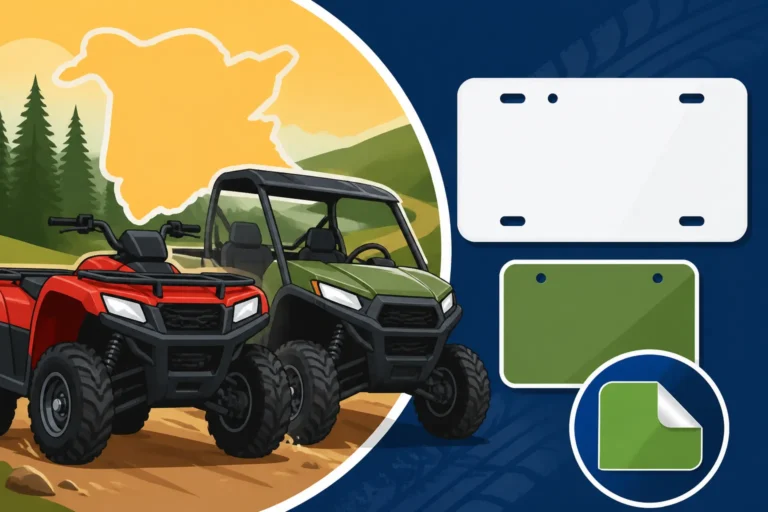
- Issuance of Registration and Plate: Once everything is processed and payments are made, you'll receive your official Certificate of Registration and your new New Brunswick ORV licence plate. This plate will have a unique number and a sticker indicating the expiry year. The [New Brunswick ORV Registration Cost] is broken down, but know that the plate itself has a separate fee. Remember that [New Brunswick Registrations Expire December 31] of each year, regardless of when you register, so keep an eye on that expiry date for renewal.
- Placement of Plate and Sticker: You'll be advised on where to properly affix your licence plate and sticker on your side-by-side. Typically, the plate goes on the rear, clearly visible, and the sticker often goes on the left-hand side of the front fender. Proper placement is crucial to avoid issues with enforcement officers on the trails.
The whole process, assuming you have all your documents, usually takes under an hour, depending on wait times. It might seem like a lot, but ticking off these boxes means you’re ready for the fun part: riding!
Understanding Fees and Renewal for Side-by-Sides
Getting your side-by-side registered isn't just a one-time thing; it involves understanding the initial costs and the ongoing commitment of annual renewals. Many riders, especially those new to New Brunswick, can be surprised by the fee structure or forget the universal renewal date. Let's break down what you can expect to pay and how to keep your registration current year after year.
Initial Registration Fees and Taxes
When you first register your side-by-side, you'll encounter a few different financial components. Firstly, there's the basic registration fee itself. In New Brunswick, side-by-sides are generally treated similarly to ATVs for registration purposes. The fee is set by the province and can change, so it's always best to check the Service New Brunswick website for the most up-to-date figures. This fee covers the administrative cost of putting your machine on the provincial registry. Additionally, you'll pay a small fee for the physical licence plate itself.
Beyond these registration fees, the most significant cost will likely be the Harmonized Sales Tax (HST). If you purchased your side-by-side from a licensed dealer, you'll pay HST on the full purchase price at the time of registration. If you bought your machine through a private sale, you'll still be required to pay the provincial portion of the HST. This tax is typically calculated based on the purchase price stated on your bill of sale or the recognized market value (often referred to as "Red Book value"), whichever is higher. This prevents people from writing an artificially low price on a bill of sale to avoid taxes. It's a key point of discussion when registering after a private sale, and understanding [New Brunswick Tax on a Private ATV Sale] is essential to avoid surprises.
Annual Renewal Process
This is where many riders get caught out. Unlike some other vehicle registrations that might expire on your birthday, all off-road vehicle registrations in New Brunswick expire on December 31st, every single year. This universal expiry date means that regardless of whether you registered your side-by-side in January or November, you'll need to renew it before the end of December to remain legal for the following year. It's a system designed for simplicity, but if you're not used to it, it's easy to forget! This is why [New Brunswick Registrations Expire December 31] is such a critical piece of information for all ORV owners.
Fortunately, renewing your registration is much simpler than the initial process. You have several convenient options:
- Online Renewal: Many riders find it easiest to renew their registration online through the Service New Brunswick website. This typically requires your current registration information and a valid credit card. It’s quick, convenient, and you can do it from the comfort of your home. If you're tech-savvy, this is a great option. [New Brunswick Renewal Online] is a fantastic resource.
- Phone Renewal: You can also renew your registration over the phone. Service New Brunswick provides a dedicated line for this service, allowing you to speak with an agent and process your payment. This is ideal if you have quick questions or prefer a human touch. Learn more about [New Brunswick Renewal by Phone].
- In-Person at Service New Brunswick: If you prefer, or if you have other transactions to complete, you can always visit a Service New Brunswick centre in person to renew. Just remember to bring your previous registration certificate.
Upon renewal, you'll receive a new registration certificate and a new decal (sticker) to place on your licence plate, indicating the new expiry year. It's crucial to replace the old sticker promptly to clearly show that your registration is current. Failing to renew means your side-by-side is technically unregistered, exposing you to fines if you're caught riding it on public trails. Don't let a lapse in renewal keep you from enjoying your machine!
Special Situations: Buying Used, Inheriting, or Importing
While the standard registration process covers most scenarios, life isn't always straightforward. Sometimes, you acquire a side-by-side in a less conventional way, leading to questions about how to get it officially registered. Whether you're buying from a friend, dealing with an estate, or bringing a machine in from outside the province, there are specific steps and documents you'll need to consider.
Registering a Used Side-by-Side After a Private Sale
This is a very common scenario, and it introduces a few nuances compared to buying new from a dealer. As discussed earlier, the bill of sale becomes your primary proof of ownership. It absolutely must be comprehensive and contain all the details of the transaction, including the VIN, purchase price, and signatures of both buyer and seller. Without a clear bill of sale, you could run into significant delays or even be unable to register the machine at all. Imagine buying a beautiful used side-by-side on a handshake, only to be told at Service New Brunswick that you can't prove you own it – a truly frustrating situation that highlights the importance of documentation.
It’s also wise to consider a record search before finalizing a private sale. This can help you determine if there are any liens against the machine or if it has been reported stolen. While Service New Brunswick offers services like a [New Brunswick Record Search at $8], it's an important step to protect yourself from unforeseen issues with the machine's history. Once you have a valid bill of sale, the process largely mirrors new registrations, including the payment of provincial HST on the purchase price or market value. Being thorough upfront saves a lot of heartache down the line.
Inheriting a Side-by-Side
Receiving an ORV as part of an inheritance can be a lovely gesture, but the registration process requires specific documentation to ensure a legal transfer of ownership. A simple will stating you inherit the machine might not be enough on its own. You'll likely need:
- Probate Documents: If the estate went through probate, the official court documents proving you are the legal beneficiary or executor with authority to transfer assets will be required.
- Death Certificate: A copy of the deceased owner's death certificate.
- Affidavit of Ownership: In some cases, if the estate is small and didn't go through full probate, Service New Brunswick might accept an affidavit signed by yourself and perhaps a witness, attesting to your legal right to the machine.
This process is about establishing a clear chain of custody from the previous owner to you, bypassing a traditional bill of sale. It’s a situation that often requires patience and clear communication with Service New Brunswick staff, as they will need to verify the legal transfer of assets. Dealing with the loss of a loved one is already difficult, so understanding the requirements for [New Brunswick Registration After the Owner Dies] can at least simplify the administrative side of things.
Registering an Imported Side-by-Side
Bringing a side-by-side into New Brunswick from another province or country presents its own set of hurdles. If you're moving from another Canadian province, you'll need the equivalent of a bill of sale or previous registration from that province, along with your new New Brunswick identification and proof of address. The machine will need to pass any necessary provincial inspections, if applicable, although this is less common for ORVs than for road vehicles.
Importing a machine from outside Canada, particularly from the United States (e.g., Maine), is significantly more complex. You’ll need to navigate customs procedures and obtain specific documentation that proves the machine has been legally imported and all duties and taxes have been paid. This includes:
- Customs Import Form: Typically, you’ll need a copy of the Canada Border Services Agency (CBSA) Form 1 (B3) or equivalent, proving the vehicle cleared customs.
- Recall Clearance: Depending on the age and origin of the machine, you might need to prove it meets Canadian safety standards and has no outstanding recalls. This often involves contacting the manufacturer directly.
- Original Title/MSO: The original title or Manufacturer’s Statement of Origin from the country of origin.
These steps ensure that the machine is legally allowed in Canada and New Brunswick. Failing to properly import an ORV can lead to serious complications, including seizure of the machine. It’s always best to consult with CBSA and Service New Brunswick directly before attempting to import a side-by-side to understand the exact requirements for [New Brunswick Registration for an Imported Machine].
Beyond Registration: Insurance and Safety Courses
Getting your side-by-side registered is a huge step, but it's not the final one before you can truly enjoy the New Brunswick trails. To be a responsible and legal rider, you also need to think about insurance and, for many, completing a recognized safety course. These additional requirements are put in place not just for your protection, but for the safety of everyone sharing the trails and the sustainability of our riding community.
Mandatory Insurance for Trail Riding
This is a big one, and it's something that often catches new riders off guard: New Brunswick requires liability insurance for any off-road vehicle operated on organized trails or Crown land. This isn't just a suggestion; it's a legal mandate. Imagine you're out on a trail ride, and through no fault of your own, another rider has an accident involving your machine. Or, heaven forbid, you're involved in a mishap that causes damage to property or injury to another person. Without liability insurance, you could be personally responsible for significant financial damages.
The requirement for insurance aims to protect all users of the trail system. It ensures that if an accident occurs, there's a mechanism to cover damages and injuries, preventing devastating financial burdens. When you get your insurance, you'll need to carry proof of it with you on the machine. This can be a physical card or, increasingly, a digital copy on your phone. Officers conducting checks on the trail will often ask for both your registration and proof of insurance. Don't be caught without it; [New Brunswick Requires Insurance on Trails] is a fundamental rule for responsible riding. Remember, your regular car insurance policy typically won't cover your off-road vehicle, so you'll need a specific ATV/UTV policy.
Off-Road Vehicle Safety Courses
While not always mandatory for adult riders to register their machine, completing an approved off-road vehicle safety course is highly recommended for everyone, and it is mandatory for specific age groups. New Brunswick has a strong emphasis on rider safety, and these courses are designed to equip you with the knowledge and skills needed to operate your side-by-side safely and responsibly.
For young riders (typically under 16), a safety course is often a prerequisite for operating an ORV on public lands or trails, sometimes alongside requirements for adult supervision and specific licensing, like a Class 9 licence. Even if you're an experienced adult, taking a course can refine your skills, update you on best practices, and teach you about specific New Brunswick regulations you might not be aware of. Topics often include:
- Pre-ride inspections
- Safe operating techniques (turning, braking, hill climbing)
- Environmental considerations
- Trail etiquette
- Understanding the Off-Road Vehicle Act
Many courses are offered by certified instructors through various organizations, including some ATV clubs. There might even be rebates or discounts available for members of the provincial federation. Beyond the legalities, consider it an investment in your safety and enjoyment. It's about being prepared for anything the trail throws your way. You can learn more about what's covered in a [New Brunswick Quad Safety Course Explained] to see how it can benefit you.
Common Hurdles and How to Overcome Them
Even with all the right information, the registration process can sometimes throw a curveball. From missing papers to unclear ownership, these hurdles can be frustrating and delay your plans to hit the trails. Understanding the most common issues and how to tackle them can save you a lot of time and stress.
Missing or Incomplete Paperwork
This is by far the most frequent issue. You get to Service New Brunswick, confident you have everything, only to find out your bill of sale is missing the VIN, or you don't have adequate proof of address.
- Solution: Before you leave home, create a physical checklist and double-check every item. For the bill of sale, ensure it includes the full names and addresses of both parties, the date, a clear description of the side-by-side (make, model, year), the VIN, the purchase price, and both signatures. If you're buying privately, strongly consider using a standardized template, perhaps from LawDepot, to make sure no crucial detail is overlooked. If you realize something is missing after the fact, you'll need to contact the previous owner to get it rectified. This is much easier if you maintain a good relationship. For proof of address, bring multiple documents (e.g., driver's licence, utility bill, bank statement) if your ID doesn't show your current address. This prepares you for any specific requirements the clerk might have.
Discrepancies in VIN or Machine Information
Sometimes, the VIN on your bill of sale might not perfectly match the VIN stamped on the machine, or the year/model could be off. This can happen due to typos or misunderstandings during the sale.
- Solution: Always verify the VIN on the machine itself against any paperwork before you complete the purchase. Take a photo of the VIN with your phone. If you discover a discrepancy during registration, you'll likely need to get the bill of sale corrected by the seller. If the VIN is obscured, damaged, or unreadable, this presents a more serious problem. Service New Brunswick may require a special inspection to verify the machine's identity, which can be a lengthy process. It's a situation to avoid at all costs, so verify, verify, verify! [Serial Numbers and Where to Look for Them] can help you find the right numbers.
Previous Owner Issues
Occasionally, you might find that the previous owner never properly registered the machine themselves, or there's a lien (a legal claim) against it that you weren't aware of.
- Solution: This is why a record search is so important when buying used. For a small fee, Service New Brunswick can provide details about the machine's registration history and any recorded liens. If you discover a lien, do not purchase the machine until that lien is officially cleared by the seller. You could end up buying a machine that legally belongs to someone else (like a bank or finance company). If the machine was never registered by the previous owner, and you have a solid bill of sale, you might still be able to register it, but it emphasizes the importance of a clear paper trail from the original purchase. Always ask for the previous registration certificate, if available, as it can simplify the transfer.
Language Barriers or Misunderstandings
New Brunswick is a bilingual province, and while Service New Brunswick staff are trained to assist in both English and French, sometimes specific terminology or nuances can cause confusion.
- Solution: Don't hesitate to ask for clarification if something isn't clear. If you're more comfortable in one language, state that upfront. Service New Brunswick aims to provide accessible service to everyone. Having a friend or family member who is fluent in both languages accompany you can also be helpful if you anticipate complex questions or discussions. Remember, the goal is to get your machine legally registered, and clear communication is key to that success.
Getting Out and Riding: What Comes Next
With your side-by-side officially registered, insured, and with any necessary safety courses under your belt, the real fun can finally begin! New Brunswick boasts an incredible network of trails, offering endless opportunities for exploration and adventure. But even with all your paperwork in order, there are still a few final considerations to ensure every ride is safe, enjoyable, and compliant with local regulations.
Proper Placement of Registration and Plate
Once you receive your physical licence plate and registration sticker, it's crucial to affix them correctly. The licence plate for your side-by-side typically mounts on the rear of the machine, where it is clearly visible. This allows enforcement officers and other riders to easily identify your machine. The registration sticker, indicating the current year of validity, is usually placed on the left-hand side of your front fender. This placement is not arbitrary; it's specified to ensure consistency and visibility.
It's tempting to just stick it anywhere, but proper placement prevents you from being cited for an improperly displayed plate or sticker. A faded, dirty, or improperly placed sticker could lead to questions, even if your registration is valid. Take the time to clean the area before applying the sticker to ensure it adheres well and lasts through all kinds of weather. Checking your [New Brunswick Plate Placement on a Quad] will give you visual guidance. Remember, you'll also need to keep your registration certificate on your person or securely on the machine whenever you ride. [Keeping a Copy of the Registration on the Machine] is a standard practice and is often required during a trail check.
Understanding Trail Permits and Local Bylaws
While registration and insurance cover the provincial legalities, accessing many of New Brunswick's phenomenal trails requires a trail permit. The QuadNB Federation manages over 10,000 kilometres of trails across the province, and these trails are maintained by volunteer clubs. Purchasing a QuadNB trail permit is not just about accessing these trails; it's also a membership that supports the vital work these clubs do in grooming, signing, and repairing the network.
There are different types of permits (groomed, non-groomed, youth, day, week), so choose the one that best fits your riding habits. Always check the QuadNB website or app for current trail conditions and closures before you head out, especially after heavy rain or during the spring thaw. Beyond the main trail network, remember that some municipalities might have local bylaws governing where and when you can operate your side-by-side within their boundaries. [New Brunswick Towns That Allow Quads] often have specific routes or times. It’s always a good idea to do a quick check on local bylaws if you plan to ride in or near a populated area.
Preparing for Your First Ride
Finally, with all the administrative tasks behind you, it's time to prepare for the sheer joy of riding your side-by-side! Before you embark on your first adventure, make sure you're geared up for safety and comfort. This includes wearing a helmet that meets recognized safety standards (like CSA, DOT, or Snell), protective eyewear, gloves, long pants, and sturdy footwear. [New Brunswick ATV Helmet Law] is quite strict, applying to every occupant.
Do a quick pre-ride inspection of your machine: check tires, fluid levels, brakes, lights, and steering. Pack essentials like a first-aid kit, a small toolkit, a map (physical or digital), water, and snacks. And most importantly, ride within your limits, respect the trails, and be mindful of other users. Our province offers an incredible playground for side-by-side enthusiasts, and by following all the rules and being prepared, you can ensure every ride is memorable for all the right reasons.
Disclaimer
This article is for general informational purposes only and does not constitute professional advice. Laws, prices and regulations vary by location and change over time. Consult a qualified professional for guidance on your specific situation.