The First Province-to-State Trail Agreement With Maine
A trail agreement between New Brunswick and Maine can make a cross-border ATV ride easier, but it does not mean every permit, machine or route is automatically covered. The practical question is what your permit allows on the other side and what paperwork you still need. Here’s how to think through the agreement and check the details before setting out.
What the New Brunswick–Maine trail agreement means
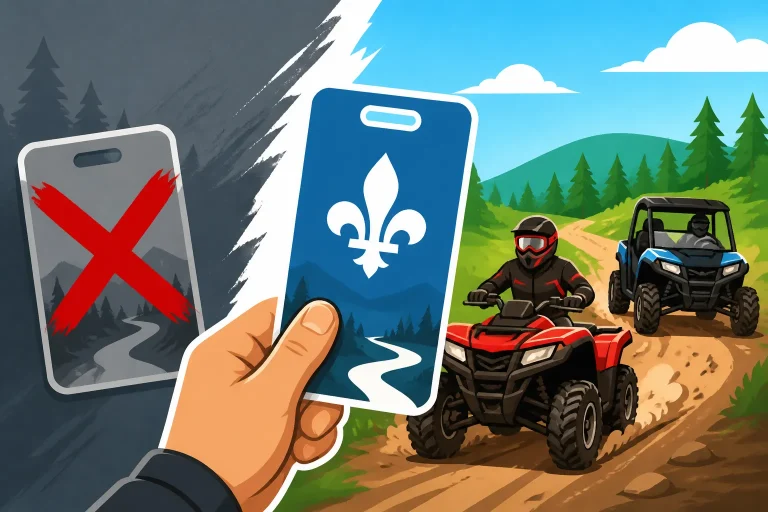
The agreement is described as the first province-to-state trail agreement of its kind. Its purpose is to support trail access between New Brunswick and Maine for eligible riders, connecting two places with established off-road riding networks.
The useful takeaway is that a rider may be able to use a qualifying trail permit from one side of the border to access certain trails on the other. That is different from having unrestricted access to every trail, road or piece of land. The agreement’s current terms, eligible permits and participating trail areas matter.
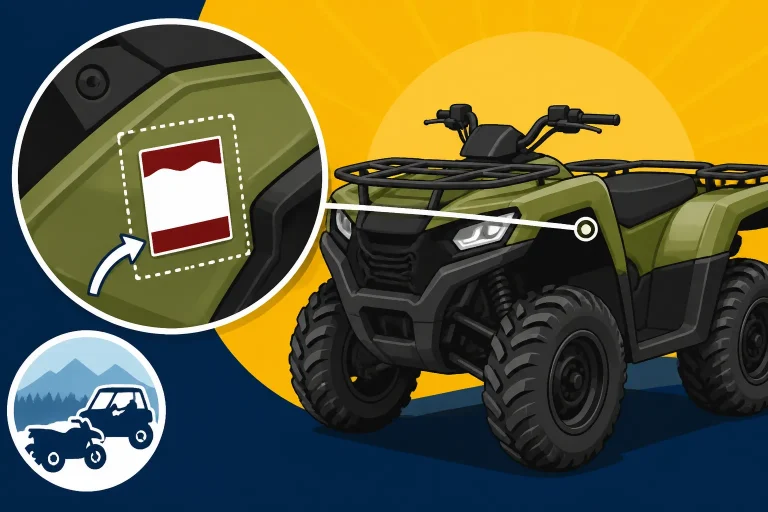
Reciprocity is also separate from vehicle registration. A trail permit or sticker is not a substitute for registering the machine where registration is required. Registration, trail access and insurance each serve a different purpose. For the New Brunswick side, New Brunswick Registration and the Trail Permit explains that distinction.
| Question | What to check before riding |
|---|---|
| Does the agreement apply to my permit? | Confirm the permit type, issuing organization and dates it covers. |
| Which trails are included? | Check current trail maps and local access notices on both sides of the border. |
| Does my machine qualify? | Verify that the agreement covers your type of off-road vehicle. |
| Is my machine properly registered? | Check the registration rules for the place where it is registered and where you plan to ride. |
| Do I have the required insurance? | Confirm coverage for the machine, rider and planned route. |
| Are there local restrictions? | Check seasonal closures, trail conditions and local rules for each area. |
Do not assume that a reciprocal permit gives permission to ride on private property, unmarked routes or roads that are otherwise closed to off-road vehicles. Trail access applies only where the responsible organization or land manager permits it. For New Brunswick permit details, see New Brunswick Riders Visiting Maine and New Brunswick Trail Permits for 2026 and 2027.
Reciprocity is not the same as unrestricted access
A permit arrangement can simplify access without removing the conditions attached to the trails. A trail may be closed for maintenance, weather, seasonal restrictions or land-access reasons. A local club may also post directions or restrictions that affect how riders use a corridor.
Treat the agreement as a way to clarify whether a permit is accepted, not as a promise that a whole region is open. Before riding, check the official permit information and the trail organization’s current notices. If the agreement’s status or terms are unclear, ask the organization that issued your permit rather than relying on an old sticker, map or social media post.
How to prepare for a cross-border ride
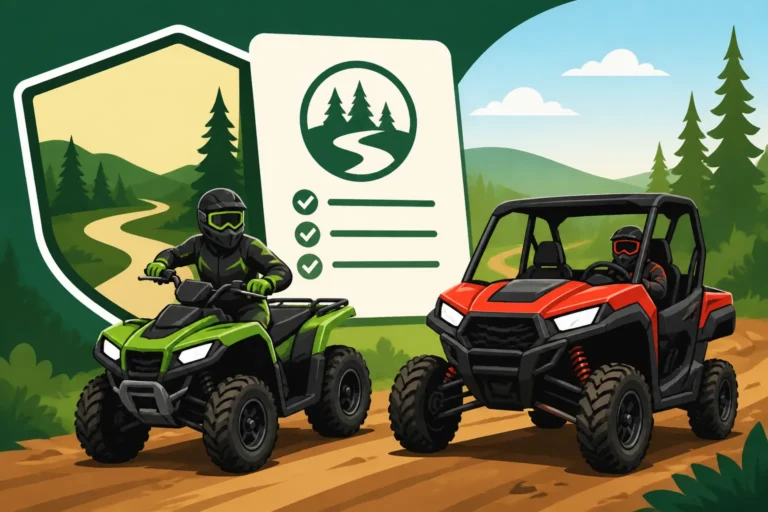
A little checking before departure can prevent a long trip ending at a trailhead where your permit is not accepted or your route is closed. Use this process before you travel.
-
Confirm the agreement is currently in effect. Reciprocity arrangements can be updated, suspended or changed. Check with the relevant New Brunswick and Maine trail organizations for current terms rather than assuming that an earlier announcement still applies.
-
Identify the permit you hold. Note who issued it, what type it is, and the period for which it is valid. If the agreement distinguishes between permit types, make sure yours qualifies. The page on New Brunswick Permit Equals Membership can help clarify what a New Brunswick trail permit represents on its own side of the border.
-
Check the specific trail area. Find out whether the trails you plan to use participate in the arrangement. Look for closures, seasonal limits, detours and access instructions. A trail map is useful for planning, but it may not show every temporary change. New Brunswick Trail Maps and the MapGear App and New Brunswick Trail Conditions Before You Go are useful starting points for New Brunswick route planning.
-
Review your machine’s registration and documents. Carry the documents required for your situation, and make sure the vehicle identification details are clear and consistent. A trail permit does not prove that the machine is registered. Riders new to the process can review New Brunswick Documents You Must Carry and New Brunswick Registration for a Visiting Rider.
-
Verify insurance for the full trip. Ask your insurer whether your policy covers the machine while riding in the destination state, including on the type of trail you intend to use. Do not treat permit reciprocity as insurance reciprocity. The coverage question is explained further in New Brunswick Insurance Requirements for Riders.
-
Check rider and machine rules at the destination. Requirements can differ between jurisdictions and may depend on the road, trail or land involved. Confirm rules for helmets, passengers, age, licensing, equipment and any road crossings you may encounter.
-
Save proof of the information you checked. Keep a copy of permit terms, maps, confirmation messages and any relevant registration or insurance documents where you can access them. If you ride with a group, make sure each rider knows what they personally need to carry.
For Maine-specific preparation, New Brunswick Riders Visiting Maine focuses on the outbound trip. Riders coming the other way can use New Brunswick Visitors From Maine to review the New Brunswick side.
Ask a precise question when terms are unclear
A general question such as “Is my permit good in Maine?” may not get a complete answer. Instead, give the organization the details that determine eligibility: the permit issuer, permit type, date range, machine type and the trail area you intend to ride. Ask whether the arrangement covers that combination and whether there are any additional steps.
If you are travelling with several machines, confirm the permit situation for each one. One rider’s valid sticker or membership should not be assumed to cover a companion’s machine. Likewise, do not assume that a rental machine is covered by the same arrangements as a privately owned one; the rental operator should explain what permits and documents are supplied and what remains the rider’s responsibility.
What the agreement does not replace
Cross-border reciprocity is about trail access under stated terms. It does not automatically override other rules or requirements.
- Vehicle registration: Registration remains a separate requirement. Confirm where and how the machine must be registered, and keep the appropriate proof with you.
- Insurance: Check that the policy applies to your trip and location. A trail permit is not evidence of insurance.
- Safety requirements: Helmet, age, passenger and equipment rules still apply. Check the rules that govern the exact place where you ride.
- Road-use rules: Trail access does not automatically authorize riding on public roads. Road use and crossings have their own restrictions and may depend on local permissions.
- Landowner permission: A reciprocal permit does not grant access to private property or a closed trail.
- Local closures and conditions: Weather, maintenance, land access and seasonal restrictions can affect a route even when the permit itself is valid.
The same distinctions matter for riders arriving in New Brunswick. A visitor should check whether their permit is accepted, but also verify registration, insurance and local riding rules. For a broader view of the process, see New Brunswick Registration Compared to Maine.
Planning a safer, more predictable trip
Build your route around confirmed trail access rather than assuming the border agreement covers a continuous corridor. Mark your intended trailheads and fuel stops, check whether the route has open sections on both sides, and allow time for detours. If your ride depends on crossing a particular border point or reaching a specific trail system, confirm access directly with the relevant organization before leaving.
Carry the documents and permit proof that apply to you, and make sure other riders in the group do the same. Store copies somewhere accessible if a paper document is damaged or misplaced. For a remote ride, plan for limited phone service and share the route and expected return time with someone who is not riding.
It also helps to have a backup plan. If a trail is closed or your permit does not qualify under current terms, use an approved route or postpone that part of the ride. Do not try to work around a closure by cutting across private land or using an unapproved road connection. A short call before the trip is far easier than resolving an access problem at the trailhead.
The agreement is most useful when riders treat it as a practical bridge between two trail systems, not as a blanket exemption from local requirements. Confirm that it is active, check that your permit and machine qualify, and verify the route, insurance and paperwork. Those steps make it much more likely that a cross-border ride starts on the trail rather than with an avoidable dispute about access.
Disclaimer
This article is for general informational purposes only and does not constitute professional advice. Laws, prices and regulations vary by location and change over time. Consult a qualified professional for guidance on your specific situation.