Why the Quebec Deal Ended
The Quebec reciprocity deal once let some ATV riders cross the provincial boundary without arranging a separate trail permit. It ended in May 2023, leaving riders unsure whether an existing sticker still covers them. The practical answer is to treat New Brunswick and Quebec as separate permit systems, confirm the current rules for your destination, and buy the required permit before riding.
What the Quebec reciprocity deal did
Reciprocity is an agreement between trail organizations or jurisdictions to recognize each other’s permits under specified conditions. For riders, the benefit is straightforward: a permit bought for one trail network may also be accepted on an eligible network across the border, so a second permit is not needed for that ride.
New Brunswick had a reciprocal arrangement connected with Quebec’s Fédération québécoise des clubs quads, commonly referred to as the FQCQ. While the arrangement was in force, it provided a way for eligible permit holders to ride across the provincial boundary under the agreement’s terms. That is different from a general rule saying that every sticker, registration or insurance policy from one province automatically works in another.
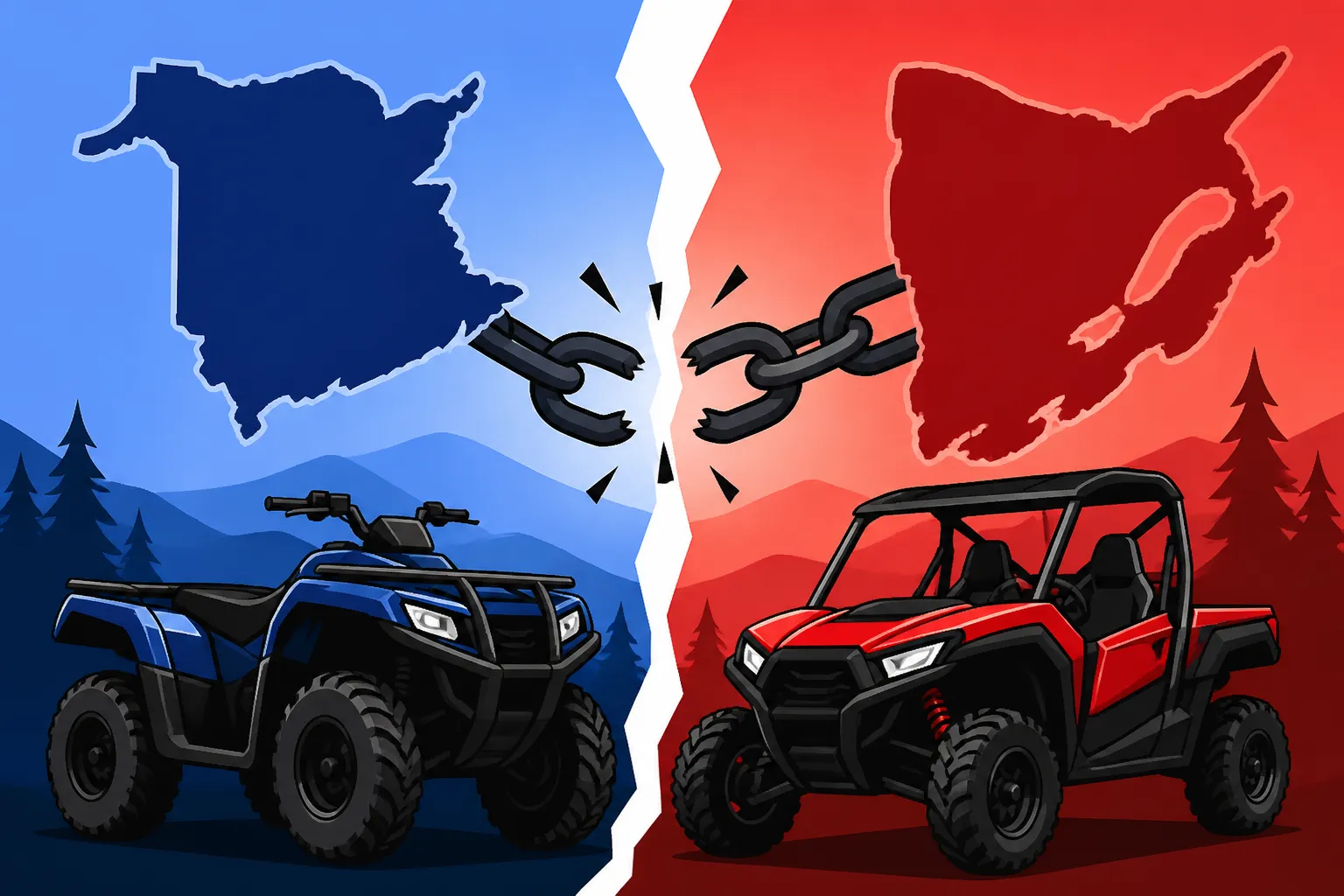
The arrangement ended in May 2023. The important consequence is that riders should not assume a New Brunswick trail permit is accepted on Quebec trails, or that a Quebec permit is accepted on New Brunswick trails. Each province’s trail organization sets its own permit requirements, and recognition depends on an active agreement—not simply on the fact that the rider has a valid permit at home.
| Before the agreement ended | After it ended |
|---|---|
| Eligible riders could rely on the reciprocal arrangement, subject to its conditions. | Riders should plan on needing the destination province’s trail permit. |
| One permit could provide access across the border under the agreement. | A permit valid in one province does not, by itself, establish access in the other. |
| Riders still had to follow local trail rules and carry required documents. | Riders still have to follow local trail rules and carry required documents, with separate permit arrangements. |
This change concerns trail access. It does not replace or determine vehicle registration, insurance, road-use rules, or other requirements that may apply to a ride. A machine can be registered in New Brunswick and still need a Quebec trail permit to use Quebec trails. Likewise, having a trail permit is not a substitute for registering or insuring a machine where those requirements apply.
For an overview of the change, see New Brunswick Ended Quebec Reciprocity and New Brunswick’s Ended FQCQ Agreement. If you are working out what applies to a particular trip, New Brunswick Riders Visiting Quebec covers the visitor side of the question.
Why the deal ended—and what riders can confirm
The careful answer to “why did the deal end?” is that the agreement ceased to apply, but riders should not treat speculation about the organizations’ internal discussions as confirmed fact. The end date explains when the rules changed; it does not, on its own, establish a detailed public reason, such as a disagreement over fees, enforcement, insurance or trail maintenance.
Reciprocal arrangements need participating organizations to agree on the terms and continue recognizing each other’s permits. Those terms can involve how permits are identified, which trail types are covered, how access is checked, and what happens when a rider does not meet local requirements. If the organizations no longer have an active agreement, riders cannot rely on the old arrangement, even if their sticker has not expired at home.
That distinction matters because the word “reciprocity” can make the change sound broader or more mysterious than it is. The practical issue is not whether a New Brunswick permit is legitimate in New Brunswick, or whether a Quebec permit is legitimate in Quebec. It is whether the destination’s trail network currently recognizes the permit from the rider’s home province. After the agreement ended, riders should get that answer from the relevant trail organization before setting out.
Avoid relying only on an old forum post, a saved screenshot, an outdated map, or what another rider remembers from a previous season. Those may describe the former arrangement accurately but still give the wrong answer for a later trip. Check the current permit information from the organization responsible for the trails you intend to use, and ask specifically whether your home-province permit is accepted for those trails.
The end of one reciprocal deal also does not establish a general rule about every other province or state. Agreements can differ by destination and change independently. For example, the answer for a Quebec trip should not be inferred from information about New Brunswick Reciprocity With Nova Scotia or another border arrangement.
If you need the exact reason behind the organizations’ decision, look for a current statement from the organizations involved. If no detailed explanation is available, the reliable takeaway for trip planning remains the same: the previous recognition should not be assumed to continue.
What New Brunswick riders need to do before riding in Quebec
If you ride a New Brunswick-registered ATV or UTV in Quebec, separate the machine’s legal paperwork from trail access. Registration identifies the machine for the purposes of the applicable registration rules. Insurance addresses a different obligation. A trail permit is permission to use the relevant managed trail network under its conditions. Having one does not automatically satisfy the others.
Before travelling, use this checklist:
- Identify the trails and organization you plan to use. A destination may include trails managed under different arrangements, so confirm that the information applies to your planned route.
- Ask whether a New Brunswick permit is currently accepted. Do not rely on the former FQCQ agreement or assume that an old sticker continues to provide access.
- If a separate Quebec permit is required, arrange it before the ride. Confirm the current process, the permit type that fits your plans, and any machine or rider conditions directly with the relevant organization.
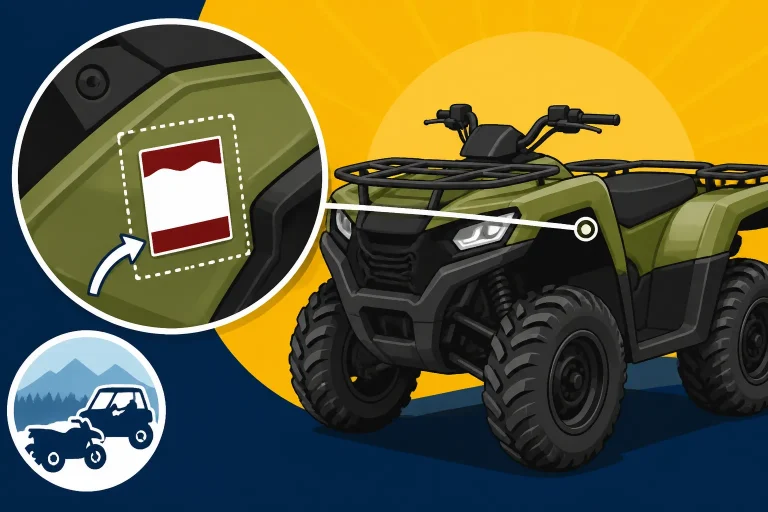
- Check the permit’s conditions. Confirm where it must be displayed, what documents riders need to carry, and whether any additional requirements apply.
- Review local riding rules. Permits do not override requirements for insurance, helmets, safety training, road use, or rider eligibility.
- Keep proof accessible. Bring the permit confirmation and any registration or insurance documents required for the trip, whether in the form accepted by the relevant authority or trail organization.
For practical permit planning, New Brunswick Riders Need a Quebec Permit is a useful companion. New Brunswick permit types are explained in New Brunswick Groomed vs Non-Groomed Permits, and the buying process is covered in How to Buy a New Brunswick Trail Permit. Those New Brunswick resources can help you prepare at home, but they do not replace Quebec’s current instructions for riding there.
Do not assume that buying a permit for one province makes it transferable to a machine, person or trip in another province. The rules can depend on the permit’s terms. Ask before you buy if you are carrying a borrowed machine, taking a second machine, or arranging a group ride. The same caution applies if you plan to cross the border during a multi-day trip: verify which permit covers each section of the route rather than relying on a single sticker to cover everything.
What Quebec riders need to do in New Brunswick
The same basic principle applies in the opposite direction. A Quebec rider should not assume that a Quebec trail permit covers New Brunswick trails now that the reciprocal agreement has ended. Confirm New Brunswick’s current permit requirements and obtain the appropriate permit before using trails here, unless the responsible organization explicitly confirms an applicable exception.
Quebec visitors should also check New Brunswick requirements beyond the trail sticker. Depending on the machine and circumstances, registration, insurance, rider qualifications and documents may be relevant. A visitor’s status does not automatically remove those obligations. For New Brunswick’s trail rules, start with New Brunswick Trail Permits for 2026 and 2027 only if its information remains current, and confirm any change with the permit issuer before travel.
If you are hosting Quebec riders, send them current permit information rather than forwarding an old message about reciprocity. It is especially helpful to clarify who is responsible for arranging each permit, which machines it applies to, where it must be displayed, and which documents each rider should carry. For an overview of documentation for a ride in New Brunswick, see New Brunswick Documents You Must Carry.
A short pre-trip confirmation can prevent an expensive or frustrating surprise at a trail entrance. Ask the trail organization or permit issuer:
- Is the permit from my home province accepted on the trails I plan to ride?
- If not, which permit should I buy, and how do I obtain it?
- Does the permit cover each machine in my group?
- What must I display or carry while riding?
- Are there other requirements for visitors or for the specific trail area?
The end of the Quebec deal does not mean New Brunswick riders can never ride in Quebec, or that Quebec riders cannot use New Brunswick trails. It means riders should make separate arrangements rather than treating the former agreement as ongoing. Confirm the destination’s current permit rules, follow the applicable local requirements, and keep proof available for the trip.
Disclaimer
This article is for general informational purposes only and does not constitute professional advice. Laws, prices and regulations vary by location and change over time. Consult a qualified professional for guidance on your specific situation.