Riding Nova Scotia on a QuadNB Sticker
A QuadNB sticker can make a Nova Scotia ride simpler, but it does not automatically settle every permit, registration or access question. The key is to confirm that reciprocity applies to your permit and planned trail, then carry the documents and equipment you would need for a cross-border ride.
What a QuadNB sticker means in Nova Scotia
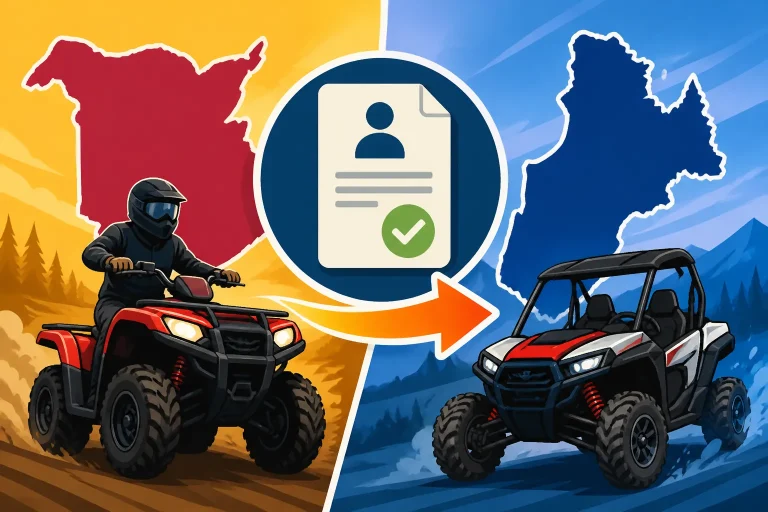
New Brunswick and Nova Scotia have a trail-permit reciprocity arrangement. In practical terms, a valid QuadNB trail permit may be accepted for eligible riding in Nova Scotia, so you may not need to buy a separate Nova Scotia trail pass for the same trip. The arrangement is about trail access; it is not a general permission to ride anywhere in the province.
Before you travel, check that the reciprocity arrangement is still in effect and that your particular permit qualifies. Permit options and conditions can vary, and an arrangement between trail organizations does not necessarily cover every machine, property or route. Start with the current information from QuadNB and the Nova Scotia trail organization, then confirm any local conditions with the club responsible for the route you want to ride. New Brunswick Reciprocity With Nova Scotia explains the New Brunswick side of the arrangement.
The sticker is evidence of a trail permit, not proof that your ATV or side-by-side is registered, insured or legally allowed on every road. Those are separate questions. A trail permit does not replace your vehicle registration, and it does not turn a public road, private road or closed trail into an authorized route.
| What you have | What it generally helps show | What it does not prove by itself |
|---|---|---|
| QuadNB trail sticker | That you hold a trail permit that may be recognized through reciprocity | That every Nova Scotia trail is open to you |
| Vehicle registration certificate | That the machine is registered as required | That you have a valid trail permit |
| Proof of insurance | That the machine has insurance coverage | That the coverage meets every requirement for your trip |
| Rider documents | That you can meet applicable age, licence or course requirements | That a trail or road is open to ATV use |
Treat reciprocity as a way to avoid unnecessary duplicate permitting, not as a substitute for trip planning. It is sensible to have a backup plan if the local club says a section is closed, the route requires something beyond the reciprocal permit, or the permit type you hold is not accepted.
Check the permit before you cross the border
Look at the sticker and any related permit record before departure. Confirm that it is valid for the riding period, belongs to the machine you intend to take, and is mounted as required. If you are unsure which permit type you bought or whether it is eligible, ask QuadNB or the issuing club rather than relying on an old sticker or someone else’s past experience.
Permit placement matters because a sticker that is missing, obscured or attached in the wrong place can be difficult to verify. Review New Brunswick Permit Placement on a Machine before setting out, and check the Nova Scotia organization’s instructions for any additional display requirements.
If you are planning to ride with a rented, borrowed or newly purchased machine, clarify who obtained the permit and which machine it covers. Do not assume that a sticker on one ATV can simply be moved to another. Ask the permit issuer before changing machines, and ask the rental operator if you are using a rental. A permit transfer may be restricted or require a new purchase; the answer depends on the applicable terms.
Prepare the machine and documents for a cross-border ride
A reciprocal trail permit is only one part of being ready to ride. Your machine still needs to meet the registration and insurance requirements that apply to it, and you should be able to show relevant documents if asked. Rules can differ between jurisdictions, so confirm the requirements for both the machine’s home registration and the Nova Scotia riding area.
For an overview of the New Brunswick paperwork side, see New Brunswick Documents You Must Carry and New Brunswick Requires Insurance on Trails. The rules that apply to your particular machine and ride matter more than a general assumption that a trail sticker covers everything.
Carry proof, not just a sticker
Before leaving, gather the documents you may need and keep them protected from water and dirt. Depending on your situation, that may include:
- Registration or ownership documents for the machine
- Proof of insurance
- The trail permit information associated with the sticker
- Identification and any required rider licence or safety-course documentation
- Permission or rental paperwork, if someone else owns the machine
Check the documents against the machine’s details. A certificate for another vehicle, a policy that does not cover the machine being ridden, or a permit tied to a different ATV can create problems even if the sticker looks valid. If you ride a borrowed machine, ask the owner whether the registration and insurance are current and whether you are covered to operate it.
Insurance deserves particular attention. A New Brunswick policy may have conditions about where the machine can be used, who may operate it, or what kinds of riding are covered. Contact the insurer before the trip if you are unsure whether coverage extends to Nova Scotia trail use. Do not infer coverage from the fact that a permit is accepted.
Your registration status also remains separate from trail access. If you recently bought the machine, changed ownership or brought it into New Brunswick from elsewhere, resolve any paperwork questions before travelling. New Brunswick Registration Compared to Nova Scotia can help clarify why registration and trail permission should be treated as separate issues.
Confirm that the route is actually open to ATVs
Reciprocity does not create access rights over land. A participating trail may be open to permitted ATV use, while a nearby road, connector or property is not. Trail networks can include sections managed by different clubs or landowners, and access may change because of maintenance, weather, construction or seasonal conditions.
Use current maps and notices from the organization responsible for the Nova Scotia trail. Check that your planned route is an ATV route rather than a snowmobile-only section, a hiking trail or a multi-use route with restrictions. If a route crosses private property, rely on the trail organization’s authorization, not a guess based on a visible track or an old map.
Also check for temporary closures and detours shortly before riding. A route shown on a map is useful for planning, but it cannot guarantee that every segment is passable or open on the day you arrive. New Brunswick Trail Conditions Before You Go offers a useful reminder to check local conditions rather than relying on a map alone.
Plan for the differences between the two provinces
A reciprocal permit does not make New Brunswick and Nova Scotia’s riding rules identical. Requirements for roads, rider age, helmets, equipment, passengers and designated routes may differ. Follow the rules that apply where you are riding, and ask the local trail organization if you are uncertain about an unfamiliar section.
In particular, do not treat a trail permit as permission to ride on a public road. Road access depends on local rules and the status of the specific road. If a route uses a road connection, confirm that ATV use is allowed there and understand any conditions before you follow it. Riding between two marked trail segments is not automatically permitted simply because both ends appear on a map.
The same caution applies to age and rider qualifications. If a young person is coming along, check the requirements that apply to that rider and machine in Nova Scotia, not only the requirements they follow at home. A parent or guardian should verify the rules before the trip, including any restrictions on operating, carrying passengers or crossing roads.
A practical pre-trip check
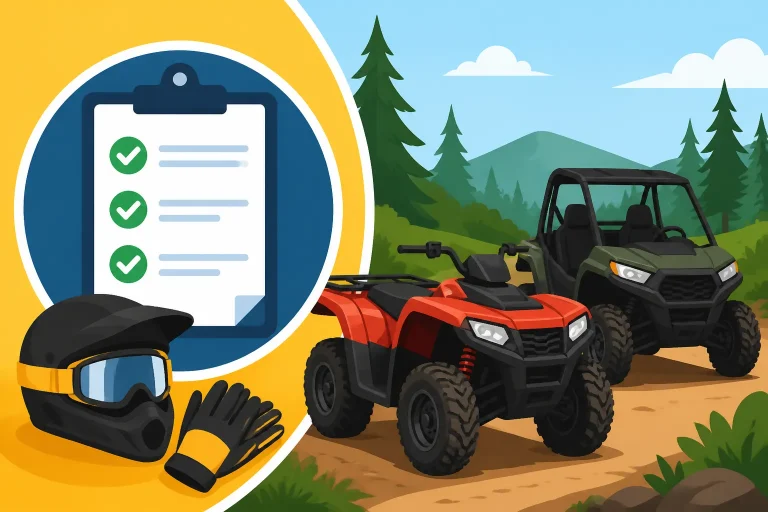
Use this sequence a few days before riding, then recheck closures and weather near departure:
- Confirm reciprocity. Check with QuadNB and the Nova Scotia trail organization that your permit is accepted for the planned ride and that no separate permit applies.
- Match the permit to the machine. Verify the permit’s validity, eligible machine and sticker placement. Ask the issuer if the machine has changed since the permit was purchased.
- Check registration and insurance. Confirm that the machine is properly documented and that the insurer covers the planned use in Nova Scotia.
- Review the route. Use current trail maps and club notices. Identify closed sections, road connections, fuel stops and a suitable place to park or unload.
- Check rider requirements. Confirm the applicable age, licence, safety-course, helmet and passenger rules for everyone in the group.
- Pack documents and essentials. Keep paperwork protected, and carry the equipment required for the ride and the conditions.
- Ask when something is unclear. Contact the local club, permit issuer, insurer or government office that handles the specific question instead of relying on an informal answer.
This check is especially useful for a first visit, a group trip or a ride involving several machines. It can also prevent a common misunderstanding: one rider may have a valid reciprocal permit while another person’s machine or permit is not covered by the same arrangement.
If your sticker is lost or hard to read
Do not assume that a damaged sticker will be accepted because you can show a purchase email or remember buying the permit. Contact the issuing organization and ask what proof it can provide and whether you need a replacement. Keep any confirmation with your other ride documents while you resolve the issue. For a New Brunswick permit, New Brunswick Permit Replacement If Lost covers the replacement question.
If an officer or trail representative asks to see your documents, stay calm and provide what you have. A clear explanation and supporting paperwork may help, but they are not a substitute for a valid permit or required documents. If you discover a problem before leaving home, sorting it out then is usually easier than trying to fix it at a trailhead.
The simplest rule is to think of reciprocity as one part of a cross-border checklist. A valid QuadNB sticker can help you access eligible Nova Scotia trails without buying a second permit, but you still need to verify the arrangement, the route, the machine’s paperwork and the local riding rules. When those pieces line up, you can plan around the actual trail network instead of assuming that the sticker alone answers every question.
Disclaimer
This article is for general informational purposes only and does not constitute professional advice. Laws, prices and regulations vary by location and change over time. Consult a qualified professional for guidance on your specific situation.