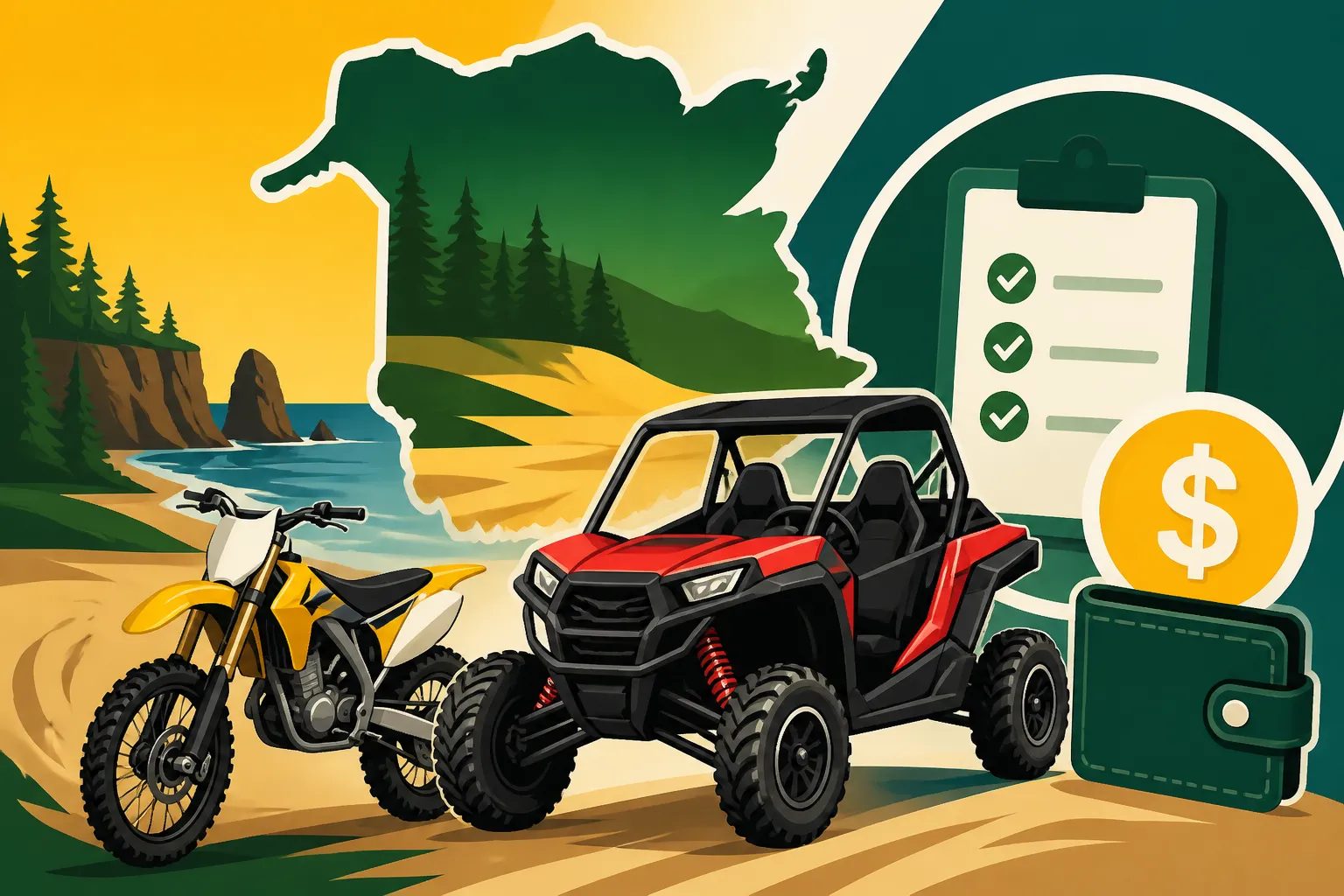
New Brunswick Dirt Bike and Dune Buggy Fees
It can be incredibly confusing to figure out exactly what you'll owe to get your dirt bike or dune buggy legally on the trails in New Brunswick. Many folks assume all off-road vehicles (ORVs) cost the same to register, leading to unwelcome surprises at Service New Brunswick. This guide will meticulously break down the specific fees associated with dirt bikes and dune buggies, clarify the registration process, and highlight other potential costs you might encounter, ensuring you're fully prepared.
Understanding the Different Types of Off-Road Vehicles in New Brunswick
Before we dive deep into the specific fees, it's really helpful to understand how New Brunswick categorizes these machines. The world of ORVs is vast and varied, from roaring dirt bikes to nimble ATVs and spacious side-by-sides. Each type serves a different purpose, and understandably, the provincial government has different ways of classifying them, which in turn affects what you pay to register them. This isn't just bureaucratic red tape; it's often tied to factors like trail impact, potential for road use, and even perceived risk, which influences the fee structure.
What Exactly is a Dirt Bike?
When we talk about a "dirt bike" in New Brunswick, we're generally referring to a two-wheeled motorized off-road vehicle designed specifically for unpaved terrain. Think about those agile machines zipping through mud, over jumps, and down winding forest trails. They typically have knobby tires for traction, long-travel suspension to absorb bumps, and a lightweight frame. They aren't designed for highway speeds or long-distance touring on pavement. For registration purposes, they usually fall under a distinct category from larger, multi-wheeled ORVs. This distinction is crucial because it directly impacts the annual registration fee you'll pay.
These machines are fantastic for adventurous riders who love the challenge of technical trails, hill climbs, and tight turns. They offer a unique riding experience that's quite different from a quad or side-by-side. Because of their design and typical use, they often have a different regulatory footprint, which is reflected in their registration costs and sometimes even in requirements like [New Brunswick Insurance Exemption for Dirt Bikes] when ridden solely on private land.
The Definition of a Dune Buggy (or Sand Rail)
Now, let's talk about dune buggies. While "dune buggy" might conjure images of sandy beaches and open-air fun, in New Brunswick's ORV framework, this term often encompasses a broader range of specialized off-road vehicles. These are typically lightweight, open-framed, often two-wheel drive vehicles, built for recreational use on varied terrain, not just dunes. They usually have larger wheels, often with specialized tires, and robust suspension. You might also hear them called sand rails, depending on their specific construction and intended use.
They're not as common on typical New Brunswick trails as ATVs or side-by-sides, but they definitely have their enthusiasts. Service New Brunswick recognizes them as a distinct category, and like dirt bikes, their unique characteristics lead to specific registration requirements and associated fees. It's important not to confuse them with heavily modified cars, as the province has clear guidelines for what constitutes an ORV versus a street-legal vehicle or a modified custom vehicle.
How Service New Brunswick Categorizes ORVs for Fees
Service New Brunswick, the provincial body responsible for ORV registration, has a classification system that dictates the fees. It’s not just about the number of wheels or how powerful the engine is; it's about the general type of machine. This is why you'll see different prices for an ATV versus a dirt bike, or even a snowmobile. For instance, you might be surprised to learn that [Why Quads Cost More to Register Than Dirt Bikes]. These classifications are rooted in the Off-Road Vehicle Act and its associated regulations.
Understanding this categorization is your first step to accurately budgeting for your machine. When you go to register, whether it's a brand-new purchase from a dealer or a used machine from a private seller, the Service New Brunswick representative will identify your vehicle's type based on its characteristics. This ensures that the correct annual fee is applied. It also helps manage expectations, so you don't walk in expecting a dirt bike price for your new side-by-side.
The Cost of Registering Your Dirt Bike in New Brunswick
So, you've got a dirt bike and you're ready to hit the trails? Fantastic! But first, let's get it registered. The good news is that dirt bikes often have one of the more wallet-friendly registration fees compared to other ORVs in the province. This small annual fee contributes to the maintenance of the trail system and the administration of the ORV program, making it a vital contribution to the riding community.
Annual Registration Fee for Dirt Bikes
In New Brunswick, the annual registration fee for a dirt bike is set at a specific amount that's quite reasonable. Many riders are pleasantly surprised when they find out the cost, especially when comparing it to larger machines. This fee is a standard charge, applied annually, and is required for any dirt bike that will be operated off your own private land. This means if you plan to explore the vast network of club trails or even access crown land, you'll need to pay this fee.
For example, [New Brunswick Charges $16 for a Dirt Bike]. This is a fairly consistent rate, though it's always wise to check the Service New Brunswick website for the most current figures, as fees can be adjusted over time. This fee covers the cost of your registration certificate and the required decal that must be displayed on your machine.
Why Dirt Bikes Have a Lower Fee
You might be wondering why dirt bikes get a bit of a break on registration costs compared to, say, a standard ATV. There are a few reasons often cited for this difference. Firstly, dirt bikes are typically lighter and generally perceived to have less impact on the trail infrastructure than heavier, wider quads or side-by-sides. Their narrower profile means less rutting and less wear and tear on certain types of trails.
Secondly, the demographic of dirt bike riders can sometimes differ, with a higher proportion of youth riders or those who use them on more technical, less groomed trails. While all ORV users contribute to the system, these factors have historically played a role in setting the differential fee structure. It's a way of acknowledging the distinct nature and use patterns of these machines within the broader ORV community.
Initial Registration vs. Renewal Costs
Whether you're registering a dirt bike for the very first time or simply renewing an existing registration, the annual fee for the machine itself remains consistent. There generally isn't a higher "initial registration" fee in terms of the actual sticker price for the year. However, if you're registering a machine for the first time, you might have other considerations, particularly if you're transferring ownership.
For example, when you acquire a dirt bike through a private sale, you'll need to transfer the ownership, and there might be a provincial sales tax (HST) component based on the purchase price. This isn't a registration fee per se, but an additional cost associated with acquiring and then registering the machine. Renewals, on the other hand, are often straightforward. Many riders take advantage of [New Brunswick Renewal Online] or [New Brunswick Renewal by Phone] options for convenience, often just paying the standard annual fee. It’s a good idea to keep track of [New Brunswick Registrations Expire December 31] to ensure you renew on time and avoid any lapses.
Demystifying Dune Buggy Registration Fees
Dune buggies, while less common than ATVs or dirt bikes, are certainly part of the vibrant ORV scene in New Brunswick. These unique machines offer a different kind of off-road adventure, and just like any other ORV, they need to be properly registered to be legally operated on public trails or Crown land. Understanding their specific fee structure is key to avoiding surprises.
Annual Registration Fee for Dune Buggies
When it comes to dune buggies, New Brunswick’s registration system places them in a category that often aligns with dirt bikes in terms of annual cost. This is a pleasant surprise for many, as the term "buggy" might make some assume a higher fee similar to larger machines. However, the province has typically viewed them in a similar vein to dirt bikes for fee purposes, likely due to their often lighter construction and recreational focus.
Specifically, [Registering a Dune Buggy for $16 a Year] has been the norm. This flat annual fee covers the provincial registration and provides you with the necessary certificate and decal. As with all ORV fees, it's always best to consult the most recent information from Service New Brunswick to confirm current rates, but this has been a consistent figure for some time. This fee ensures that you're contributing to the overall management and maintenance of the province's extensive trail network, which benefits all ORV users.
Comparing Dune Buggy Fees to Other ORVs
It's interesting to compare the fee for dune buggies to other types of off-road vehicles. As mentioned, they often share the same lower fee as dirt bikes. This contrasts sharply with the higher fees typically associated with ATVs (quads) and side-by-sides, which generally incur a higher annual registration cost. For instance, [New Brunswick Charges $41 for an ATV]. This significant difference can be a major factor for enthusiasts choosing between vehicle types.
This distinction highlights the provincial government's approach to ORV classification. While dune buggies might look more substantial than a dirt bike, their specific design and typical usage patterns often place them in a similar category for registration purposes. It's a classification that benefits dune buggy owners, making their entry into the registered ORV community more affordable on an annual basis.
Understanding "Dune Buggy" as an ORV Category
The term "dune buggy" can sometimes be a bit ambiguous, as people might use it to describe a variety of custom-built or specialized off-road vehicles. However, for registration purposes in New Brunswick, Service New Brunswick has a specific understanding of what falls into this category. It typically refers to those open-top, often rear-engine vehicles, distinct from factory-built side-by-sides or highly modified passenger cars that might attempt to venture off-road.
If you've built a custom machine or are purchasing something that seems a bit unusual, it's always best to consult with Service New Brunswick directly to ensure it's correctly categorized. Providing clear photos and specifications can help them assign the correct ORV type, which directly impacts your annual fee. Being proactive ensures you avoid any misunderstandings and pay the correct New Brunswick Dirt Bike and Dune Buggy Fees from the start.
Additional Costs Beyond the Annual Fee
While the annual registration fee for your dirt bike or dune buggy is a primary concern, it's really important to remember that it's often not the only cost you'll face. There are several other potential expenses that can pop up, especially when you're buying a machine, replacing documents, or simply trying to stay compliant. Being aware of these can save you from unexpected budget strain.
Potential HST on Purchase or Transfer
One of the biggest "hidden" costs, especially when buying a used machine from a private seller, is the Harmonized Sales Tax (HST). If you purchase a new dirt bike or dune buggy from a dealership, the HST will be applied to the sale price, and the dealer will collect and remit it. However, if you're buying from a private individual, the HST is typically applied by Service New Brunswick during the transfer of ownership. This tax is usually calculated based on the purchase price you declare on the bill of sale, or the average wholesale value of the machine, whichever is higher.
This can sometimes catch people off guard. For example, if you agree to a private sale for $2,000, you'll need to budget for the HST on top of that purchase price when you go to register the machine in your name. It's a provincial tax, so it's a mandatory part of the transaction for most ORVs. Always factor in [New Brunswick HST on an ATV Purchase] or private sale when budgeting for your new-to-you machine. Using a robust bill of sale, perhaps from a service like LawDepot, can help ensure all details are clearly documented for the transfer.
Replacement Plates, Stickers, and Certificates
Life happens, and sometimes things get lost, damaged, or simply wear out. Your ORV registration plate might get bent on a tight trail, the decal could peel off, or your registration certificate might go missing. When this occurs, there are associated fees to get replacements. These aren't huge costs, but they add up if you're not careful. For instance, [New Brunswick Replacement Plates and Decals] come with a fee.
Typically, replacing a lost or damaged registration certificate, which is one of the [New Brunswick Documents You Must Carry], will cost you. Similarly, if your plate becomes unreadable or gets lost, there's a fee for a new one. And if your annual sticker gets damaged or falls off, you'll also incur a small charge for a replacement. Keeping your documents safe and ensuring your plate and sticker are securely affixed can help you avoid these extra costs.
The Importance of a Bill of Sale and its Impact on Costs
A well-documented bill of sale is not just a formality; it's a critical piece of paperwork, especially when dealing with private sales. It serves as proof of ownership, outlines the terms of the transaction, and most importantly for fees, establishes the purchase price. This declared price is what Service New Brunswick will use to calculate the HST payable on the transaction. Without a clear bill of sale, or if the declared value seems unusually low, Service New Brunswick might use a valuation guide to determine the fair market value, which could result in you paying more HST than you anticipated.
Using a standardized form, perhaps a template found on a platform like LawDepot, can ensure all necessary details are captured accurately. This not only protects you as the buyer but also streamlines the registration process. A clear and comprehensive bill of sale helps prevent delays and ensures you pay the correct [New Brunswick Tax on a Private ATV Sale] or dirt bike sale, avoiding any disputes or re-assessments down the line.
How to Navigate the Registration Process and Avoid Hidden Fees
Getting your dirt bike or dune buggy registered in New Brunswick doesn't have to be a headache, but it certainly helps to be prepared. Knowing exactly what documents you need, what payment methods are accepted, and what common mistakes people make can save you a lot of time, frustration, and even some money. The goal is a smooth, one-and-done trip to Service New Brunswick.
Essential Documents to Bring to Service New Brunswick
When you head to a Service New Brunswick centre to register your dirt bike or dune buggy, think of it like preparing for a mini-exam – you need all your materials. The most crucial item is proof of ownership. For a new machine, this will be the Manufacturer's Statement of Origin (MSO) or a New Vehicle Information Statement (NVIS). For a used machine, you'll need a properly completed bill of sale, signed by both the buyer and seller. If it’s a machine imported from out of province, you might need additional customs paperwork.
You'll also need personal identification (like a driver's licence) and proof of address. Sometimes, if you're registering a machine from a private sale, they might ask for the previous owner's registration certificate, if available. Having a [New Brunswick Registration Paperwork Checklist] can be incredibly helpful to ensure you don't forget anything. A missing document can lead to delays and potentially require multiple trips, costing you valuable time.
Payment Methods Accepted for Registration
Service New Brunswick aims to make payments convenient, but it's always good to know your options. Typically, they accept various forms of payment, including debit cards, credit cards (Visa, MasterCard, American Express), and cash. Personal cheques are usually not accepted for immediate transactions like registration. While most people opt for plastic, having a backup plan, especially for cash, is smart.
Confirming the exact payment methods at your specific Service New Brunswick location can prevent issues, though generally, the major forms of electronic payment are universally accepted. Be sure you have sufficient funds or credit available, especially if you're registering a newly purchased machine where HST will also be collected. It’s not just about the New Brunswick Dirt Bike and Dune Buggy Fees; it’s about covering the whole transaction.
Common Pitfalls That Can Increase Your Costs
There are several common mistakes that can inadvertently increase your registration costs or cause unnecessary delays. One of the biggest is failing to register the machine in a timely manner after purchase. While there isn't usually a direct late fee for registration itself, riding an unregistered machine opens you up to significant fines. [New Brunswick No-Registration Fine of $172.50] is a substantial penalty that far outweighs the annual registration fee.
Another pitfall is an incomplete or poorly filled-out bill of sale. If information is missing or unclear, Service New Brunswick might delay the transfer or assess the HST based on an estimated value rather than your declared purchase price, potentially leading to higher costs. Using a template, perhaps from LawDepot, can help prevent these errors. Lastly, not carrying your required documents while riding can also lead to fines. Ensure you have your [Carrying Four Documents at Once] to avoid legal trouble on the trails.
The Value of Proper Registration and Penalties for Non-Compliance
It's easy to look at registration as just another hoop to jump through and another fee to pay. But in New Brunswick, proper registration for your dirt bike or dune buggy is far more than a formality. It’s an essential part of responsible ORV ownership, contributing to the safety, sustainability, and legality of riding across the province. Ignoring these requirements can lead to serious consequences, both financial and legal.
Why Registration Matters Beyond Just the Fee
First and foremost, your annual registration fee is a direct contribution to the New Brunswick ORV program. This money helps fund the administration of the Off-Road Vehicle Act, which governs everything from safety standards to trail access. It supports the efforts to maintain and expand the province's extensive network of managed trails. Without these funds, the infrastructure that riders enjoy simply wouldn't exist or would quickly deteriorate.
Beyond the financial contribution, registration provides a verifiable record of ownership. This is incredibly important in cases of theft or recovery. If your machine is stolen, having it registered in your name makes it much easier for law enforcement to track and return it to you. It also plays a role in accident reporting and liability, ensuring that there's a clear record of who owns and operates the machine involved. It's truly about being a responsible member of the ORV community.
Fines for Riding an Unregistered Machine
The consequences of not registering your dirt bike or dune buggy in New Brunswick are very real and can be quite costly. Operating an unregistered ORV on public lands, designated trails, or even attempting to cross public roads can result in a significant fine. This isn't just a slap on the wrist; it's a deterrent designed to encourage compliance and protect the integrity of the ORV system.
As mentioned earlier, the [New Brunswick No-Registration Fine of $172.50] is a set fine, meaning it’s a predetermined amount that you'll be required to pay. This fine vastly exceeds the annual registration fee itself, making it a clear financial incentive to keep your registration current. Imagine getting pulled over on a beautiful trail ride and having to pay that fine – it would quickly sour your day and your budget.
The Link Between Registration and Trail Permits/Insurance
Registration is often the first step in a chain of compliance. In New Brunswick, if you plan to ride on the vast network of club trails, which constitute the majority of managed off-road corridors, you'll also need a valid trail permit from QuadNB. This permit is typically only issued to machines that are properly registered with the province. So, without registration, you can't get your trail permit, which means restricted access to many popular riding areas.
Furthermore, [New Brunswick Requires Insurance on Trails] for most ORVs. While dirt bikes might have specific exemptions for private land use, as soon as you venture onto a public trail, proof of insurance is generally mandatory. Both trail permits and insurance policies often require a valid registration number for the machine. This interconnectedness means that skipping one step can quickly lead to non-compliance on multiple fronts, potentially leading to more fines, such as [New Brunswick Uninsured ATV Fine of $604.50]. It’s all part of the holistic approach to safe and responsible ORV use in the province.
Frequently Asked Questions About Dirt Bike and Dune Buggy Fees
It's natural to have questions, especially when navigating government regulations and fees. Many riders, both new and experienced, often have similar queries about dirt bike and dune buggy costs. Let's tackle some of the most common ones to provide even more clarity.
What if I Buy a Used Machine?
Buying a used dirt bike or dune buggy in New Brunswick is a popular option, offering great value. However, the registration process has a few extra steps and considerations. Your primary task will be to transfer the ownership from the previous owner to yourself. This requires a properly executed bill of sale, detailing the buyer, seller, machine information (like VIN), and the agreed-upon purchase price.
As discussed, Service New Brunswick will then assess and collect HST on this transaction, calculated either on the declared purchase price or the wholesale value, whichever is higher. So, when you're budgeting for a used machine, remember to add the HST on top of the selling price. It's also a good idea to perform a [What a Record Search Shows Before You Buy Used] to check for any liens or outstanding issues against the machine before completing the purchase. Tools and templates, like those found on LawDepot, can aid in creating a legally sound bill of sale.
Do I Need Insurance on My Dirt Bike or Dune Buggy?
Yes, generally, you absolutely need insurance for your dirt bike or dune buggy in New Brunswick if you plan to ride anywhere other than your own private property. The Off-Road Vehicle Act mandates that all ORVs operated on designated trails or public land must have valid liability insurance. This is incredibly important for protecting yourself and others in case of an accident.
While there might be very specific and limited exemptions (for instance, certain dirt bikes ridden exclusively on owner-only private land might be exempt from trail insurance), the safest and most responsible approach is to always carry adequate insurance. The cost of insurance is separate from your registration fee but is a mandatory operational expense for most riders. Remember, [New Brunswick Requires Insurance on Trails], and failing to have it can lead to very steep fines. [New Brunswick Insurance Cost for an ATV] can give you a general idea, though dirt bike and dune buggy rates might differ.
Is There a Difference for Farm or Woodlot Use?
This is a great question that often comes up for those using their ORVs for practical purposes rather than purely recreational ones. In New Brunswick, if your dirt bike, dune buggy, or any other ORV is used exclusively on your own private land for farming or woodlot operations, it generally still needs to be registered. The annual registration fee would still apply if the machine is driven at all, but some exemptions regarding trail permits and insurance may be considered, specifically around designated trail use.
However, the moment that machine leaves your private property and enters any public road, trail, or Crown land, all the standard rules regarding registration, insurance, and potentially trail permits come into play. It's a fine line, and it's always best to be clear on the regulations. If there's any chance your "farm quad" or "woodlot machine" will touch public land, ensure it's fully compliant with all provincial requirements. [A Farm Quad and New Brunswick Paperwork] and [A Woodlot Machine and New Brunswick Paperwork] cover these nuances in more detail.
| ORV Type | Annual Registration Fee (Approx.) | Typical Trail Permit Required | Insurance Required (on trails) | Common Use Case | Notes |
|---|---|---|---|---|---|
| Dirt Bike | $16 | Yes (if on club trails) | Yes | Technical trail riding, motocross, general recreation | Lower fee reflects lighter trail impact and specific use. |
| Dune Buggy | $16 | Yes (if on club trails) | Yes | Recreational off-roading, specialized terrain | Often grouped with dirt bikes for registration fee. |
| ATV (Quad) | $41 | Yes (if on club trails) | Yes | General trail riding, utility, hunting | Higher fee due to wider profile and heavier impact. |
| Side-by-Side | $41 | Yes (if on club trails) | Yes | Group riding, utility, family recreation | Similar to ATV for fees, but can carry more passengers. |
| Snowmobile | Seasonal Rate | Yes (if on club trails) | Yes | Winter trail riding, utility | Specific seasonal fees and permit structure. |
Disclaimer
This article is for general informational purposes only and does not constitute professional advice. Laws, prices and regulations vary by location and change over time. Consult a qualified professional for guidance on your specific situation.