Buying at a Government Counter
Buying a New Brunswick ATV or UTV trail permit at a government counter can be convenient, especially before a first ride. The key is knowing what the permit covers, which counter sells it, and what to have ready. A trail permit is separate from vehicle registration and insurance, so buying one does not automatically take care of those other requirements.
What you are buying at the counter
In New Brunswick, a trail permit is the authorization for using the organized off-road trail network under the applicable permit conditions. It is not the same as registering your ATV or UTV with Service New Brunswick, and it does not replace insurance. Treat those as separate checks before heading out.
A participating government service centre may sell trail permits, but that does not mean every counter carries them or can issue every permit type. Confirm with the location before travelling, particularly if you need a youth, short-term, or specific seasonal permit. A permit sold at a counter may also be subject to the same category rules and sticker-placement requirements as one bought through another authorized seller.
The permit choice can depend on when you plan to ride and what kind of trail access you want. New Brunswick distinguishes between permits for groomed and non-groomed trails, as well as shorter-term and youth options. The right choice is not necessarily the cheapest-looking option: consider your planned dates, the routes you expect to use, and whether the permit category covers those trails.
| What to check | Why it matters |
|---|---|
| Permit category | Groomed and non-groomed trail access may have different permit types. |
| Validity period | A day, week, youth, or longer-term permit may suit different riding plans. |
| Machine details | The permit sticker is associated with a machine; ask how the seller handles a second machine or a rental. |
| Sales location | Not every government counter may sell trail permits or have every type available. |
| Other documents | A trail permit does not replace registration, insurance, or required rider credentials. |
| Reciprocity | A permit accepted in one neighbouring jurisdiction may not be accepted in another. |
If you are unsure which category applies, ask before paying. Explain the machine you will ride, when you expect to use it, and whether you intend to ride groomed trails, non-groomed trails, or both. You can also review New Brunswick Groomed vs Non-Groomed Permits before visiting a counter.
A permit is generally linked to the particular machine, so do not assume one sticker covers every ATV or UTV in your household. If you are taking a second machine, borrowing one, or planning to switch vehicles during a trip, ask how the permit rules apply. The details can differ from simply buying another sticker, and a permit should not be moved or shared unless the current rules allow it. For a second machine, see New Brunswick Permit for a Second Machine.
Before you visit a government service centre
A little preparation can prevent a wasted trip or an incorrect purchase. First, verify that the service centre sells trail permits. The list of authorized sellers and the permit options available at a particular location can change, so check through an official channel or contact the location directly rather than assuming the nearest counter can help.
Then gather the information the seller may need. Be prepared to identify the permit category and the machine it is for. If you are buying for another rider, a youth, or a rental machine, explain that at the start; those situations may have additional eligibility or documentation considerations. Ask what identification or vehicle information the counter requires before you go. Requirements can vary with the transaction, and it is better to confirm than to arrive without something needed.
Use this short checklist:
- Confirm the counter currently sells trail permits.
- Decide which dates you intend to ride and which type of trails you plan to use.
- Identify the ATV or UTV that will carry the permit.
- Ask whether the counter sells the permit type you need and what information to bring.
- Check the current cost and accepted payment methods with the seller.
- Ask what proof of purchase or permit documents you should keep.
- Confirm where the sticker goes and how to handle it if it is damaged or lost.
Do not rely on an old receipt, saved screenshot, or a previous season’s information to establish that your current permit is valid. Ask the seller what documentation to retain and how the permit’s validity is shown. If you need more than one permit, make sure each is assigned to the correct machine before leaving the counter.
A government counter can be useful for an in-person purchase, but it may not be the fastest option if the location is far away, has limited service hours, or does not sell your permit type. Other authorized sellers may include clubs or dealers. Compare the options by convenience and availability, and check the current purchase process before setting out. The available methods and details are covered in How to Buy a New Brunswick Trail Permit.
The counter can also be a sensible place to resolve a question before paying. Ask whether a permit is valid for the dates you have in mind, whether it covers your intended trail type, and whether your planned machine can use it. If the answer is uncertain, pause and confirm through an official permit channel. A confident answer at the till matters more than discovering a mismatch at a trailhead.
Keep the permit separate from registration and insurance
One of the easiest mistakes is treating the trail sticker as an all-in-one document. A trail permit concerns access to the organized trail network; vehicle registration and insurance are separate matters. A rider may need to meet all applicable requirements, not just display a trail permit.
Before your first ride, check that the vehicle’s registration is current, that the required insurance is in place, and that you can produce the documents riders are expected to carry. Rules and requirements can depend on the machine and where it is being operated. See New Brunswick Documents You Must Carry for a practical document check, and New Brunswick Requires Insurance on Trails for the separate insurance issue.
Registration is handled through a different process from buying a trail permit. If your ATV or UTV is new to you, confirm its registration status and deal with any transfer or initial registration requirements before riding. A permit purchase at a government counter does not itself register the machine. Registering an ATV With Service New Brunswick explains the registration process, while New Brunswick Registration After a Private Sale is relevant if you bought the machine from an individual.
Sticker placement also matters. Follow the current instructions supplied with the permit rather than choosing a convenient spot or copying an old placement from another machine. A sticker that is hidden, damaged, or attached to the wrong vehicle can create avoidable trouble when the permit is checked. If the sticker is lost, peels off, or becomes unreadable, ask the permit seller or issuing organization how replacement works; do not assume a photograph or receipt is an acceptable substitute. For placement details, refer to New Brunswick Permit Placement on a Machine.
Keep the purchase receipt and any permit paperwork together with the vehicle’s other documents. If you buy at a counter, ask whether the receipt alone is needed after the sticker is installed or whether you should carry additional proof. Store papers so they remain legible and protected from water and dirt. A small document pouch on the machine can help, but check that papers are secure and accessible when needed.
Reciprocity and common counter questions
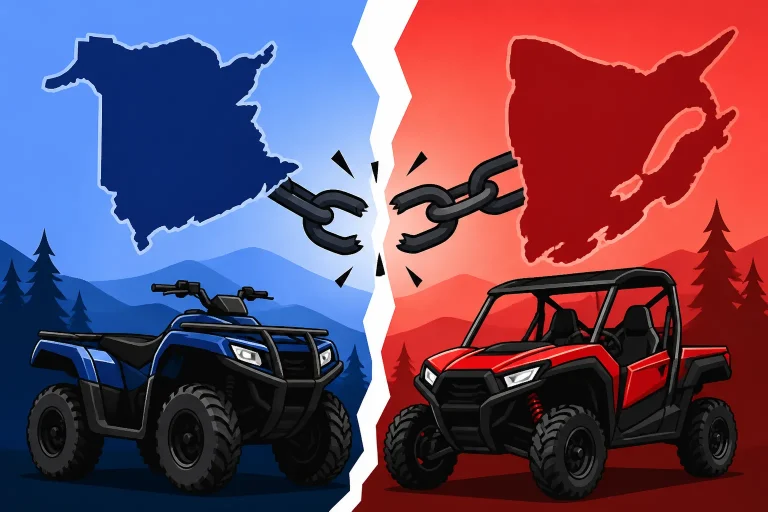
A permit bought in New Brunswick does not automatically grant access to every neighbouring trail system. Reciprocity arrangements can differ by province or state, and agreements can change. If your trip crosses a border, check the current rules for each place you intend to ride before leaving. Do not infer that a sticker accepted in one jurisdiction will be accepted in another just because riders travel between the regions.
This is especially important when a trip includes Quebec, Maine, Nova Scotia, or Prince Edward Island. Confirm whether your New Brunswick permit is recognized for the specific trails you plan to use, whether an additional local permit is required, and whether your registration, insurance, and rider qualifications meet the destination’s rules. New Brunswick Reciprocity With Nova Scotia and New Brunswick Riders Visiting Quebec can help frame those checks, but verify current arrangements before your trip.
At a counter, these questions are worth asking:
- Does this location sell the permit category I need?
- Which permit covers the trails and dates I have planned?
- Does the permit apply to this specific machine?
- What information or identification do you need from me?
- What proof should I keep after the purchase?
- How should the sticker be attached?
- What should I do if the sticker is damaged or the machine changes?
- Do I need another permit for a second machine or a visiting rider?
- Are there any current reciprocity limits for the places I plan to ride?
These questions are not a substitute for checking the official rules, but they can expose a mismatch before you pay or travel. Be clear about the machine and riding plan rather than asking only for “an ATV permit.” A UTV, a youth rider, a rental, or a cross-border trip can make a difference to the right next step.
The best time to sort this out is before the ride, not at a trail entrance. Confirm the counter’s availability, choose a permit that matches the trail type and dates, and check registration and insurance separately. Keep the receipt and required documents with the machine, and follow the sticker instructions. That small amount of preparation makes an in-person purchase useful without confusing trail access with the other requirements for riding.
Disclaimer
This article is for general informational purposes only and does not constitute professional advice. Laws, prices and regulations vary by location and change over time. Consult a qualified professional for guidance on your specific situation.