New Brunswick Insurance Proof at a Trailhead
Getting to a New Brunswick trailhead with a registered ATV or UTV and a valid trail permit does not mean you can leave your insurance documents at home. Riders need to be ready to show that the machine has the required coverage. Here’s what to carry, what to check before setting out, and why permit reciprocity and insurance are separate issues.
Why insurance proof matters at a trailhead
New Brunswick requires insurance for riding an off-road vehicle on trails. A valid permit and registration do not take the place of insurance: each serves a different purpose. Registration identifies the machine and its registered owner, a trail permit allows eligible trail use, and insurance provides coverage under the terms of the policy.
That distinction matters at a trailhead because documents can be checked before a ride or during one. Don’t assume that a machine is covered just because it is registered, has a permit sticker, or belongs to someone who has an insurance policy. The policy needs to cover the machine and the planned use. For a fuller explanation of the provincial requirement, see New Brunswick Requires Insurance on Trails.
A rider should be able to produce current proof that connects the insurance to the machine being ridden. The proof’s exact format can depend on the insurer and policy, so confirm with your insurer what document to carry and whether it identifies the machine clearly. Do not rely on an old slip, a policy for a different vehicle, or a verbal assurance from the owner.
A trailhead check is also a poor time to discover that a policy has expired or that the machine details on the paperwork do not match. Check before loading the ATV or UTV, especially if it was recently bought, borrowed, rented, or moved from another province.
Keep these distinctions in mind:
| Item | What it does | What it does not do |
|---|---|---|
| Registration | Connects the machine with its registered owner and records | Prove that current insurance is in place |
| Trail permit | Authorizes applicable use on the trail network | Provide insurance coverage |
| Insurance proof | Shows that an insurance policy applies to the machine | Replace registration or a required trail permit |
For the related paperwork riders may need to carry, see New Brunswick Documents You Must Carry and New Brunswick Proof of Insurance on the Machine.
What to check on your insurance documents
Before you head out, check that the document is current and relates to the ATV or UTV you plan to ride. The name, machine details, and dates should make sense together. If you are unsure what your insurer’s document is meant to show, ask the insurer to confirm that it is suitable proof for operating the machine on New Brunswick trails.
Use this quick review:
- Match the machine. Check the details against the ATV or UTV you’re taking. If the document identifies the machine by a serial number or VIN, compare it with the number on the machine and registration paperwork.
- Check the policy dates. Make sure the coverage is in force for the ride. A document from a previous policy period may not prove current coverage.
- Confirm the planned use. Ask the insurer whether the policy covers the machine’s use on trails in New Brunswick. Do not assume that coverage for storage, farm use, or another type of riding automatically covers trail riding.
- Check who is insured. If someone else owns or insures the machine, confirm with the insurer that you are permitted to operate it and that the policy applies to the planned use.
- Carry the proof the insurer identifies. Ask whether you should bring an insurance card, certificate, or another policy document. Do not assume a phone screenshot or an emailed document will be accepted in every situation.
- Keep a backup accessible. If you carry a paper copy, protect it from water and mud. If you keep a digital copy too, make sure you can open it without relying on cell service.
Proof may not show every detail of the policy. If the document seems incomplete or the machine identification is unclear, don’t try to interpret the policy yourself at the trailhead. Contact the insurer before riding and ask for the right proof or clarification. More on the difference between a rider’s insurance responsibilities and the machine’s coverage is covered in New Brunswick Insurance Requirements for Riders.
A small waterproof document pouch can keep paper proof legible in wet or muddy conditions. It can be stored with other ride documents, provided it stays secure and accessible. If you’re buying one, a local outdoor or powersports shop may have suitable options; Amazon is another place to look. The pouch is only a storage aid, not a substitute for carrying the correct proof.
Separate insurance from permits and reciprocity
Permit reciprocity can make cross-border riding less confusing, but it does not answer whether your insurance is valid. A permit arrangement relates to trail access. Insurance is a separate question about the policy covering the machine and the planned riding.
This matters for visitors as well as New Brunswick residents. If you bring an ATV or UTV from another province, don’t assume that its home registration, home trail sticker, or insurance automatically satisfies every requirement for a New Brunswick ride. Check both sides of the paperwork: what permits are accepted for the trail you intend to use, and whether your insurer confirms coverage for riding in New Brunswick. Riders bringing a machine from elsewhere can also review New Brunswick Registration for a Visiting Rider.
Likewise, a New Brunswick permit does not make an uninsured machine eligible to ride. Get permit information from the appropriate trail or provincial source, and get coverage questions answered by the insurer. If you are comparing permit arrangements, New Brunswick Reciprocity With Nova Scotia is a separate topic from insurance proof.
There are situations where riders are tempted to treat insurance as an afterthought:
- A borrowed machine: The owner may have a policy, but you should confirm that the policy covers the machine and your use of it. See Riding a Borrowed Quad With No Insurance.
- A rental machine: Ask the rental provider what insurance is in place, who is covered, and what documents the rider must carry. Do not assume the rental agreement itself is proof of insurance. For permit questions, see New Brunswick Permit for a Rented Machine.
- A recent purchase: A previous owner’s insurance does not establish that your machine is currently insured. Confirm coverage before riding and make sure registration and ownership paperwork are in order.
- A visiting rider: Ask your insurer whether the policy applies to trail use in New Brunswick, rather than relying on a general statement that the machine is insured at home.
The practical rule is simple: treat trail permission and insurance as two separate checks. A machine can have one without the other.
A simple pre-ride routine
A short check at home is easier than trying to sort out documents at the trailhead. Use this routine whenever you change machines, renew a policy, borrow or rent a vehicle, or plan a trip across a provincial border.
- Identify the exact machine. Note its make, model, and identifying number, if available. Use those details when checking the policy rather than asking only whether “the ATV” is covered.
- Confirm trail use with the insurer. Ask specifically about operating the machine on New Brunswick trails. If someone other than the owner will ride, ask whether that rider is covered.
- Get the right proof. Follow the insurer’s instructions for the document to carry. If the proof does not clearly relate to the machine, request clarification or a corrected document before departure.
- Check registration and permit separately. Make sure the registration and applicable trail permit are current and relate to the machine you are bringing. Four Things to Carry on a New Brunswick Trail can help with the broader carry-along checklist.
- Pack documents where you can reach them. Keep the insurance proof with the other ride paperwork, protected from water but not buried under gear.
- Recheck when anything changes. A new machine, policy renewal, ownership change, rental agreement, or change in who is riding can affect what proof you need.
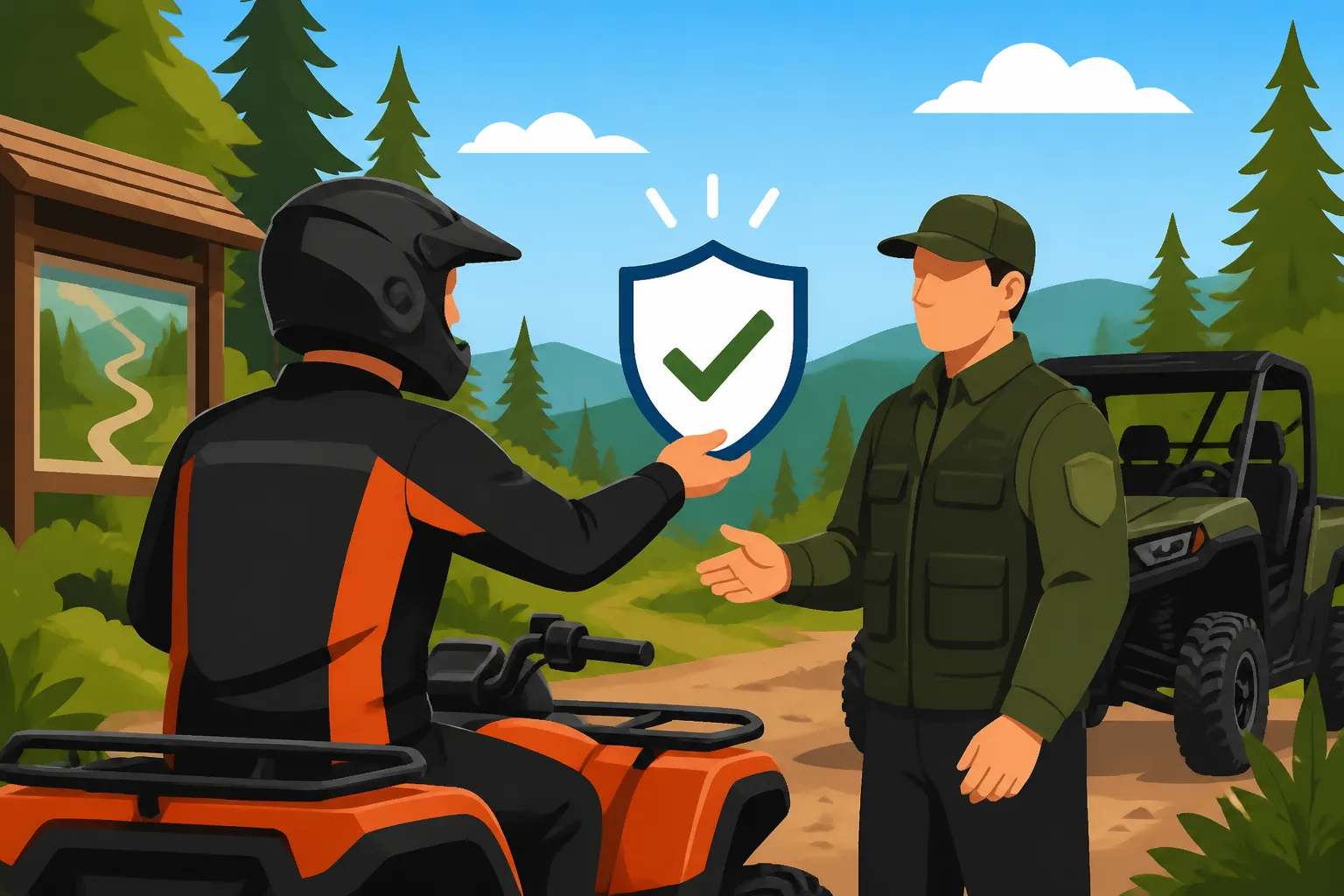
If a document is missing, expired, or unclear, resolve the question before riding rather than hoping it will not come up. Contact the insurer or the relevant registration or trail-permit provider, depending on what is missing. If a person at a trailhead asks to see proof, stay calm, provide the requested document, and avoid guessing about policy terms you haven’t confirmed.
Insurance proof is one part of a prepared ride, not paperwork to deal with only if stopped. Carry current proof that matches the machine, confirm coverage for the planned use, and keep registration and trail permits in order as separate requirements. That gives you a clearer answer at the trailhead and a better chance of avoiding an unnecessary interruption once the ride begins.
Disclaimer
This article is for general informational purposes only and does not constitute professional advice. Laws, prices and regulations vary by location and change over time. Consult a qualified professional for guidance on your specific situation.