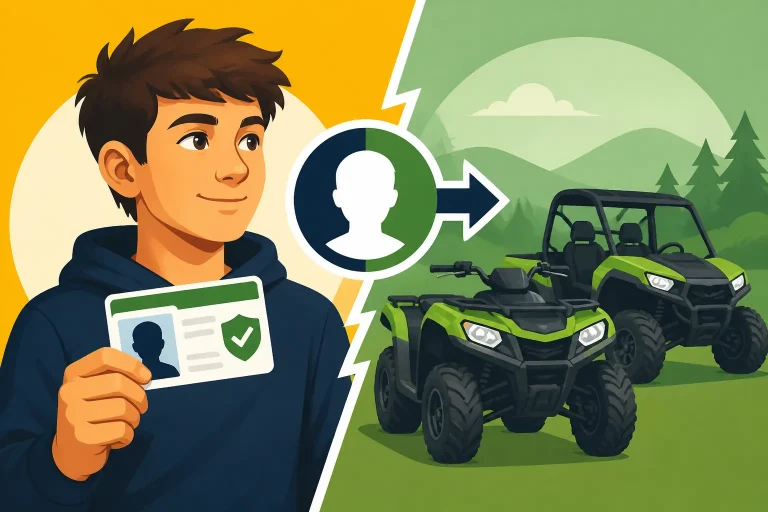
New Brunswick Course Machine Rentals
Want to take an ATV safety course in New Brunswick but don’t own a machine? You may be able to arrange one, but availability and what’s included depend on the course provider. Find out what to ask before booking, how to prepare, and what to do if you need to bring your own ATV or UTV.
How machine rentals work for a safety course
A safety course is not the same as a recreational rental. A course machine is used for specific training exercises under an instructor’s direction, and the provider sets the conditions for its use. Some course organizers may have machines available; others may expect participants to arrive with a suitable machine of their own or one borrowed from someone they know.
That distinction matters when choosing a course. A listing that says a course is available in your area does not automatically mean a machine is supplied. Ask the organizer directly whether a machine is available for your session and whether it can be reserved for you. For a broader explanation of course structure and expectations, see New Brunswick Quad Safety Course Explained.
The terms “rental” and “machine supplied” can also mean different things. A provider might offer a machine as part of the training session, while another could arrange access separately or have a limited number available. Do not assume the machine will be the same model or style you plan to ride later. Confirm what is available and whether it suits the course exercises.
If you’re looking for a course specifically because you don’t own an ATV, ask that question before choosing a date. Taking the Safety Course Without Owning a Quad covers the broader issue of attending without owning a machine, while this article focuses on the practical details of using a course machine.
It is also worth checking whether the course is designed for the type of machine you intend to ride. Training may involve operating an ATV, but that does not mean every provider has an ATV or UTV for every participant. Confirm the machine type, seating arrangement and any rider-size restrictions with the organizer rather than relying on a general course description.
A safety course should not be treated as a guarantee that you can take any machine onto any trail. Training, machine suitability, registration, insurance and trail permits are separate considerations. If you are sorting out the permit side as well, see How to Buy a New Brunswick Trail Permit.
What to ask before you book
Course machine availability can be limited, so make it one of your first questions—not something to sort out on the day. Contact the course provider before paying or finalizing your plans. Ask for clear answers about the machine, the cost arrangement, the participant’s requirements and what happens if the machine is unavailable.
| Question | Why it matters |
|---|---|
| Is a course machine available for my session? | Availability may differ between dates or providers. |
| Can you reserve one under my name? | A machine may not be guaranteed unless it is specifically confirmed. |
| Is the machine an ATV, UTV or another type? | The available machine may not match what you expect to operate. |
| Is machine access included in the course fee, or is there a separate charge? | Providers set their own arrangements; check the current details with them. |
| Is the machine appropriate for my age, size and experience? | The provider can explain any suitability requirements before you attend. |
| Is required safety gear supplied? | Do not assume that a machine booking includes a helmet or other equipment. |
| What happens if the machine has a mechanical problem? | Find out whether a replacement is available or whether the session may be rescheduled. |
| What should I bring if I use my own machine? | The organizer can explain any equipment or condition requirements. |
| What is the cancellation or rescheduling policy? | A change in weather, machine availability or your plans may affect attendance. |
Ask about the total cost and payment arrangements without relying on an old listing or someone else’s experience. Course prices, machine arrangements and rebates can change. If a club or provider mentions a rebate, confirm who qualifies, how to apply and whether it applies to the machine arrangement as well as the training. The overview at New Brunswick Safety Course Rebates can help you identify the right questions, but the course organizer should confirm current terms.
If you cannot find a provider that offers a course machine, try contacting another organizer or club. Availability can vary by location and schedule. Finding a Club That Runs the Safety Course may help you work out where to ask, and [New Brunswick Safety Course Schedule] is useful when comparing possible dates.
When contacting a provider, give enough information to get a useful answer: the participant’s age, whether they have ridden before, the type of machine they hope to operate and whether they can bring their own. You do not need to know every detail of the course in advance. The goal is to uncover any mismatch early, while there is still time to choose another date or make a different plan.
Get important details in writing if possible. A confirmation message that says a machine is reserved, identifies what it is and explains the payment arrangement can prevent confusion later. If you speak by phone, write down the provider’s name, the date and what you were told. This is especially helpful if a booking includes several people or if the machine is being arranged separately from the course.
Preparing to use a course machine
Once the provider confirms the arrangement, ask what you need to bring and what will be supplied. A machine booking does not necessarily include a helmet, boots, gloves, eye protection or weather-appropriate clothing. Some providers may supply certain items, but you should confirm each one rather than assume.
Choose gear that fits properly and lets you move comfortably. A loose helmet or footwear that catches on the machine’s controls can make practical instruction harder. If you are buying gear, check that it meets the requirements given by the course organizer and is suitable for the participant and the conditions. Avoid buying equipment based only on a product description; fit, certification and the provider’s requirements matter more than brand.
You may also want to ask whether the course machine has any limits you should know about. A participant who is used to a different machine may need time to adjust to its controls and feel. That is normal. Tell the instructor if you are new to riding or unfamiliar with the type of machine being used. A course is a place to practise basic skills with supervision, not a test of how quickly you can imitate an experienced rider.
Arrive early enough to complete any check-in steps and listen to the instructions before operating the machine. Bring any documents or forms the provider has requested, and check in advance whether a parent or guardian must attend for a youth participant. Requirements can depend on the course and the participant’s circumstances, so ask the organizer rather than assuming. New Brunswick Parental Attendance Rules is a useful related read for youth courses.
If the participant is 14, confirm the course and machine arrangements specifically for that age. The organizer can explain who may take part, what supervision is required and whether the available machine is appropriate. See New Brunswick Safety Course for a 14-Year-Old for more on the age-specific questions to check.
During the practical portion, follow the instructor’s directions even if you have ridden another machine before. A familiar-looking control layout does not mean every ATV or UTV handles the same way. Ask before adjusting or operating anything you have not been shown. If the machine does not feel right, or a control seems difficult to reach, tell the instructor instead of trying to work around it.
If you have a physical limitation, mobility concern or other need that may affect machine use, raise it with the course provider before booking. Ask whether the machine can be adjusted, whether the training exercises can accommodate your needs, and whether there are any restrictions. Do not wait until the practical session to find out that a particular machine is unsuitable.
If you cannot get a machine
If no course machine is available, you still have options. Ask whether another date has availability, whether a different nearby provider offers machine access, or whether the organizer permits participants to bring a borrowed machine. A borrowed ATV or UTV may be a practical solution, but get approval before arriving. The organizer may have rules about the machine’s condition, type or suitability for the exercises.
If you plan to bring your own or borrow one, ask what the provider expects. Confirm the machine is in working order and that the operator can reach and use its controls safely. Ask whether fuel, maintenance checks or any other preparation is your responsibility. The provider is the best source for course-specific requirements.
Do not rent a recreational machine from a shop and assume you can use it for the course. A commercial rental may have restrictions on who can operate it, where it can be taken and whether it can be used for training. The rental business may also require a licence, deposit, waiver or other conditions. Get permission from both the course organizer and the rental provider before making a booking.
If you cannot find a suitable machine or course date, avoid paying for a session until you know how the machine issue will be resolved. Ask about the cancellation and rescheduling policy, and confirm whether any charge is refundable if the provider cannot supply the promised machine. Keep a copy of your booking details and any messages confirming the arrangement.
Finally, keep course completion separate from the paperwork needed for a ride. A certificate does not replace a trail permit, registration or insurance, and carrying one document does not cover the others. Ask the relevant provider or authority what applies to your planned ride. If an officer asks for proof of training, the related article Producing Your Safety Certificate When an Officer Asks explains why it is sensible to know where your certificate is and how to produce it.
Disclaimer
This article is for general informational purposes only and does not constitute professional advice. Laws, prices and regulations vary by location and change over time. Consult a qualified professional for guidance on your specific situation.