New Brunswick ORV Registration Explained
It's no secret that getting all your ducks in a row for ATV and UTV registration in New Brunswick can feel like navigating a maze blindfolded. Many of us just want to hit the trails, but the thought of deciphering regulations and gathering paperwork often feels like more trouble than it's worth. This guide is here to untangle the whole process, walking you through everything you need to know to get your off-road vehicle legally registered, without the usual headaches.
Why Registration is Non-Negotiable for Your ORV
You've got your new (or new-to-you) quad or side-by-side, and the open trails of New Brunswick are calling. But before you even think about firing up the engine and heading out, there's a crucial step that many riders either misunderstand or overlook: registration. It's not just a suggestion; it's a legal requirement that protects you, other riders, and helps maintain our fantastic trail system. Trying to skirt this step can lead to some pretty significant headaches and fines down the road.
Understanding Your Legal Obligations
The province has clear rules about off-road vehicles (ORVs), which include ATVs, UTVs, dirt bikes, and snowmobiles. The Off-Road Vehicle Act outlines these requirements, stating that almost all ORVs operating in New Brunswick must be registered. This isn't just about collecting fees; it's about accountability and ensuring that there's a record of ownership for every machine out there. Without proper registration, your machine is essentially invisible to the system, which can cause major problems if it's stolen, involved in an accident, or if you simply get stopped by an officer. It's a fundamental part of responsible ORV ownership here.
Beyond the initial registration, there's also the ongoing responsibility of keeping that registration current. Like any other vehicle, your ORV registration isn't a one-and-done deal. It requires annual renewal, typically expiring on a specific date each year, which we'll delve into later. Forgetting to renew can put you in the same boat as someone who never registered in the first place, facing similar penalties. It's a small administrative task that saves a world of potential hassle.
Avoiding Steep Penalties and Fines
Let's be blunt: riding an unregistered ORV in New Brunswick is a costly gamble. Enforcement officers, whether they're RCMP, conservation officers, or local police, are well-versed in ORV regulations. If you're stopped on a trail, a public road where ORVs are permitted, or even a private woodlot that's accessible to the public, they can and will ask for your registration. The penalty for operating an unregistered ORV is a significant fine, which can sting a lot more than the cost of registration itself. It's not just a slap on the wrist; it's designed to be a deterrent. [New Brunswick Penalties for Riding Unregistered] outlines these consequences clearly.
And it's not just the monetary fine you have to worry about. Riding unregistered can also affect your insurance coverage, which is another crucial component of legal ORV operation on most trails. If you're involved in an accident while your machine is unregistered, your insurance provider might deny coverage, leaving you on the hook for repairs, medical bills, and potential liability claims. The consequences can snowball, turning what should have been a fun day out into a financial disaster. It simply isn't worth the risk when the solution is so straightforward.
The Essential Documents You'll Need
Gathering the correct paperwork is often the biggest hurdle for new ORV owners or those unfamiliar with the process. It's like trying to bake a cake without knowing the ingredients – you might have all the right intentions, but if you're missing a key item, it simply won't work. Service New Brunswick is pretty firm about what they require, and showing up unprepared usually means a wasted trip and a frustrated afternoon. Don't let that be you!
Proving Ownership: Bill of Sale and MSO
The absolute cornerstone of registering any vehicle, including an ORV, is proof of ownership. Without it, Service New Brunswick cannot process your application because they can't verify that you are the rightful owner.
- Manufacturer's Statement of Origin (MSO): If you've just purchased a brand-new ATV or UTV from a dealership, your primary document will be the Manufacturer's Statement of Origin (MSO). This is essentially the birth certificate of your machine, detailing its make, model, VIN, and original owner (the dealer). The dealership will usually handle much of the initial paperwork and tax remittance, making the process smoother for you. They'll give you the MSO, sometimes endorsed over to you, which you'll then take to Service New Brunswick along with proof of tax paid. Dealers are generally quite adept at preparing this paperwork, so you should feel confident that you're getting what you need.
- Bill of Sale: For those buying a used ORV from a private seller, a comprehensive bill of sale is critical. This document needs to clearly state the seller's and buyer's full names and addresses, the date of sale, the ORV's make, model, year, and crucially, its Vehicle Identification Number (VIN). It also needs to specify the purchase price, as this will determine the provincial sales tax (HST) you'll owe. Both the buyer and seller should sign and date it. Some people find it helpful to use a template from a reputable source like LawDepot to ensure all necessary details are included. A well-crafted bill of sale protects both parties and makes the registration process much smoother. Without it, Service New Brunswick might refuse your registration entirely, or require additional steps to prove legitimate ownership. Always keep a copy for your records, too.
Identity and Residency Verification
Beyond the machine itself, Service New Brunswick needs to verify who you are and that you reside in the province. This is standard procedure for any official registration.
- Proof of Identity: You'll need to bring valid government-issued photo identification. This typically means your New Brunswick driver's license. If you don't have a driver's license, other forms of ID like a provincial identification card or even a passport paired with another document showing your signature might be accepted, but it's always best to call ahead if you're unsure. The key is to have an ID that clearly links you to the name on the bill of sale or MSO.
- Proof of New Brunswick Residency: Your driver's license usually serves as proof of residency, as it shows your provincial address. However, if your address on your license is not current, or if you're using another form of ID, you might need to provide a secondary document. This could be a utility bill (power, water, internet) addressed to you at your current New Brunswick residence, a bank statement, or even a rental agreement. The goal is to prove you are a legitimate resident of the province. [New Brunswick Registration and Proof of Address] is a good resource if you are new to the province.
Other Supporting Documentation
While a bill of sale or MSO and your ID are the main requirements, a few other pieces of paperwork can smooth the process or are mandatory for specific situations.
- Application for Vehicle Registration: While staff at Service New Brunswick will help you fill this out, it's the official form that captures all the details of your ORV and your personal information. It's where everything comes together, affirming your ownership and the machine's specifics. You can often find a blank copy online, or simply complete it at the counter. Understanding what information this form requires can help you prepare beforehand.
- Previous Registration (if applicable): If you're transferring ownership of a machine that was already registered in New Brunswick, bringing the previous owner's registration certificate can sometimes help, though the bill of sale is paramount. This simply helps confirm the machine's history within the province's system.
- Insurance Information: While you might not need to provide proof of insurance directly at the registration counter for all ORV types, it is absolutely essential to have it before you hit the trails, especially groomed club trails. Knowing your insurance provider and policy number is always a good idea. [New Brunswick Requires Insurance on Trails] further explains this requirement.
Here’s a quick checklist for your next visit to Service New Brunswick:
| Document Type | Description | From Dealer (New) | From Private Seller (Used) |
|---|---|---|---|
| Proof of Ownership | Manufacturer's Statement of Origin (MSO) or Bill of Sale | MSO | Bill of Sale |
| Proof of Identity | Valid Government-Issued Photo ID (e.g., NB Driver's License) | Required | Required |
| Proof of Residency | NB Driver's License or utility bill, bank statement, rental agreement | Required | Required |
| Application Form | Application for Vehicle Registration | Filled at counter | Filled at counter |
| Previous Registration | (Optional) Previous owner's NB registration certificate | N/A | Helpful, but not primary |
Navigating Service New Brunswick: Where and How
So, you've got your documents in hand, you know what's required, and you're ready to make it official. The next step is dealing with Service New Brunswick. For many, this part can feel a bit daunting, conjuring images of long lines and bureaucratic hurdles. While it can sometimes involve a bit of a wait, going in prepared and knowing your options will make the experience as smooth as possible.
Your First Stop: The Service Centre
For an initial registration of an ORV, especially if it's new to you or new to the province, an in-person visit to a Service New Brunswick centre is typically required. This isn't like renewing your driver's license online; there are physical documents to be verified and the initial entry of your machine's details into the provincial system. There are locations spread across the province, from Fredericton and Moncton to smaller communities, making it accessible for most residents. [New Brunswick Service Centres That Register ORVs] lists all the available locations.
When you arrive, you'll need to take a number for the "Vehicle Registration" or "Driver & Vehicle Services" queue. This is where you'll present all your carefully gathered documents – your bill of sale or MSO, your photo ID, and any proof of residency if needed. The staff are generally helpful and will guide you through the process, which includes completing the official Application for Vehicle Registration form. They'll verify the VIN on your documents, calculate the HST (if applicable for a private sale), and explain the registration fees. It's a good idea to set aside ample time for this visit, especially during peak hours.
Understanding the Role of VIN Verification
A crucial part of the in-person registration process is the Vehicle Identification Number (VIN) verification. This 17-character alphanumeric code is unique to your ORV, like a fingerprint. Service New Brunswick staff will ensure the VIN on your documents matches the one on the machine, or they may ask you to provide a clear photograph of the VIN plate if you didn't bring the machine itself (though bringing the machine or being prepared to provide clear VIN photos is always a safe bet). This step is vital in preventing fraud and ensuring the machine isn't stolen or previously unregistered in a way that could cause issues.
Sometimes, if there's any ambiguity or concern about the VIN, or if the documentation is less than perfect, they might require a more formal verification, perhaps even by an RCMP officer in certain rare cases. While this isn't common, it highlights the importance of having crystal-clear documentation from the start. If you’re buying a used machine, always verify the VIN yourself against the documentation before completing the purchase. Taking a photograph of the VIN before you finalize the deal is a smart move, and knowing [Serial Numbers and Where to Look for Them] on your specific type of ORV can be very helpful.
Online and Phone Renewal Options
While initial registration almost always requires an in-person visit, subsequent renewals are much simpler. New Brunswick has embraced technology to make the annual renewal process more convenient for registered owners.
- Online Renewal: Many riders find renewing their ORV registration online to be the quickest and easiest option. The Service New Brunswick website provides a portal where you can enter your registration details, pay the renewal fee with a credit card, and often print an interim registration certificate immediately. Your new sticker and official certificate will then be mailed to you. This is a huge time-saver and means you can take care of it from the comfort of your home, or even your camp. [New Brunswick Renewal Online] has more details about this process.
- Renewal by Phone: For those who prefer speaking to someone or don't have easy internet access, phone renewal is also an option. You'll need your current registration certificate handy, as the agent will ask for specific identifying information about your ORV and yourself to process the renewal and payment over the phone. Like online renewals, the sticker and certificate will be mailed to your registered address. [New Brunswick Renewal by Phone] explains this method further.
These convenient renewal options are designed to reduce the need for repeat visits to a service centre, making it easier to stay compliant year after year.
Understanding Fees and Renewal Cycles
Nobody loves paying fees, but they're a necessary part of keeping our trails maintained and our ORV system running smoothly. Knowing what to expect financially and understanding the annual renewal cycle will help you budget and avoid those last-minute rushes or, worse, lapsed registrations. The costs vary slightly depending on the type of ORV you own, which sometimes catches new owners by surprise.
Breaking Down Registration Fees
The fees for registering an ORV in New Brunswick are set by the provincial government and typically depend on the category of your machine. Generally speaking, ATVs (quads) and side-by-sides often have a slightly higher annual registration fee compared to dirt bikes. These fees contribute to the administration of the ORV program and, indirectly, to the overall infrastructure that supports off-road riding in the province.
For instance, you might find that [New Brunswick Charges $41 for an ATV] while [New Brunswick Charges $16 for a Dirt Bike]. These figures illustrate the different tiers. It's not about the size of the machine, but rather its classification within the Act, which determines the fee. When you're at Service New Brunswick for your initial registration, they will clearly outline the specific fee for your machine based on its type and classification. Remember, these fees are distinct from any provincial sales tax (HST) you might owe on the purchase price if you bought the machine privately.
The Annual December 31st Expiry
This is one of the most important pieces of information for any New Brunswick ORV owner: all ORV registrations expire on December 31st each year. Yes, every single one. This standardized expiry date simplifies the system for both Service New Brunswick and for riders. It means you don't have to remember a different renewal date based on when you initially registered your machine. However, it also means that the end of the year can be a busy time for renewals.
This universal expiry date is consistent across all ORV types, whether it's an ATV, UTV, dirt bike, or snowmobile. [New Brunswick Registrations Expire December 31] is a common and important fact. It's a good practice to mark this date on your calendar and set a reminder a few weeks in advance. Many riders aim to renew in early December to avoid any potential delays in receiving their new sticker and certificate by mail, especially if the holidays impact postal service.
Costs for Replacement Documents
Life happens, and sometimes documents get lost, damaged, or simply need updating. Thankfully, Service New Brunswick has processes in place for these situations, though they do come with their own associated fees.
- Replacement Registration Certificate: If you lose your registration certificate, or if it gets damaged beyond recognition (which can happen with trail riding!), you can obtain a replacement. There is a nominal fee for this service, such as the [New Brunswick Replacement Certificate at $20]. It's a good idea to have a legible copy of your registration on your machine or in your saddlebag when riding, but the physical certificate is important for official purposes.
- Replacement Plates and Decals: The physical plate and the annual sticker (decal) are subject to wear and tear, especially if your ORV sees a lot of action. If your plate becomes bent, faded, or the sticker peels off, you'll need to get replacements. There's a fee for a new plate, often around [New Brunswick Plate Fee of $25], and a separate fee for a replacement sticker, which might be [New Brunswick Sticker Replacement at $11.50]. It's crucial that your plate is always clearly visible and legible, as this is how enforcement officers identify your machine.
- Record Searches: Before buying a used ORV, some buyers opt for a record search to check the machine's history, including previous owners and any liens against it. This service also has a fee, such as the [New Brunswick Record Search at $8]. This can be a smart move to protect yourself from purchasing a stolen machine or one with outstanding financial obligations. LawDepot can help create documents for secure transactions, but a record search through Service New Brunswick provides official provincial data.
Understanding these associated costs helps you manage your ORV budget and ensures you're never caught off guard when you need to replace a lost document or update your registration.
Special Situations and Common Roadblocks
While the general registration process is fairly straightforward, life isn't always that simple. There are numerous scenarios that can complicate matters, from buying an ORV without a standard bill of sale to dealing with machines from outside the province. It's in these "what if" situations that many riders hit roadblocks, and knowing how to navigate them can save you a lot of frustration.
Registering After a Private Sale
Buying an ORV from a private seller is common in New Brunswick, but it introduces specific considerations for registration that aren't present with a dealer purchase. The biggest hurdle is often the bill of sale.
- No Bill of Sale or Incomplete Information: This is perhaps the most common issue. You might buy a quad from a friend or a neighbour, shake hands, exchange cash, and think you're good to go. However, without a formal bill of sale, Service New Brunswick might refuse your registration. They need clear proof of ownership transfer, including the purchase price for tax calculation. If you find yourself in this situation, you might need to track down the seller to complete a proper bill of sale. If that's impossible, Service New Brunswick may have specific procedures involving a sworn affidavit or other documentation to attest to the sale, but these are often more complex and time-consuming. Using a template, perhaps from LawDepot, can help ensure all necessary fields are included. [New Brunswick Registration Without a Bill of Sale] covers this scenario in more detail.
- Tax on Private Sales: Unlike some other provinces, New Brunswick charges provincial sales tax (HST) on the private sale of ORVs. This means when you go to register your privately purchased machine, Service New Brunswick will calculate the HST based on the purchase price listed on your bill of sale. Be prepared for this additional cost, as it's separate from the registration fee. If the stated purchase price seems unusually low, Service New Brunswick reserves the right to assess the tax based on the estimated market value of the machine.
Inherited or Gifted Machines
It's not uncommon for an ORV to be passed down through a family, whether as a gift or through an inheritance. While a wonderful gesture, these situations require specific documentation to transfer ownership legally.
- Inherited Machines: If you've inherited an ORV after the owner's passing, you'll need more than just the machine itself. Service New Brunswick will typically require documents like the death certificate, a copy of the will (if applicable), and proof that you are the legal beneficiary or executor of the estate. The process can be a bit more involved, often requiring a visit to a Service New Brunswick centre with all relevant legal documents. [New Brunswick Registration After the Owner Dies] provides comprehensive guidance for this sensitive situation.
- Gifted Machines: For machines given as a gift, a "Gift Letter" or a bill of sale stating a nominal purchase price (e.g., $1.00) is usually required. This document needs to clearly state that the machine is a gift, include all the ORV's details (VIN, make, model), and be signed by both the giver and the recipient. Even if no money changes hands, Service New Brunswick still requires documentation of the ownership transfer.
Registering Imported Machines
Bringing an ORV into New Brunswick from another province or country introduces a new layer of complexity, particularly for those crossing international borders.
- From Another Canadian Province: If you're moving to New Brunswick and bringing an ORV from another Canadian province, you'll need to register it here. You'll typically need the original registration certificate from your previous province, along with your bill of sale and proof of identity and New Brunswick residency. The process is similar to registering a local used machine, but you're effectively bringing it into the New Brunswick system for the first time. [New Brunswick Registration for a New Resident] covers this in depth.
- From the United States: Importing an ORV from the US, such as from Maine, involves customs procedures before you even get to Service New Brunswick. You'll need to ensure all Canada Border Services Agency (CBSA) requirements are met, including paying any applicable duties and taxes. You'll receive specific import documentation from CBSA, which you'll then need to present at Service New Brunswick along with your original title or bill of sale from the US and proof of identity/residency. This can be a multi-step process, so it's vital to research all import requirements before you make the purchase. [Importing a Machine From Maine] is a helpful resource.
Challenges with Lost or Damaged VINs
In rare cases, the VIN on an older ORV might be unreadable, damaged, or even missing. This is a significant problem for registration, as the VIN is the primary identifier of the machine.
- Unreadable VIN: If the VIN is simply faded or obscured by dirt, a good cleaning might reveal it. If it's truly unreadable due to rust or damage, you'll need to contact Service New Brunswick. They may require an inspection by law enforcement or a certified mechanic to verify the machine's identity and assign a new VIN or record the existing one as best as possible. This can be a lengthy process designed to prevent the registration of stolen machines.
- Missing VIN: A completely missing VIN is a red flag. It might indicate a stolen machine, or one that was never properly documented. Service New Brunswick will almost certainly involve law enforcement in such cases. It's generally advisable to avoid purchasing an ORV with a missing or highly suspicious VIN, as you could be opening yourself up to legal issues and significant difficulty in getting it registered. [New Brunswick Registration When the VIN Is Gone] explains the gravity of this situation.
These special situations require extra patience and preparation, but with the right information and documentation, you can still get your ORV legally registered in New Brunswick.
Beyond Registration: What Else to Know
Getting your ORV registered is a fantastic first step, but it’s crucial to understand that it’s just one piece of the puzzle for legal and responsible riding in New Brunswick. Think of it like getting your driver's license for a car; it allows you to drive, but you still need insurance, obey traffic laws, and sometimes pay for parking. The same goes for your quad or side-by-side. To truly enjoy our province's incredible trail network, you'll need to be aware of other requirements.
Insurance: A Must for Trail Riding
While you might not always be asked for proof of insurance at the Service New Brunswick counter during registration, having proper insurance is absolutely mandatory for riding on most designated ORV trails in New Brunswick. This is a critical point that many new riders overlook.
- Trail Insurance Requirements: If you plan to ride on any of the extensive QuadNB network trails, which includes thousands of kilometres of managed corridors, you must have valid liability insurance. This protects you and others in the event of an accident. The fine for riding an uninsured ORV on a trail is substantial, often significantly higher than the fine for riding unregistered. [New Brunswick Requires Insurance on Trails] highlights this key fact.
- Proof of Insurance: You don't just need to have insurance; you need to be able to prove it if asked by an enforcement officer. This means carrying your insurance card or certificate with you whenever you ride. Many riders keep a laminated copy in a waterproof pouch in their saddlebag or glove compartment, or a clear photo on their phone. Don't risk a hefty fine by leaving it at home.
The All-Important Trail Permit
Beyond registration and insurance, if you want to access the vast majority of official ORV trails in New Brunswick, you'll need a trail permit. These permits are managed by QuadNB (the New Brunswick All-Terrain Vehicle Federation) and are essential for financially supporting the maintenance, grooming, and development of our provincial trail system.
- Groomed vs. Non-Groomed Permits: New Brunswick offers different types of trail permits, including groomed and non-groomed options, and sometimes day or week passes for visitors. The groomed permit typically covers year-round access, including snow-covered trails, while the non-groomed might be for three seasons. Choosing the right permit depends on when and where you plan to ride. [New Brunswick Groomed vs Non-Groomed Permits] provides a good comparison.
- Where to Buy: You can purchase trail permits from QuadNB member clubs, many dealerships, and sometimes even at Service New Brunswick centres. When you purchase a permit, you're also becoming a member of QuadNB, which comes with its own benefits, like discounts and certain insurance coverages. [How to Buy a New Brunswick Trail Permit] offers a step-by-step guide.
- Placement of Sticker: Once you have your permit, you'll receive a sticker that must be prominently displayed on the left side of your ORV's front fender. This allows trail wardens and enforcement officers to easily verify that you're a legal user of the trail system. [New Brunswick Permit Placement on a Machine] provides clear instructions.
Documents You Must Carry While Riding
Now that your ORV is registered, insured, and has a trail permit, there's one final point to remember every time you head out: what documents to carry. Getting stopped by an officer and not having your papers can be as problematic as not having them at all.
- Registration Certificate: Always carry a copy of your current ORV registration certificate.
- Proof of Insurance: Your valid insurance card or certificate is non-negotiable.
- Trail Permit: While the sticker should be on your machine, it's a good idea to have a copy of the permit certificate as well, especially if there's any doubt about the sticker's legibility.
- Photo ID: Your driver's license or other government-issued photo ID is necessary to confirm you are the registered owner or authorized operator.
It can feel like a lot to juggle, but many experienced riders keep all these documents together in a waterproof holder attached to their machine or in a secure pocket. [New Brunswick Documents You Must Carry] emphasizes the importance of always having these on hand. By ensuring all these ducks are in a row, you'll be set to enjoy New Brunswick's trails confidently and legally.
Transferring Ownership: Selling or Buying a Registered Machine
Eventually, you might decide to sell your ORV, or perhaps you're looking to buy one that's already registered in New Brunswick. The process of transferring ownership is a specific administrative task that needs to be handled correctly by both the seller and the buyer to ensure the machine remains legally registered under its new owner. Getting this wrong can cause headaches for both parties, potentially leaving the seller liable or the buyer unable to register their new purchase.
As a Seller: Your Responsibilities
When you sell your registered ORV, your responsibilities extend beyond simply handing over the keys and collecting payment. Protecting yourself from future liability and ensuring a smooth transition for the buyer are key.
- Provide a Proper Bill of Sale: This is paramount. As the seller, you should provide the buyer with a detailed bill of sale that includes:
- Your full name and address.
- The buyer's full name and address.
- The date of the sale.
- The make, model, year, and most importantly, the Vehicle Identification Number (VIN) of the ORV.
- The agreed-upon purchase price.
- Signatures from both you and the buyer.
A clear, complete bill of sale not only facilitates the buyer's registration but also serves as your proof that you've relinquished ownership. Using a template, perhaps from LawDepot, can help ensure you don't miss any critical details.
- Sign Over the Registration Certificate: If you have the original paper registration certificate, you might sign it over to the new owner, indicating the date of sale and the new owner's name. However, the bill of sale is the more crucial document for the transfer.
- Cancel Your Registration: This is a vital step for the seller. Once you've sold the machine, you should contact Service New Brunswick to cancel your registration for that specific ORV. This removes your name from the vehicle's record and prevents any future liability associated with the machine, such as fines for an unregistered machine if the new owner fails to register it. It's your official way of saying, "This is no longer my responsibility." [Selling a Registered Machine in New Brunswick] covers these steps for sellers.
As a Buyer: What to Expect
If you're purchasing an ORV that's already registered in New Brunswick, the process starts with ensuring you get the right documentation from the seller.
- Obtain a Complete Bill of Sale: Just as it's the seller's responsibility to provide one, it's your responsibility as the buyer to ensure you receive a comprehensive bill of sale. Double-check that all information is accurate and complete, especially the VIN. If the bill of sale is incomplete or unclear, you could face difficulties at Service New Brunswick.
- Pay the HST: Even for a used machine bought privately, you will be responsible for paying the Harmonized Sales Tax (HST) on the purchase price when you go to register the ORV in your name. This tax is calculated on the value stated on the bill of sale.
- Register the Machine in Your Name: After purchasing, you must visit a Service New Brunswick centre to transfer the registration into your name. You'll need the bill of sale, your photo ID, and proof of New Brunswick residency. This process will formally update the provincial records to show you as the new legal owner. Don't delay this step; until it's in your name, you're not fully compliant, and the machine may still be linked to the previous owner. [Buying From a Private Seller in New Brunswick] offers specific advice for buyers.
- Consider a Record Search: Before finalizing a private purchase, it's a very smart move to conduct a record search through Service New Brunswick. For a small fee, this search can reveal past owners and, critically, if there are any outstanding liens or encumbrances on the ORV. This can protect you from unknowingly buying a machine that legally belongs to someone else (like a bank or financing company) due to an unpaid loan. [What a Record Search Shows Before You Buy Used] explains why this is a good precaution.
Transferring ownership isn't just a formality; it's a legal and financial necessity for both parties. By following these steps, you ensure a clean break for the seller and a solid start for the new owner, keeping everyone on the right side of the rules.
Keeping Your Registration Current: Renewals and Updates
Once you've successfully navigated the initial registration, the journey isn't over. Your ORV registration in New Brunswick isn't a lifetime pass; it requires annual renewal and sometimes updates to personal information. Neglecting these ongoing responsibilities can quickly land you back in the "unregistered" category, with all the associated fines and hassles. Staying on top of renewals and changes is simpler than the initial registration, but no less important.
The Annual Renewal Process
As we've mentioned, every ORV registration in New Brunswick expires on December 31st each year. This makes it easy to remember but also means a lot of renewals happen in a concentrated period.
- When to Renew: While the expiry is December 31st, you don't have to wait until the last minute. Service New Brunswick typically sends out renewal notices by mail a few weeks in advance, usually in November or early December. It's wise to renew as soon as you receive this notice, or at least before the holiday rush. This ensures you receive your new registration certificate and decal well before the new year, allowing you to ride legally without interruption from January 1st onwards. [Renewing Before the New Year] is a smart strategy.
- How to Renew:
- Online: This is often the most convenient method. Through the Service New Brunswick website, you can easily renew your registration by entering your existing registration number, paying the fee with a credit card, and getting confirmation right away. Your new documents will be mailed to you. [New Brunswick Renewal Online] is a quick and efficient way to handle this.
- By Phone: If you prefer, you can call Service New Brunswick to renew over the phone. You'll need your registration information and a credit card for payment. They'll process the renewal and mail out your new documents. [New Brunswick Renewal by Phone] provides the details for telephone renewals.
- In-Person: You can, of course, always visit a Service New Brunswick centre to renew in person. This is a good option if you have questions or prefer to handle transactions face-to-face. You'll need your current registration certificate and payment. [Renewing at a Service Centre] is a reliable option for many.
Regardless of the method you choose, ensure you complete the renewal before December 31st. Riding in January with an expired sticker is the same as riding unregistered.
Updating Your Information
Life changes, and sometimes your personal details or the status of your ORV change too. It’s important to keep Service New Brunswick informed of these updates.
- Change of Address: If you move to a new residence within New Brunswick, you'll need to update your address on your ORV registration, just as you would for your driver's license. This ensures you receive renewal notices and any other important correspondence from Service New Brunswick. You can typically update your address online, by phone, or in person. [New Brunswick Registration Address Change] is a necessary step to maintain current records.
- Lost or Stolen Machine: In the unfortunate event that your ORV is lost or stolen, it's crucial to report it to the police immediately. Once you have a police report, you should also notify Service New Brunswick. This will help them flag the machine in their system and can prevent it from being illegally registered by someone else.
- Disposal or Export of Machine: If you dispose of your ORV (e.g., junk it) or export it out of the province (e.g., sell it to someone in Nova Scotia), you should also cancel its registration with Service New Brunswick. This officially removes the machine from your name and from the provincial registry, preventing any lingering responsibilities.
The Importance of the Decal
Once you've renewed your registration, you'll receive a new decal (sticker) in the mail. This small sticker is incredibly important.
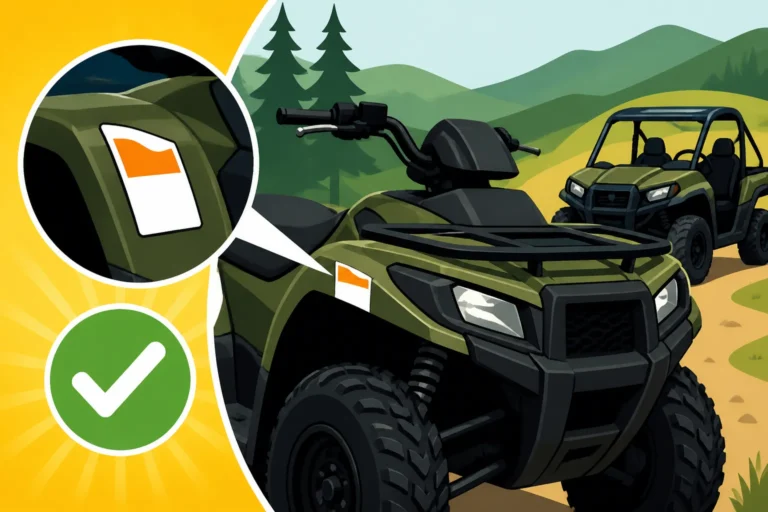
- Placement: The decal must be affixed to the left side of the front fender of your ORV. It needs to be clearly visible and not obscured. [Why the Registration Sticker Goes on the Left Fender] is not just a suggestion, it’s a rule that helps officers quickly verify your compliance.
- Visibility and Legibility: The decal indicates the year your registration is valid until. Enforcement officers will quickly check this as you pass or if you are stopped. An expired decal is a clear sign of an unregistered machine. Make sure your decal is always legible; if it peels or fades, you'll need to order a replacement. [Checking Your Plate Sticker Is Still Valid] should be part of your pre-ride routine.
Keeping your registration current and your information updated might seem like minor tasks, but they are fundamental to being a responsible and legal ORV rider in New Brunswick. They ensure you can continue to enjoy the trails without the worry of fines or legal complications.
Disclaimer
This article is for general informational purposes only and does not constitute professional advice. Laws, prices and regulations vary by location and change over time. Consult a qualified professional for guidance on your specific situation.