New Brunswick Groomed vs Non-Groomed Permits
Choosing between a groomed and non-groomed permit in New Brunswick can be confusing if you are planning around a particular trail, season, or budget. The key difference is the access each permit is meant to provide—not simply whether a trail looks smooth. Here’s how to compare the options, check what your route requires, and avoid assuming a permit covers every trail.
What the two permits are for
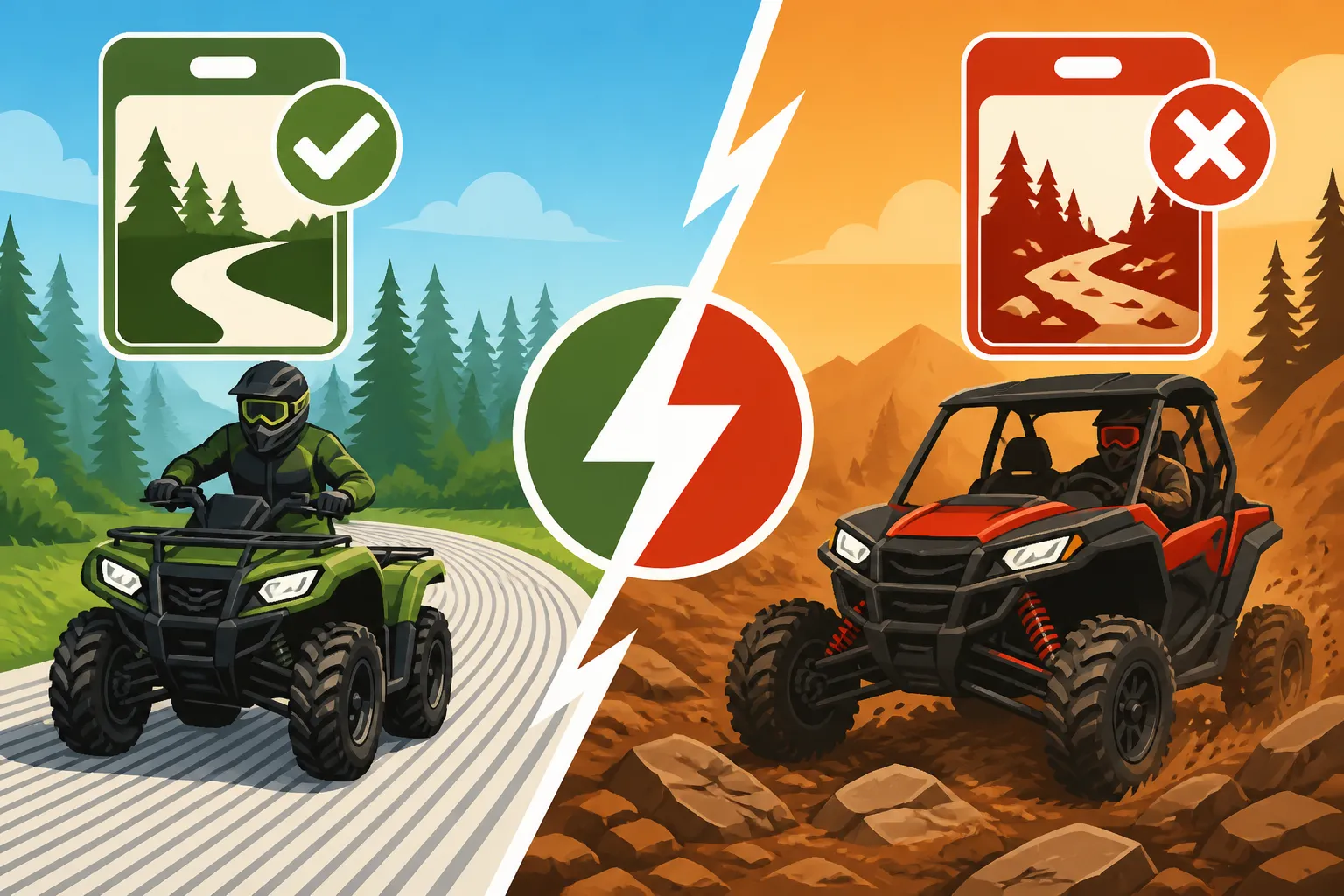
New Brunswick’s trail permit system distinguishes between groomed and non-groomed trail access. In broad terms, a groomed permit is intended for riders who want access to groomed trails as well as applicable non-groomed routes. A non-groomed permit is for riders whose plans are limited to trails designated as non-groomed.
The names describe a trail category, not a promise about its condition on the day you ride. A groomed trail may still be rough, muddy, rutted, or affected by weather. A non-groomed trail may be well maintained and easy to ride. Conditions depend on the route, maintenance, recent weather, and club closures.
The permit choice matters because the trail network does not have one uniform access rule. A route can include different types of trails, and an open trail still requires the appropriate permit. Before buying, check the route information and the current permit rules rather than judging access from a map line or a trail’s surface.
| Question | Groomed permit | Non-groomed permit |
|---|---|---|
| Main purpose | Access for routes that include designated groomed trails, subject to current rules | Access for routes designated as non-groomed, subject to current rules |
| Best fit | Riders who need groomed-trail access or want broader route options | Riders whose planned routes are limited to non-groomed trails |
| Season planning | May suit plans that include the extra season associated with four-season trail access | May suit plans that stay within the applicable non-groomed season |
| Cost | A separate permit category; check the current amount with an authorized seller | A separate permit category; check the current amount with an authorized seller |
| What to confirm | Whether each trail is open and covered by the permit | Whether every intended trail is non-groomed and open |
For details about each category, see New Brunswick’s Groomed Trail Permit and New Brunswick’s Non-Groomed Trail Permit. The category names are a starting point; the current trail map, notices, and permit conditions are what matter for a specific ride.
A permit also is not a substitute for other requirements. It does not replace machine registration, insurance, or any documents a rider must carry. If you are checking what to bring, New Brunswick Documents You Must Carry explains the separate paperwork side of a trail ride.
How to choose the right permit for your plans
The simplest way to choose is to start with the route, not the sticker. Decide where you expect to ride, check which trail categories make up that route, and then confirm which permit covers them. If you are joining a group, ask the organizer which routes they plan to use and whether the ride may change direction because of closures or conditions.
A groomed permit may make sense when your plans include groomed trails or when you want the flexibility to use them. It may also be the more practical choice if you expect to ride during a season when groomed routes are available but non-groomed access is limited. Confirm the current season dates and trail access before relying on that distinction; a permit category does not guarantee that a particular trail is open.
A non-groomed permit may suit a rider who already knows that the planned routes are non-groomed and who does not need groomed-trail access. This can be a reasonable way to avoid paying for access you do not plan to use, but only if your intended trails and riding period fit the permit’s rules. Choosing the cheaper category without checking the route can leave you with a permit that does not cover the ride you had in mind.
Use this quick decision process:
- List the trails or trail segments you plan to ride. If you only know the general area, narrow it down using current trail maps and local club information.
- Check how those trails are classified. Do not infer the category from the trail’s appearance, surface, or name.
- Check dates and closures. A route can be closed or seasonally unavailable even when you hold the correct permit.
- Compare the route with the permit conditions. If any part of the trip requires groomed-trail access, do not assume a non-groomed permit will cover it.
- Confirm with an authorized seller or relevant trail organization if the route is unclear. It is easier to ask before riding than to discover a mismatch at a trailhead.
If you are weighing the trade-off between a broader access option and a more limited one, Which Riders Are Better Off on a Non-Groomed Permit can help frame the decision. For the seasonal difference, see What the Extra Season on a Four-Season Permit Covers. Treat season labels as planning information, not a promise that all routes will be available throughout the year.
Your choice may also change from one trip to the next. A local ride on known non-groomed trails can have different needs from a multi-day trip that links several areas. If you expect to cross into a different trail system, check that system’s rules separately rather than assuming your New Brunswick permit is enough.
Season, trail access, and conditions
Groomed and non-groomed categories can have different season coverage. The groomed option is associated with four-season access, while non-groomed trails are generally associated with a shorter riding season. That distinction can influence the permit decision, particularly for riders planning trips outside the main riding period.
Still, “four-season” does not mean every groomed trail is open every day of the year. Weather, maintenance, safety concerns, land access, and local closures can affect whether a route is usable. A spring thaw, washout, or other trail issue may lead a club to close a section or mark a reroute. A permit gives access under the applicable rules; it does not override a closure.
Before setting out, check the latest trail information for your route. Pay attention to notices from the organization responsible for the trails, and avoid riding around a closure to rejoin the marked route farther along. A closed section may be protecting the trail, addressing a hazard, or respecting a land-access restriction. When a route changes, follow the posted reroute.
It is also worth separating three questions that are easy to mix up:
- Is the trail open? Check current trail notices and conditions.
- Is the trail within the permit category you hold? Check the classification and permit conditions.
- Is your machine and ride otherwise compliant? Confirm registration, insurance, and any other applicable requirements.
A “yes” to one does not answer the others. For example, a trail can be open but require a permit category you do not have. A valid sticker does not make it lawful to ride a closed trail or excuse missing registration or insurance.
Do not assume that groomed means smoother or easier. Grooming describes a management or preparation category; it is not a difficulty rating. Riders still need to judge their machine, skill, weather, and the day’s conditions. If you are unfamiliar with a route, check its difficulty information and be prepared to turn back if conditions are beyond your ability or equipment.
Permit rules can also be confused with trail stickers and other decals. Attach the permit as required and check that it is legible and current. [New Brunswick Permit Placement on a Machine] covers sticker placement. If your sticker is damaged or missing, use the current replacement process rather than moving an old sticker between machines without confirming that is allowed.
Cost, purchase, and what the permit does not cover
Groomed and non-groomed permits have different costs, and the amount can change. Check the current price with an authorized seller before buying; do not rely on an old receipt, online discussion, or last season’s information. Some sellers may include the permit as part of a transaction, while others sell it separately. Confirm what is included and which machine the permit applies to.
Your decision should balance the cost against the access you actually need. If every trail on your planned route is non-groomed and you do not expect to use groomed trails, paying for a broader category may not be worthwhile. If a route includes groomed trails, or you need the associated season coverage, a non-groomed permit may not be an appropriate substitute. The route and current rules should settle the question.
A trail permit is separate from vehicle registration. Registration identifies the machine for road and regulatory purposes; the trail permit is for eligible trail access under the trail system’s rules. Insurance is separate again. Review New Brunswick ORV Registration Explained if you need to sort out registration, and New Brunswick Requires Insurance on Trails for the insurance requirement. Having one of these items does not mean you have the others.
The trail permit is also associated with membership benefits. New Brunswick Permit Equals Membership describes that relationship. Benefits and participating organizations can change, so check current information if a discount or membership feature is part of your decision.
Before completing the purchase, confirm the following:
- The permit category matches every trail you intend to ride.
- The permit applies to the machine you will use.
- The riding dates fit the current season rules.
- You understand where and how to display the sticker.
- You have separate registration and insurance requirements in order.
- You know where to check for trail closures and reroutes.
Buying from a seller does not necessarily answer whether a specific trail is open or whether the category covers your entire route. Keep a record of the permit purchase and carry the required documents when riding. If anything on the permit or sticker is unclear, ask the seller or the organization responsible for the trail network before heading out.
Reciprocity and riding outside New Brunswick
A New Brunswick permit should not automatically be treated as permission to ride every trail outside the province. Reciprocity arrangements can vary by destination, trail organization, permit type, and season. They can also change, so confirm the current arrangement before crossing a provincial or international border.
For nearby destinations, check the specific rules for the place you plan to ride. The information in New Brunswick Reciprocity With Nova Scotia and [New Brunswick Reciprocity With PEI] can help you identify what to verify. For travel to Maine, review New Brunswick Riders Visiting Maine. If you are planning a Quebec ride, check the current requirements in New Brunswick Riders Visiting Quebec rather than assuming an older arrangement still applies.
Do not rely on a sticker alone as proof of reciprocity. Ask whether the agreement covers your permit category, the trails you plan to use, and the dates of your trip. Also check whether the destination requires additional registration, insurance, or documents. A reciprocal trail-access arrangement, where available, does not necessarily waive unrelated legal requirements.
If your route crosses between networks, build in time to verify access before departure. Save current maps and notices, but remember that downloaded information may not show a late closure. A quick confirmation with the relevant trail organization can prevent an expensive or frustrating detour.
The practical rule is straightforward: choose the permit based on the New Brunswick trails you intend to ride, then confirm access separately for any other jurisdiction. When plans change, check again. That small step is more reliable than assuming that the permit category, sticker, or agreement you used previously still covers the new route.
Disclaimer
This article is for general informational purposes only and does not constitute professional advice. Laws, prices and regulations vary by location and change over time. Consult a qualified professional for guidance on your specific situation.