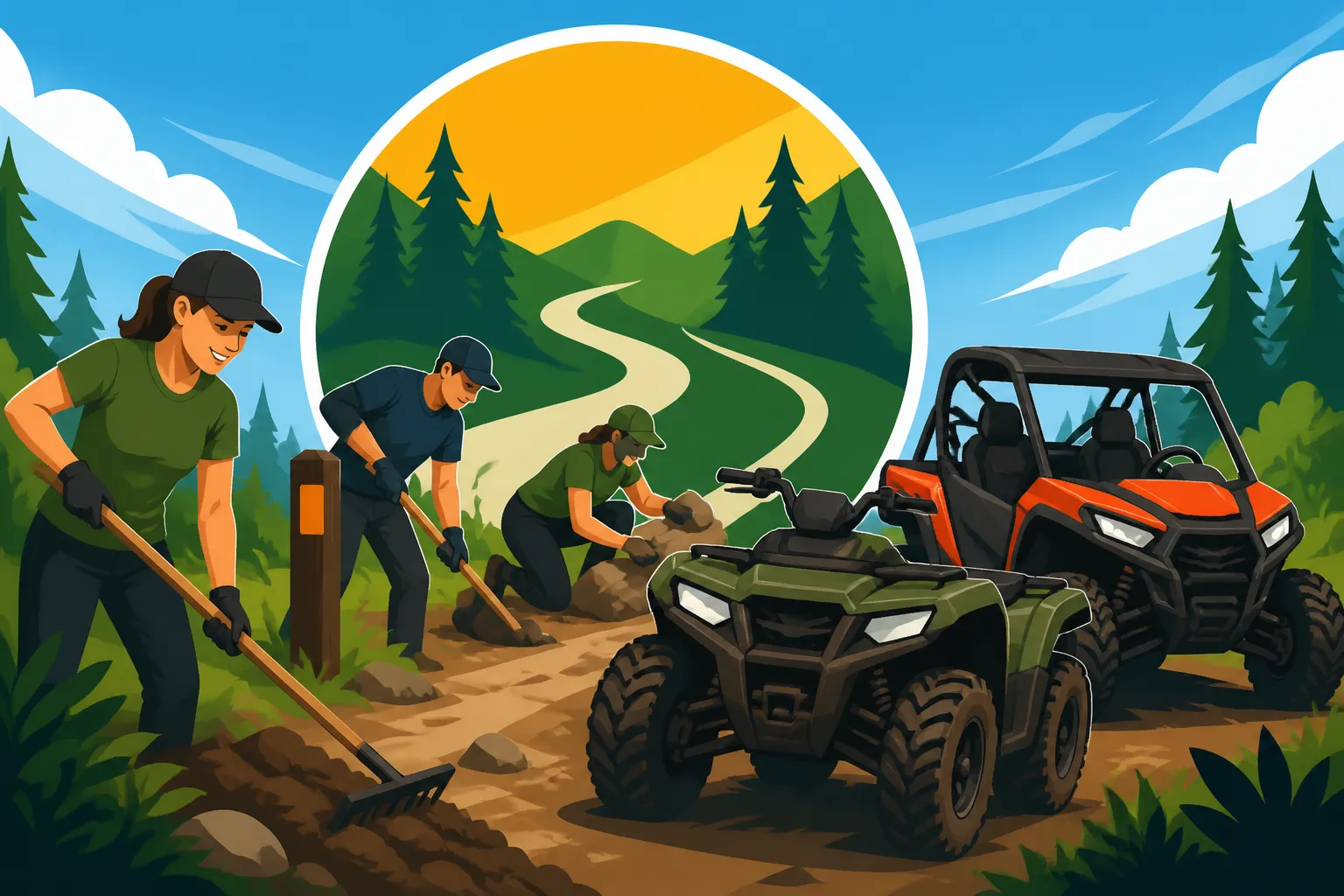
New Brunswick Club Volunteer Days
A trail that looks like a simple muddy stretch may actually need careful drainage work, brush clearing, or a reroute to keep riders safe and protect the land. New Brunswick ATV club volunteer days are a practical way to help maintain the routes riders enjoy, even if you have never picked up a trail tool before. Here’s how to find a work day, what to expect, and how to contribute responsibly.
What New Brunswick ATV club volunteer days involve
The work behind a rideable trail
Trail maintenance is more than cutting back branches. Depending on the location and conditions, volunteers may clear brush, move fallen limbs, refresh signs, remove litter, inspect a bridge, or help direct water away from a damaged section. Some tasks are straightforward; others need experienced volunteers, specialized tools, or permission and planning before work begins.
A trail can change quickly after heavy rain, spring thaw, or a storm. Water flowing down the trail may deepen ruts or wash out the edge of a path. A low branch may become a hazard when riders approach it around a bend. What looks like a small repair to one person can become a larger safety or erosion problem if people keep riding around the wet spot and widening the route.
Clubs organize maintenance to address these issues in a coordinated way. That matters because a good repair is not simply about making a trail look tidy. Work should protect the route, account for drainage, and follow the land manager’s requirements. For more background, see [New Brunswick Club Trail Maintenance] and [New Brunswick Clubs and What They Maintain].
Why volunteer help matters
A club may have a wide area to care for, with trails that pass through different terrain and conditions. Volunteers add practical help where it is needed: a few extra people can make it easier to clear a short stretch, check trail signs, or spot problems that are easy to miss from a machine.
The benefit is personal, too. Joining a work day gives you a better sense of what goes into keeping a trail open. You may learn why a route is marked a certain way, why a damaged section is closed, or why riding around a puddle can make it worse. That knowledge tends to stay with you on later rides.
Work days can also be a friendly way to meet local riders without needing to arrive with a group or an impressive set of tools. You can ask questions, learn who to contact about a concern, and get familiar with the people who help maintain the trails. If you are unsure which club covers the area where you ride, start with [Finding a New Brunswick Club Near Your Town].
How to find and join a volunteer day
Contact the club before making plans
Volunteer days are organized locally, so details can vary. A club may announce a work day through its own communication channels, invite members directly, or coordinate help for a specific project. Rather than assuming that a trail needs work or showing up with tools, contact the club first and ask what help is planned.
A simple message is enough: say where you usually ride, that you are interested in volunteering, and whether you have any relevant experience. Ask where and when to meet, what clothing to wear, whether tools are provided, and whether you need to bring anything. If you have a chainsaw, brush cutter, ATV, or other equipment, mention it, but wait for the organizer’s direction before bringing or using it.
This first conversation also helps avoid a common frustration: arriving at the wrong access point or on a day when the club is not working there. Trails may cross multiple parcels or use access routes that are not obvious to someone unfamiliar with the area. The organizer can explain where to meet and which route to use.
Choose a task that fits your experience
You do not need to be a mechanic or a skilled trail builder to contribute. Clubs may need help with simple tasks such as picking up litter, carrying supplies, checking signs, or moving small branches. If you are new, say so. A responsible organizer should be able to explain the task and let you know if it requires training or specialized equipment.
Here is a useful way to think about the options:
| Volunteer task | Often suits | Ask the organizer |
|---|---|---|
| Litter pickup | First-time volunteers and families, if the club permits | What areas are included and how to handle hazardous items |
| Sign or marker checks | Riders familiar with the local route | Which signs need checking and how to report missing ones |
| Light brush clearing | Volunteers comfortable working outdoors | Which tools are approved and what vegetation should remain |
| Carrying supplies | People who prefer a support role | What needs moving and whether a machine is useful |
| Drainage or structure work | Volunteers with relevant experience or instruction | Who is supervising and whether special authorization is needed |
A volunteer day is not the time to independently cut trees, reshape a trail, install signs, or alter a bridge. Even well-intended work can create safety, environmental, or land-access problems if it is not approved. Follow the club’s plan, and if you spot a separate issue, report it instead of trying to fix it on your own.
What to bring and how to work safely
Dress for the conditions, not just the forecast
New Brunswick trail conditions can vary from one area to another, and weather can shift during an outdoor work day. Wear sturdy footwear, gloves, and clothing that can handle brush, damp ground, and dirt. Bring drinking water, food for the length of the event, and any personal medication you may need. A spare layer and rain gear can make a long day far more comfortable when the weather turns.
Ask the club whether it supplies tools and safety equipment. If you bring your own, do not assume that you should use it. Power tools, cutting equipment, and machinery need proper handling and supervision. Make sure the organizer knows what you brought and follows the club’s safety plan.
If you are travelling to an unfamiliar meeting point, save the directions before leaving. Cell reception can be unreliable in remote areas, so a phone map should not be your only plan. An app such as onX Offroad may help you understand your own route or organize offline navigation, but it should not replace official club directions, trail signage, or permission to access land. Confirm the meeting location with the club and follow the route it identifies.
Follow instructions and respect the trail
Listen to the briefing before work starts. The organizer should explain the task, boundaries, hazards, and how volunteers will communicate. Stay within the assigned area, use tools only as instructed, and let the supervisor know if you find a problem that was not part of the plan.
Good trail stewardship also means leaving the area as you found it—or better. Keep debris and supplies out of waterways, do not block access points, and follow any directions about waste or materials. If the work involves a gate, make sure you understand how it should be left. If the task is near a road or active work area, stay alert and follow the safety instructions rather than stepping away to take a closer look.
For your own riding days, check [New Brunswick Trail Conditions Before You Go] and [New Brunswick Trail Etiquette Locals Expect]. Those habits connect directly to volunteer work: respecting closures, staying on the marked corridor, and avoiding wet or damaged sections can reduce the repair work needed later.
Turning a work day into lasting trail support
Report problems clearly
If you notice a washout, fallen tree, missing marker, or damaged bridge, give the club a clear description. Include the nearest recognizable trail sign, junction, or access point. If it is safe and appropriate, a photo can help the club understand the issue. Avoid walking into an unstable area or standing in a travel lane to get a better picture.
A navigation app such as onX Offroad can help you orient yourself while recording where you encountered a problem, but treat any location information as a clue for the club to confirm—not as a substitute for its official trail map. Describe what you saw in plain language, such as “large limb across the marked trail just past the signed junction,” rather than relying only on an app pin.
Use the club’s preferred reporting method and include whether the problem appears to block passage or create an immediate hazard. Do not post sensitive access details publicly if the club asks riders to keep them private. For more guidance, read [Reporting Damage to a Club] and [New Brunswick Trail Closures After Rain].
Keep helping after the event
One volunteer day does not have to turn into a major commitment. You can ask whether the club needs occasional help, whether another work day is planned, or whether there are small tasks you can support between organized events. Some people are happiest doing hands-on trail work; others may be more useful helping with event setup, checking signs, or sharing accurate closure information with fellow riders.
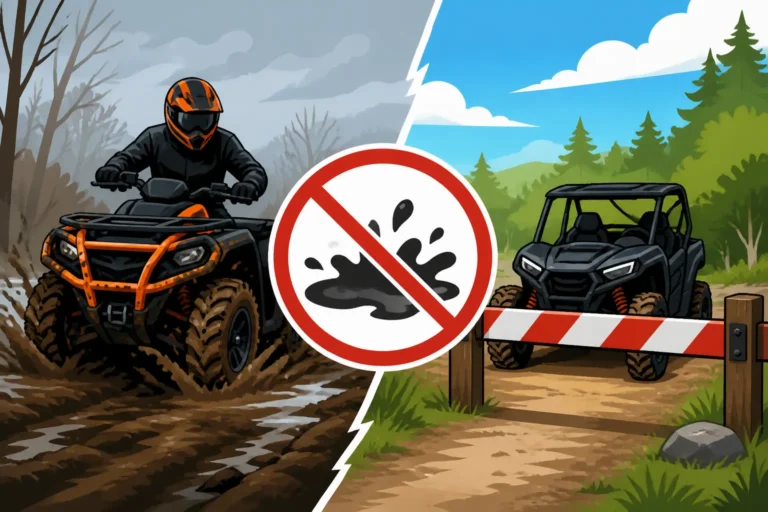
You can also support trail care simply by riding thoughtfully. Stay on the marked route, obey closure notices, avoid spinning tires in soft sections, and do not create a new line around mud or standing water. If a trail is closed, choose another open route rather than trying to get through. That patience can prevent damage that volunteers would otherwise need to repair.
If you use onX Offroad or another navigation tool, keep your saved routes in perspective: a track on a screen does not necessarily mean the trail is currently open or approved for riding. Check club information before heading out, especially after storms, during spring thaw, or when conditions are changing. The most useful volunteer mindset is simple: ask before acting, leave the route better than you found it, and let the club coordinate the work.
Disclaimer
This article is for general informational purposes only and does not constitute professional advice. Laws, prices and regulations vary by location and change over time. Consult a qualified professional for guidance on your specific situation.