New Brunswick Riding in Summer
Summer is a rewarding time to ride an ATV or side-by-side in New Brunswick, but warm weather does not mean every trail is open, dry, or easy to follow. Bugs, sudden showers, soft ground, and changing trail conditions can turn a pleasant outing into a frustrating one. This guide helps you plan a safer summer ride, choose a route, and prepare for the day.
Plan your New Brunswick summer ride before leaving
Check that your route is open and suitable
Start with a current trail map and condition update from the relevant club or trail organization. New Brunswick has riding areas around places such as Woodstock, Hartland, Miramichi, Bathurst, and the Acadian Peninsula, but conditions can differ from one section to the next. A route that looks straightforward on a map may include a washout, a temporary closure, a detour, or a section that is difficult after rain.
Pay attention to the type of trail and the season it is open. Some trails are maintained for more than one season, while others have limited seasonal access. Do not assume that a roadbed, rail corridor, or woods road is open to ATVs just because it is physically passable. A route shown on a general navigation app is not necessarily an authorized ATV trail.
Check the trail status on the day you plan to ride, especially after heavy rain. Clubs may close a section to prevent damage while the ground is saturated. Riding around a muddy spot can widen the trail and damage nearby vegetation, so follow posted detours rather than making your own. For a closer look at the differences between seasonal trail access, see [New Brunswick Trails Open in Summer Only] and [New Brunswick Trail Conditions Before You Go].
Make sure your paperwork and permit are in order
Registration and a trail permit serve different purposes. Registration relates to the machine, while the trail permit relates to access to designated trails. Having one does not automatically mean you have the other. Before you leave home, check the requirements that apply to your machine and route, and confirm that any required sticker is valid and displayed correctly.
It is also worth checking insurance and carrying the documents you may need to produce on a ride. A quick pre-trip check can prevent an awkward delay at a trailhead or during an officer’s inspection. Keep papers protected from rain and mud, and make sure everyone in your group knows where they are stored. [New Brunswick Registration Before Your First Ride] explains the registration side, while [Four Things to Carry on a New Brunswick Trail] is a useful reminder for packing.
| Before the ride | What to check | Why it matters |
|---|---|---|
| Trail access | Current club map, closures, and detours | A mapped line may not be open or authorized |
| Permit | Correct permit for the intended trail use | Registration alone does not grant trail access |
| Registration and insurance | Valid documents for the machine | You may need to show them during a stop |
| Weather | Rain, heat, and storm forecast | Conditions affect comfort, traction, and visibility |
| Fuel and distance | Route length and fuel stops | Remote sections may have few services |
| Group plan | Meeting point, pace, and return time | Keeps the group together and helps if plans change |
Prepare for summer conditions on the trail
Pack for heat, rain, and bugs
Summer weather can change quickly, particularly on longer rides away from towns. A cool start can become hot by midday, and a passing shower can leave riders damp long after the rain has stopped. Wear layers that can be adjusted, bring rain gear even when the morning sky is clear, and pack enough drinking water for the full ride rather than relying on an uncertain stop along the way.
Insects can also make a beautiful ride feel miserable if you are not ready for them. Bug spray, long sleeves, and a light layer for breaks can be especially useful in wooded areas and during early summer. Sunglasses or goggles help with dust and flying debris, while gloves and sturdy footwear make long stretches more comfortable. Keep any food and scented items sealed so they do not spill or attract unwanted attention at a rest stop.
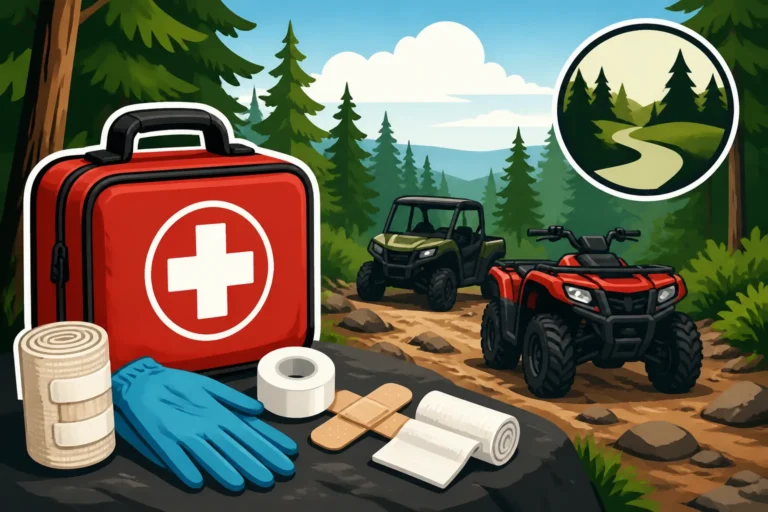
A practical day pack might include water, snacks, a basic first-aid kit, a phone, a charging option, rain gear, bug protection, and a small tool kit suited to your machine. For remote rides, think carefully about communication: a phone may lose service in the interior, so do not treat a map app or mobile signal as your only backup. [Packing for a Full Day in the Woods] offers more ideas for building a sensible kit.
Expect changing traction and trail surfaces
Summer trails are not automatically dry trails. Clay, loose gravel, exposed roots, and rocky sections can behave differently after a storm, and shaded or low-lying areas may remain wet when the rest of the route has dried. Slow down when the surface changes, leave room between machines, and avoid sudden steering or braking on slippery ground.
Dust can be another issue during a dry stretch, especially when several machines are travelling together. Leave enough distance to see the trail clearly, and avoid following so closely that dust blocks your view. On narrow sections, be prepared to meet other trail users and pass carefully where there is adequate space. Never leave a marked corridor just to get around a rough or wet patch; that shortcut can create new damage and may take you onto land where riding is not permitted.
Route-planning tools can help you understand distance and terrain, but they should be treated as supplementary. Some riders use onX Offroad to review route lines and keep track of their position; compare what you see there with the official New Brunswick trail map and current local notices before setting out. onX Offroad can also be useful for organizing a planned route, but a saved track should not override a closure sign or a club reroute.
Choose a route that fits your group
Match distance and difficulty to the least experienced rider
A summer ride is more enjoyable when the route suits the whole group. Think about the least experienced rider, the range of machines, and how comfortable everyone is with longer stretches away from services. A route that feels easy to a regular rider may be demanding for someone who is new, riding a different machine, or travelling with a passenger.
Plan a conservative first leg and leave room for stops. Riders often underestimate how long a route will take once they account for dust, trail traffic, breaks, and unexpected detours. If you are riding with children or newer riders, avoid building the day around an ambitious mileage target. Agree on a pace before starting and decide where the group will regroup if someone falls behind.
New Brunswick’s riding areas offer a range of scenery and terrain, from wooded corridors to routes near rivers and coastal areas. Choose based on what your group wants from the day, not just the longest line on the map. For route inspiration, browse [New Brunswick Trails for a Weekend Trip] or [New Brunswick Trails With River Views], then confirm the route’s current access and conditions locally.
Build in fuel, rest, and a backup plan
Before you start, estimate fuel needs using your own machine, load, riding style, and expected terrain. Do not assume that a village or fuel station will be directly on your route or open when you arrive. If your trip includes a remote leg, carry a suitable reserve plan and share your route and expected return time with someone who is not riding with you.
Agree on a simple regrouping routine. For example, stop at major intersections, wait at trail junctions, and make sure the last rider knows the route. If a machine develops a problem, the group should have a plan for turning around or getting help without leaving anyone alone. A navigation app such as onX Offroad may help you follow a planned track, but keep an offline map or another backup available where practical. onX Offroad is most useful as one part of a broader plan that includes official trail information, a charged device, and clear communication among riders.
A useful backup plan also accounts for weather and fatigue. Decide in advance what conditions would make the group shorten the ride or return early. If rain makes a section unsafe, a rider becomes overheated, or the group is moving more slowly than expected, changing the plan is good judgment—not a failed outing.
Ride responsibly and leave the trail in good shape
Respect closures, land access, and other trail users
Stay on the marked route and obey closure signs, gates, and detours. A woods road can cross land with different owners or access rules, so do not assume that a visible road is open to recreational riding. If you are unsure whether a route is authorized, stop and check rather than continuing based on guesswork. [New Brunswick Trails That Cross Private Woodlots] and [Who to Ask Before Riding New Brunswick Crown Land] can help you think through access questions.
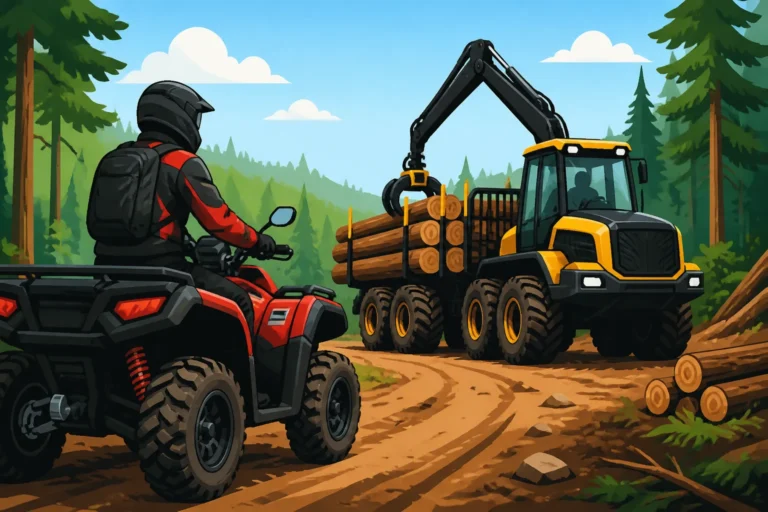
Be considerate when passing homes, farms, hikers, cyclists, or other trail users. Slow down, give people room, and keep noise and dust in mind, particularly near residences. If you meet logging or other work activity, approach carefully and follow any directions or posted signs. Trail access depends on shared use and local cooperation, so a little patience can help protect routes for future rides.
Finish with a quick post-ride check
At the end of the day, check your machine for damage, packed mud, loose parts, or leaks before loading it for the trip home. If you encountered a washout, a damaged sign, or a blocked section, report it to the appropriate club or trail organization with a clear location description. That information can help crews assess the issue and decide whether a warning or repair is needed.
Take a moment to account for everyone in the group and confirm that no one is waiting at a planned meeting point. Clean mud and debris from your machine before moving between riding areas where practical, and leave the trailhead tidy. A little care after the ride makes the next outing easier—and helps preserve the places that make summer riding in New Brunswick worthwhile.
Disclaimer
This article is for general informational purposes only and does not constitute professional advice. Laws, prices and regulations vary by location and change over time. Consult a qualified professional for guidance on your specific situation.