Best New Brunswick ATV Trails for Beginners
A first New Brunswick ATV ride can feel intimidating when the map is unfamiliar, trail conditions change, and a route that looks simple on screen turns muddy or rocky in person. This guide helps beginners choose a sensible starting area, match a ride to their experience and machine, and prepare for a safer day without assuming every marked trail is easy.
Beginner-friendly ATV trail areas in New Brunswick
“Beginner-friendly” is not a permanent label attached to an entire region. A smooth, wide section can lead into a rougher stretch, and rain, washouts, logging activity, or seasonal closures can change what a trail is like. Think of these locations as places to research for a first ride, not guarantees of easy conditions.
Woodstock, Hartland, and the western trail network
The Woodstock and Hartland areas can be useful starting points for riders who want to explore a managed trail network without committing to a remote, all-day route. Before setting out, look for a short out-and-back or loop that lets your group turn around easily. A nearby starting point and a modest first destination make it simpler to stop if someone feels tired or unsure.
New riders often focus on distance and overlook surface. A shorter route on a wide, well-maintained section may feel more comfortable than a longer ride with narrow cuts, steep grades, or wet ground. Check the route’s current condition and access details through the appropriate trail information channels before you unload. [Riding Out of Woodstock] and [Riding Out of Hartland] can help you explore those local starting areas.
If you’re bringing a UTV, confirm that the route allows your machine’s size and type. A trail that feels roomy on an ATV may be tight for a side-by-side, especially near bridges, gates, or narrow turns. Don’t assume that a route suitable for one vehicle automatically works for another.
Miramichi and the central interior
Miramichi is another area to consider when planning a New Brunswick ride. The region’s mix of woods roads and trail corridors can appeal to riders looking for a forest setting, but the character of a route can vary from one section to the next. A beginner should choose a known, well-marked ride rather than improvising at every junction.
For a first outing, plan around a clear turnaround point and keep the route conservative. Forest trails may have limited cell service, so download or prepare your navigation information before leaving a populated area. [Riding Out of Miramichi] offers a useful place to begin researching the area, while [New Brunswick Trail Conditions Before You Go] is a good reminder to check for changing access and conditions.
Beginner riders should also account for other trail users and work activity. Logging trucks, maintenance vehicles, and riders coming from the opposite direction may appear around bends or on narrow sections. Slow down where visibility is limited, stay to the marked corridor, and leave room to pass safely when the trail allows it.
Fredericton, Bathurst, and coastal options
Riders based near Fredericton or Bathurst may find it more practical to choose a local starting area than to travel across the province for a first ride. The best option is the route that fits your group’s ability, machine, available daylight, and comfort with changing terrain—not necessarily the one with the most dramatic scenery.
Coastal and northern areas can be appealing, but don’t read “scenic” as “easy.” Trail surfaces and exposure can vary, and weather can make a familiar route feel more demanding. Start with a modest plan and check local trail information before heading out. [Riding Near Fredericton] and [Riding Near Bathurst] can help narrow your search.
| Area to research | Why it may suit a first ride | What to check before you go |
|---|---|---|
| Woodstock and Hartland | Convenient starting points for planning a short, manageable route | Current trail conditions, route width, access, and UTV suitability |
| Miramichi | A forest-region option for riders who prefer a clearly planned route | Cell coverage, marked junctions, work activity, and a turnaround point |
| Fredericton area | A practical choice for riders who want to begin closer to home | Local access rules, route surface, and available riding time |
| Bathurst area | A northern starting point for researching nearby trail options | Weather, trail condition, route restrictions, and fuel planning |
How to choose a trail that matches your experience
A first ride goes better when the route fits the least experienced person in the group. It’s easy to feel pressure to keep up with friends, but a pace that feels comfortable to one rider can be stressful for someone learning to handle hills, loose gravel, ruts, or tight turns.
Look beyond distance and scenery
Start by asking practical questions: Is the route marked? Can you turn around without difficulty? Does it include narrow sections, steep climbs, water crossings, or loose surfaces? How far is the next place to stop? A route description that doesn’t answer these questions is a reason to do more research, not a reason to guess.
Keep the first outing short enough that your group can return well before dark. A beginner may need more time than expected to get used to steering, braking, shifting their weight, and keeping a safe following distance. Fatigue can also arrive before anyone expects it, particularly on a bumpy route.
A mapping tool such as onX Offroad can help you review route lines and plan navigation, but don’t treat any app as proof that a trail is open, permitted, or suitable for your machine. Compare what you see with current local trail information and posted signs. Conditions and access can change, and a line on a map may not tell you what the ground is like today.
Match the trail to your machine and group
ATVs and UTVs don’t always have the same access options. A UTV’s width can make narrow trails, gates, and bridges a concern, while an ATV rider may have different handling challenges on rutted or uneven ground. Confirm machine access before leaving home, and don’t try to squeeze a vehicle through a passage that looks too tight.
Think about the whole group, not just the most confident rider. If one person is new, choose a route that gives them room to build confidence without pressure. An experienced rider can help by riding behind the beginner, keeping a steady pace, and waiting at junctions rather than disappearing around the next bend.
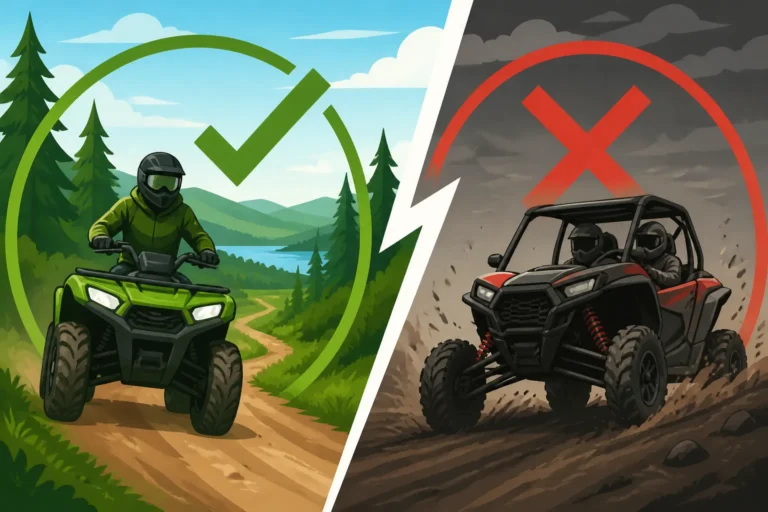
For a first ride, avoid making the route more difficult just because the machines are capable of handling it. Deep mud, steep slopes, and water crossings can turn a relaxed outing into a recovery problem. If a section feels beyond your group’s comfort level, stop somewhere safe and reassess rather than following others into it.
Prepare before you leave the trailhead
A little preparation can prevent the most frustrating beginner problems: arriving to find a route closed, discovering you lack required paperwork, or realizing your phone has no signal when you need directions. Set aside time to check requirements and organize your gear before the day of the ride.
Check permissions, permits, and required documents
Confirm that the route is an authorized ATV trail and that your group has the permits, registration, and insurance required for the kind of riding you plan to do. Requirements can depend on the machine, where you’re riding, and whether you’re on a managed trail or private land. A trail pass is not the same thing as permission to ride anywhere.
New Brunswick trail information is organized through the provincial trail network and its clubs. Check the current rules and route information before going, and read posted signs at the trailhead. [New Brunswick ATV Trails: The QuadNB Network] is a useful starting point for understanding the managed trail system, while [New Brunswick Trail Permit Placement on a Machine] addresses an easy-to-miss practical detail.
Keep required papers accessible and protected from rain. Don’t assume that a photo on your phone will meet every requirement; check what documents you’re expected to carry. It’s also wise to tell someone who isn’t riding with you where you plan to go and when you expect to return.
Plan navigation, fuel, and basic safety gear
Download or prepare your maps before reaching an area with weak reception. onX Offroad can be one navigation aid, but carry a backup plan too: know the route, identify major junctions, and agree on what the group will do if riders become separated. A map is most useful when everyone understands the plan before moving.
Fuel planning matters even on a short beginner ride. Consumption varies with the machine, terrain, load, and riding style, so don’t assume a route that appears close on a map is within your comfortable fuel range. Leave with a sensible reserve and identify where you can refuel before committing to a longer outing.
Bring a properly fitted helmet and other protective gear appropriate to your ride, along with water, weather-appropriate layers, basic first aid supplies, and a charged phone. A tow strap and basic recovery gear may be useful, but beginners should not attempt a recovery they don’t understand. [Packing for a Full Day in the Woods] can help you think through what to carry when a short ride grows into a longer day.
Ride at a beginner’s pace and adapt as conditions change
Even a carefully chosen route can feel different once you’re on it. Take your time, leave space between machines, and remember that turning around is a sensible decision—not a failed ride.
Use simple habits on the trail
Before moving, agree on a few group rules. Decide who leads, who rides at the back, where everyone waits, and how the group will respond if someone stops. At a junction, wait until the last rider has caught up before continuing. These small habits help prevent a beginner from being left to guess which way the group went.
Keep your speed low enough to react to what you can actually see. Slow down for blind corners, ruts, loose stones, other trail users, and changing surfaces. Avoid riding close behind another machine, where dust can reduce visibility and there may be little room to brake safely.
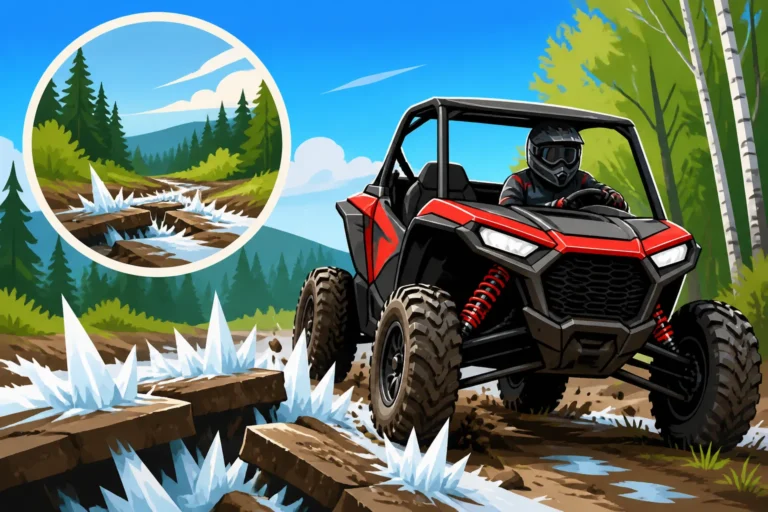
Stay on the marked route and follow signs, gates, and closures. Riding around a muddy or damaged section can widen the problem and harm the trail corridor. If the trail looks unsafe or blocked, don’t force a way through. Turn back or contact the appropriate local trail organization to ask about an alternate route.
Know when to stop, turn around, or choose another route
Pay attention to how the group is doing, not just how far you’ve travelled. If a new rider is tense, struggling with the machine, or tiring quickly, take a break in a safe spot. A short pause can help, but continuing to push through discomfort often makes mistakes more likely.
Conditions can also call for a change of plan. Heavy rain, a damaged bridge, poor visibility, a closed trail, or an unexpected work area can make a route unsuitable. Don’t rely on yesterday’s ride report or a route someone remembers from a previous season; check for recent updates and follow signs on site.
If you’re using onX Offroad during the ride, treat it as a navigation reference rather than a substitute for local instructions. The app can help you keep track of your planned route, but it cannot make a closed trail open or confirm that the ground is safe. For a beginner, the most useful plan is one that includes enough time and flexibility to take an easier route or head back early.
Disclaimer
This article is for general informational purposes only and does not constitute professional advice. Laws, prices and regulations vary by location and change over time. Consult a qualified professional for guidance on your specific situation.