Why QuadNB Used to Be Called the NBATVF
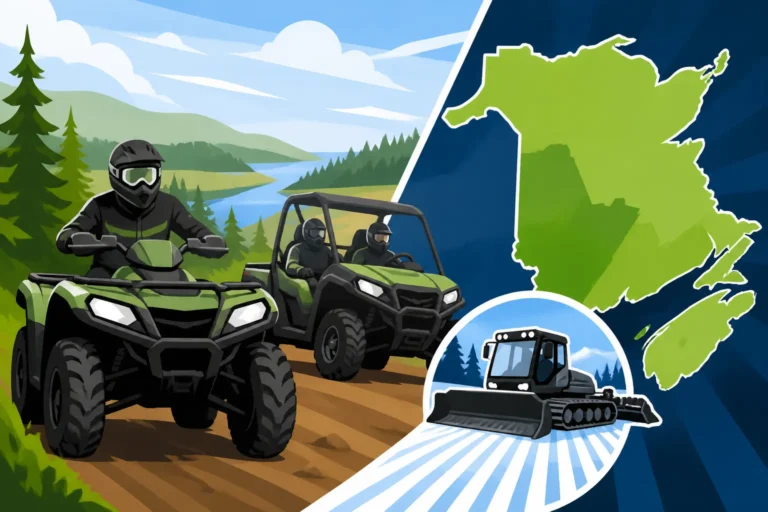
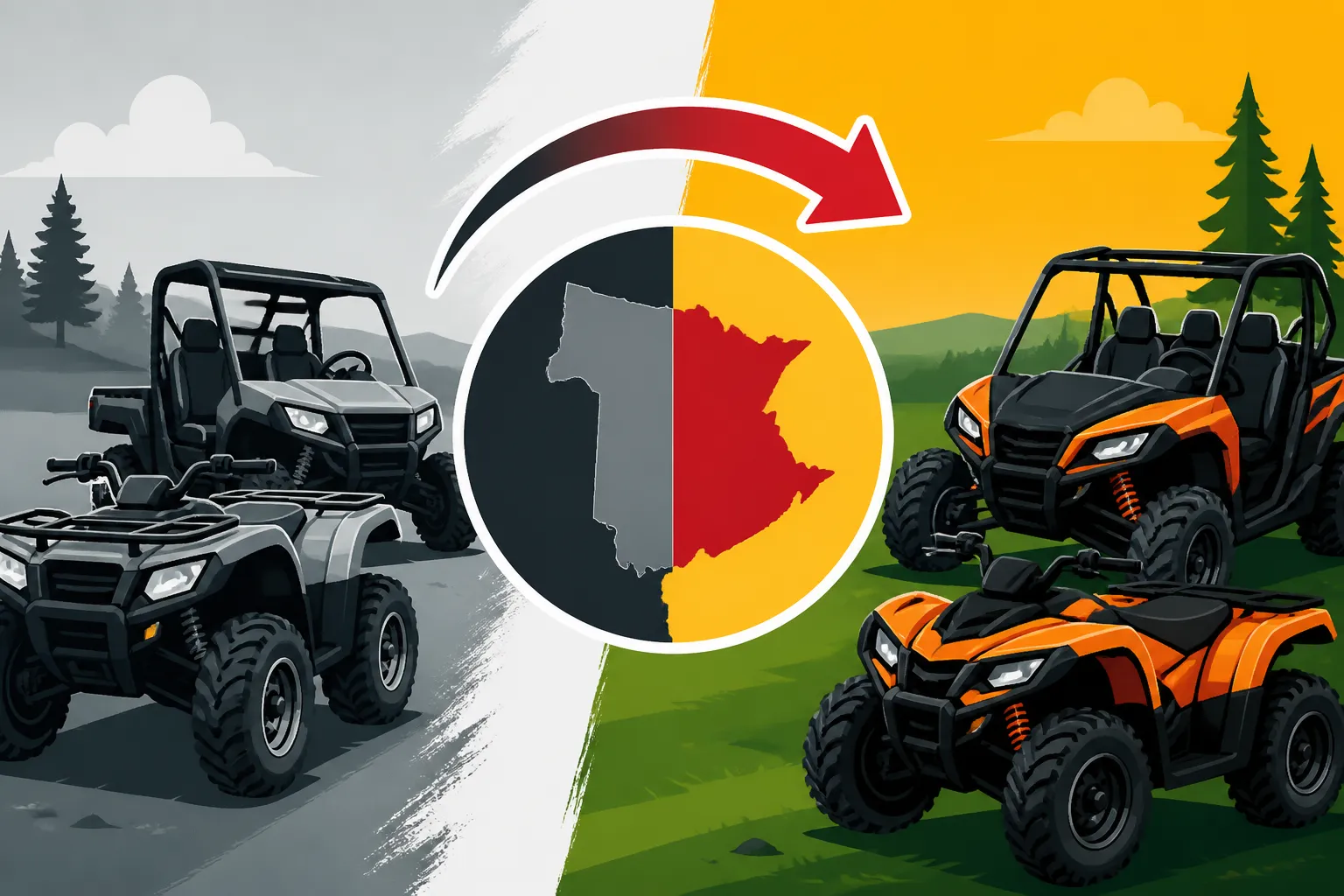
The name NBATVF can look like a completely different organization from QuadNB, especially when an older trail sign, club document or online post uses the former acronym. The connection is straightforward: NBATVF refers to the New Brunswick ATV Federation, while QuadNB is the name riders are more likely to recognize today. Here’s what that name change means—and what it does not mean—when you ride.
What NBATVF Stood For
The acronym behind the old name
NBATVF is short for the New Brunswick ATV Federation. It is an initialism built from the organization’s former name, so it can feel formal and a little cumbersome when spoken aloud. Riders might have seen it on older paperwork, club materials, trail references or posts shared by people who have been riding for years.
That kind of name tends to make sense in official or administrative contexts. “Federation” describes a body that connects clubs and represents a wider riding community, while “ATV” identifies the type of recreation it serves. But an acronym does not always tell a new rider much at a glance. Someone planning a family ride near Miramichi, for example, may recognize “quad” much faster than “NBATVF.”
This is one reason the older and newer names can continue to circulate together. A long-time rider may naturally say NBATVF because that is the name they learned first. A newer rider may search for QuadNB when looking for trail information. They may be talking about the same provincial organization, even if the words on the screen or sign differ.
Why “federation” can sound less familiar to riders
“Federation” describes an organizational structure, not a specific trail, club or piece of riding equipment. If you are new to the sport, it may not be obvious whether a federation is a government office, a permit seller, a club association or a trail operator. That uncertainty is understandable, particularly when you are trying to figure out where to get a permit or whether a route is open.
In everyday conversation, riders often use straightforward language. They talk about quads, trails, local clubs and where they plan to ride. A short name that includes “Quad” can feel more immediate and easier to remember than an acronym whose letters need explaining. That practical difference matters when someone is scanning a map or asking a friend, “Who manages this trail network?”
Still, the older name helps explain the organization’s broader role. A federation is not simply a nickname for one local riding club. It points to a province-wide connection among clubs and riders. If you want to understand how local groups fit into that picture, [New Brunswick Clubs and What They Maintain] offers useful context about the work clubs do on the ground.
Why QuadNB Is the Name Riders See
A more direct public-facing identity
QuadNB is a shorter, more conversational name. It is easier to say aloud, easier to remember and more immediately connected to quad riding. That makes it practical in places where riders need to identify an organization quickly: a conversation at a trailhead, a club notice, a map or a post shared in a riding group.
The name also works well for riders who use “quad” as their everyday term for an ATV. A visitor planning a trip from Fredericton or Bathurst does not need to decode an acronym before understanding the general subject. The name itself points toward the riding community and trail activity.
A more approachable name does not automatically mean the organization’s responsibilities or structure changed. It is helpful to separate a public-facing name from the underlying work. Trail communication, club coordination and rider information are practical functions that can continue even as the name people recognize evolves.
Why both names may still appear
Names do not disappear from everyday use the moment a newer identity becomes familiar. Older documents may remain in circulation, club members may reuse saved templates, and riders may share information they received years ago. A search result or social post may also use the older acronym because that is how the writer remembers the organization.
That can be frustrating when you are trying to confirm whether two references point to the same place. You might see NBATVF on one page and QuadNB on another, then wonder whether you have found two separate groups. In many ordinary riding conversations, the difference is simply old name versus newer public identity—not a sign that you have to join two organizations or buy two separate permits.
When the distinction matters for a specific decision, such as a permit, trail closure or event, check the details in the notice itself rather than relying on the name alone. Look for the issuing club, the location, the trail or permit type, and any conditions attached. A familiar logo or acronym can help you orient yourself, but the actual notice is what tells you where and when a rule applies.
| Name | What it refers to | Why riders may encounter it |
|---|---|---|
| NBATVF | The former name, New Brunswick ATV Federation | Older documents, long-time riders’ conversations or archived references |
| QuadNB | The more recognizable public-facing name | Current rider conversations and trail-related information |
| Local club name | A community or regional riding club | Local trail work, events, access questions and club updates |
What the Name Change Means for Riders
It is a useful clue, not a riding permission
Seeing the name QuadNB or NBATVF does not, by itself, tell you that a particular trail is open to your machine. Trail access can depend on the route, season, permit, local conditions and the rules that apply in that area. The organization’s name helps you recognize who is connected to the riding network; it does not replace checking the details for the route you plan to use.
Imagine you are driving to a trailhead outside Woodstock for a weekend ride. You find an older club post that mentions NBATVF and a newer map page that uses QuadNB. The names may be referring to the same provincial riding community, but you still need to check that the trail is open, that your permit is appropriate and that your machine is allowed on the specific route.
The same care applies when you see a sticker on a machine or a sign at a trail entrance. Do not assume the sticker is current simply because it carries a familiar name. Confirm its validity and placement requirements, and check that you have the documents required for the ride. For practical preparation, see [New Brunswick Trail Signage Explained] and [New Brunswick Trail Conditions Before You Go].
Local clubs still matter
A province-wide organization and a local club do different kinds of work. A broad organization helps connect the riding community and communicate at a provincial level. Local clubs are closer to the trails themselves and can be a valuable source of information about maintenance, access and local conditions.
This distinction is easy to miss if you are new to New Brunswick riding. Someone visiting from Maine may search for “QuadNB trails” and expect one central office to answer every question about every route. In practice, a local club may be the most useful contact for a particular trail section, especially when a storm, washout, logging activity or seasonal closure has affected the area.
If you are trying to get involved rather than simply plan a single ride, looking up nearby clubs can help you understand who maintains the corridors you use and where to ask local questions. [New Brunswick Quad Clubs Worth Joining] is a helpful next step. Riders who want to prepare their own route information can also explore [New Brunswick ATV Trail Map Downloads].
How to Read Older Trail Information
Check the details before dismissing an old reference
An older document is not automatically useless, but it may not answer today’s practical question. A trail map saved on your phone might still show a route, while the access conditions have changed. Likewise, an old notice that says NBATVF may correctly identify the organization but say nothing about whether a trail is open this week.
Start by identifying what the item is meant to tell you. Is it a general description of the organization? A trail map? A permit notice? A closure announcement? A club event post? Those are different kinds of information and can age at different rates. A historical reference to NBATVF may remain useful for understanding the name, while a trail-condition update needs to be checked against current local information.
Then confirm the location and the date or season connected to the information. A route near Bathurst can have different conditions from one near Moncton, and a notice for one stretch should not be treated as applying to a whole region. If the source is unclear, ask a local club or check the appropriate trail information before setting out.
Use digital maps as planning tools, not guarantees
Digital mapping can make route planning much easier, especially when you are unfamiliar with an area. Tools such as onX Offroad can help riders explore and organize route information, but a digital map should not be treated as permission to ride anywhere it displays. Verify access, trail status and applicable requirements through the relevant local or official information.
This distinction matters in New Brunswick, where a route may pass through different kinds of land or connect with roads and corridors that have their own rules. A line on a screen does not necessarily establish that a trail is open to ATVs, that a permit covers it, or that a temporary closure has not been posted. Treat the map as a planning aid, then confirm the conditions before you load the machine.
If you download a route for a remote ride, save the information in a format that works for your device and make a plan for limited cell service. [New Brunswick GPX Downloads for Riders] can help you think through route files, while [New Brunswick Trail Closures in Spring Thaw] explains why seasonal access can change even when a trail appears on a map.
What to Do When You See NBATVF or QuadNB
Match the name to the question you are asking
If your question is about the organization’s identity, the simple answer is that NBATVF is the older name associated with the New Brunswick ATV Federation, while QuadNB is the name riders commonly see today. If your question is about a permit, trail opening, club event or route, the name alone is not enough. Read the specific information attached to it.
For example, if a friend tells you that “the NBATVF trail” is open near Hartland, ask which trail or section they mean and when they last checked its status. If a club post uses QuadNB, look for the local club or corridor named in the post. Clear location details are more useful than trying to infer everything from the organization’s name.
You can also make your search more precise by combining the name with the place or task. Search for a local club near your destination, the specific trail region, or the permit information you need. That approach is usually more productive than searching only for the acronym and assuming the first result covers every riding question.
Build a simple pre-ride check
Before a ride, confirm the route, conditions, permit and documents you need. It may feel repetitive when you have ridden the area before, but it prevents the awkward moment of arriving at a trailhead only to discover that a section is closed or a required item is missing. This is especially worthwhile for visitors who are unfamiliar with local club boundaries.
A practical routine is to check the trail information, identify the local club or contact for the route, confirm your permit and inspect your machine before leaving home. If you are heading into a remote area, share your general plan with someone and prepare for weak cellular coverage. Route planning is not just about choosing a line on a map; it is about knowing what to do if the ride changes.
Respecting the trail also helps keep access available for everyone. Stay on marked corridors, follow posted signs and avoid riding around wet or damaged sections. The guidance in [New Brunswick Trail Etiquette Locals Expect] is useful whether you are a first-time visitor or a long-time rider who wants to be a good neighbour on shared trails.
Why the Name History Is Worth Knowing
Understanding the relationship between NBATVF and QuadNB is more than a trivia question. It can save you time when you are looking for older information, asking a local rider for directions or trying to work out whether two references point to the same organization. Instead of treating the names as competing groups, you can recognize the older acronym and move on to the detail that matters for your ride.
It also offers a small window into how an outdoor community communicates. A formal name may suit organizational work, while a short, familiar name is easier for riders to use in everyday conversation. That does not erase the older name or make every old reference irrelevant. It simply gives you a better way to interpret what you find.
For a practical takeaway, remember the distinction: NBATVF is the former name tied to the New Brunswick ATV Federation, and QuadNB is the name many riders recognize now. When planning a ride, focus next on the local club, the specific trail, current conditions and the requirements that apply to your machine. Those details—not the acronym alone—are what help turn a confusing search into a well-planned day on the trail.
Disclaimer
This article is for general informational purposes only and does not constitute professional advice. Laws, prices and regulations vary by location and change over time. Consult a qualified professional for guidance on your specific situation.