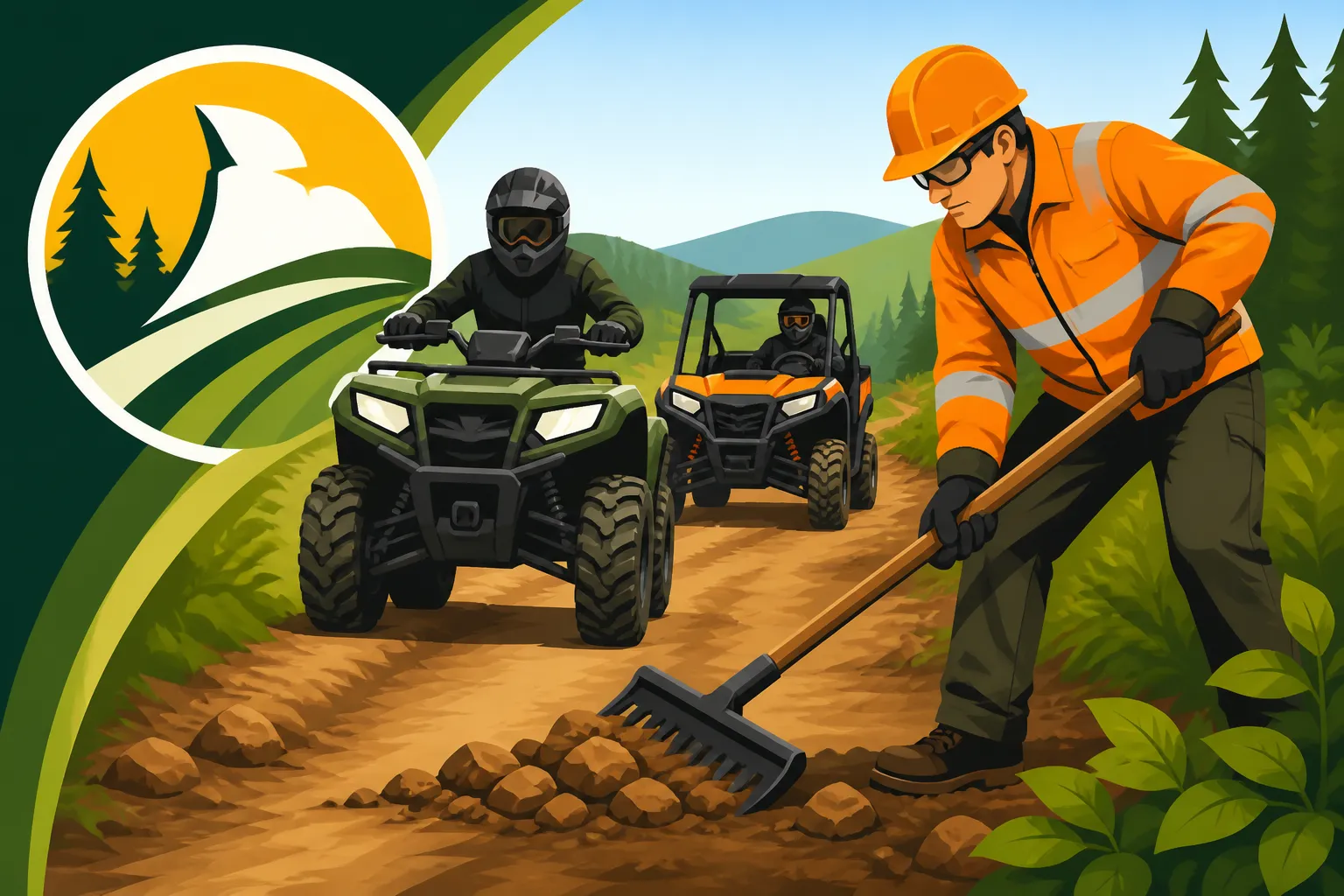
New Brunswick Club Trail Maintenance
A muddy rut, a washed-out culvert, or a branch hanging across a trail can turn a familiar New Brunswick ride into a frustrating detour. Club trail maintenance helps keep marked routes safer and more usable, but the work depends on volunteers, land access, and riders who respect closures. Here’s how maintenance happens, how to report a problem, and what you can do to protect the trails you ride.
How New Brunswick club trail maintenance works
Clubs maintain routes with help from volunteers
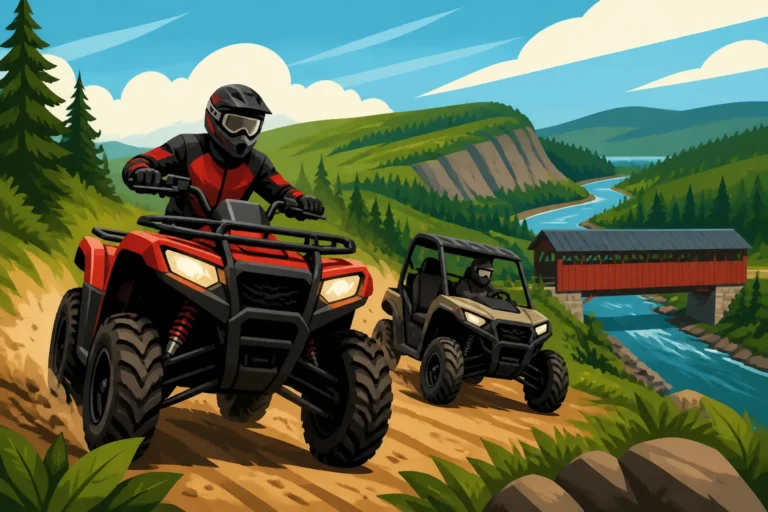
A marked trail doesn’t look after itself. Local clubs and volunteers may clear brush, inspect bridges and culverts, refresh signs, address erosion, and flag hazards. The work varies with the route: a corridor near Woodstock may face different issues from a remote section in the Restigouche, but both need attention from people who know the area and have permission to work there.
Maintenance is often practical, hands-on work rather than a single large project. A volunteer might trim branches that obstruct sightlines, while a larger work party clears a corridor or checks a structure after heavy rain. Some repairs need specialist equipment, materials, or approval before anyone can proceed. That can mean a hazard is identified quickly but takes time to fix.
Volunteers also have limits. They may be balancing trail work with jobs, family responsibilities, and other club duties. A report of a problem is useful, but it doesn’t mean a repair crew can be sent out immediately. For a closer look at the people and projects behind this work, see [Club Trail Work Weekends in New Brunswick](Club Trail Work Weekends in New Brunswick).
The kind of work changes with the season
Spring can expose damage that wasn’t obvious before winter. Frost heaves, soft ground, blocked drainage, and washouts may make a route unsuitable for traffic until it dries or is repaired. This is one reason a trail that looked fine late in the previous riding season may need careful inspection before it’s ready again. See [New Brunswick Trail Closures in Spring Thaw](New Brunswick Trail Closures in Spring Thaw) for more on why seasonal closures matter.
As the ground firms up, clubs may focus on brushing, drainage, signs, or repairs that were difficult to carry out during the thaw. Later in the season, heavy rain, wind, and frequent use can create new problems. In winter, some corridors may be shared with other users or managed differently, so a trail’s condition and availability can change even when it appears on a map.
Maintenance also depends on access. Clubs may need to coordinate with landowners or other people who manage the property before work can start. If a route passes through private land, permission is part of responsible trail stewardship—not an administrative detail to ignore. Good maintenance respects the people and agreements that make the route possible.
Why closures and trail conditions matter
A closure protects the trail as well as riders
It’s tempting to treat a closure sign as a suggestion when a route looks passable. But soft ground can be damaged quickly by repeated traffic. Tires may deepen ruts, push mud into a stream or ditch, or widen the trail as riders try to avoid a wet section. What begins as a short-lived problem can become a more difficult repair.
A closure can also protect riders from hazards they can’t easily judge from the trailhead. A washed-out culvert, damaged bridge, unstable slope, or active work area may be hidden around a bend. If a club closes a section, turn around and use a legal alternative rather than riding around a barrier or cutting a new path. For a more detailed look at the effects of wet conditions, read [New Brunswick Trail Closures After Rain](New Brunswick Trail Closures After Rain).
Closures can be inconvenient, especially when you’ve planned a long ride or driven a machine to a trailhead. Still, riding through a closed or damaged section can make it harder for a club to reopen the route. Check for updates before setting out and be prepared to change your plan. [New Brunswick Trail Conditions Before You Go](New Brunswick Trail Conditions Before You Go) offers a useful reminder to make conditions part of your pre-ride planning.
Stay on the marked route, even when it looks rough
When riders leave the established corridor to skirt mud, a branch, or a puddle, they can create a second trail. That may damage vegetation, disturb soil, or lead onto land where riding isn’t permitted. A detour that feels harmless to one rider can also confuse the next person about which route is official.
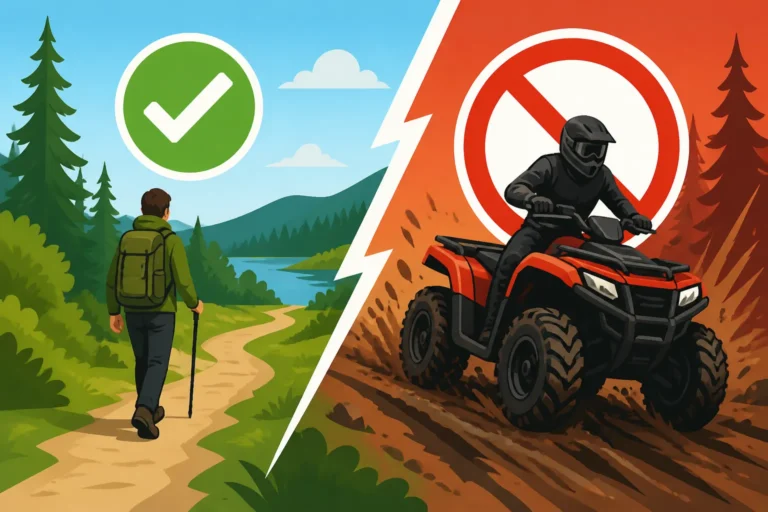
If you encounter a rough but open section, ride cautiously and stay within the marked corridor. Don’t remove signs, move a barrier, or follow tire tracks into the woods as proof that a route is open. A track can be old, unauthorized, or left by someone who ignored a closure. The basics are covered in [Staying on a Marked New Brunswick Corridor](Staying on a Marked New Brunswick Corridor).
If the route is blocked and there’s no safe way forward, turn around. Record the location and report the problem to the club or organization responsible for the route. That’s more helpful than trying to repair a structure yourself or pushing branches into a ditch. Proper repairs may require permission, tools, or knowledge of how water flows through the area.
How to report trail damage
Give the club details it can act on
A useful report helps someone locate and understand the problem. Note the trail or general area, the direction you were travelling, and the nearest recognizable landmark, junction, bridge, or trail sign. If you know the location from a map or GPS device, include that information. A vague note like “the trail is bad near the river” can be difficult to follow up on when a route covers a large area.
Describe what you saw without guessing at the cause. For example, say that water is flowing across the trail and the ground is washing away, rather than declaring that a culvert has failed if you can’t see it. Mention whether the route is passable, whether a barrier or warning sign is present, and whether there’s an immediate danger. Photos can help, provided you take them from a safe place and don’t enter an unstable area to get a better view.
Use an appropriate club or trail organization contact channel when one is available. Avoid posting a precise location publicly if the issue involves private property, sensitive land, or a hazard that might attract people to an unsafe spot. For practical guidance on what information is useful, see [Reporting Damage to a Club](Reporting Damage to a Club).
Report hazards without putting yourself at risk
You don’t need to inspect a damaged bridge, walk into fast-moving water, or move a heavy obstruction to make a helpful report. Keep yourself and your riding group at a safe distance. If the route is blocked, stop before the hazard, turn around where it’s safe, and let others in your group know what you’ve found.
Use your phone or GPS to record the location if conditions allow, but don’t rely on mobile coverage in remote areas. You may be able to save a track or location for later even when you can’t send a message from the trail. A mapping tool such as onX Offroad can help riders record their position or review a planned route, but it should not be treated as confirmation that a trail is open or that a particular corridor is authorized. Check the relevant local trail information as well.
If you do have service, send a clear report when you’re safely stopped. Include the date you encountered the problem, the direction of travel, and whether you saw any closure notices. Don’t assume someone else has already reported it. A concise, accurate message can help a club decide whether to inspect the location, post a warning, or arrange a repair.
| What you find | Details to report | What to do while riding |
|---|---|---|
| Washout or soft ground | Location, size, and whether water is moving through it | Avoid riding around the marked corridor; turn back if needed |
| Downed tree or blocked trail | Nearby sign, junction, or landmark; whether passage is possible | Don’t cut or move it unless you’re authorized and equipped |
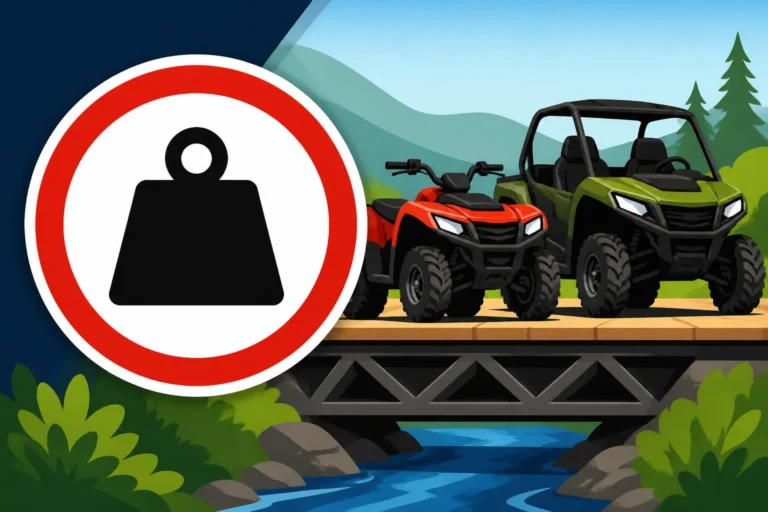
| Damaged bridge or culvert | Visible damage and any warning signs | Don’t cross if the structure appears unsafe |
| Missing or confusing sign | Location and the direction the sign should indicate | Follow clear markings; don’t guess at an uncertain route |
| Erosion or deep rutting | Approximate length and whether the route is worsening | Ride cautiously if open; report rather than widening the trail |
What riders can do to support trail maintenance
Respect signs, gates, and temporary barriers
Signs and barriers communicate more than directions. They may mark a closed section, a private access point, a hazardous structure, or a route that is temporarily unavailable while work is underway. If a gate is closed, leave it as you found it. Don’t assume a gap beside a barrier is an invitation to pass.
Trail signage can be easy to miss when you’re travelling in a group, especially in poor light or unfamiliar terrain. Slow down near junctions and look for the next marker before continuing. If signs are missing, damaged, or difficult to understand, report that information rather than installing your own. See [New Brunswick Trail Signage Explained](New Brunswick Trail Signage Explained) for more on following trail markers.
It’s also worth giving work crews room. If you meet volunteers or machinery on a narrow corridor, stop in a safe place, follow their directions, and wait until they signal that it’s clear to continue. A crew may be working around equipment, falling branches, or a partially repaired section. Patience helps protect both riders and workers.
Ride in a way that doesn’t make repairs harder
How you ride affects the condition of the corridor. Repeated wheelspin can loosen soil and deepen ruts; accelerating through a wet area can throw mud beyond the trail. If a section is marked open, pass through carefully without widening it. If it’s closed or clearly unsafe, don’t try to prove your machine can make it through.
Good trail etiquette also means keeping noise and speed under control near homes, work areas, and other trail users. Be considerate when passing, keep your group together at junctions, and avoid leaving litter. These choices may seem separate from maintenance, but they help protect relationships with landowners and communities—relationships that are essential to continued access. The everyday expectations are outlined in [New Brunswick Trail Etiquette Locals Expect](New Brunswick Trail Etiquette Locals Expect).
Maps are useful planning tools, but they don’t replace signs, local updates, or good judgment on the ground. A route shown in onX Offroad or another mapping app may not reflect a temporary closure or a recently changed access arrangement. Download or review the relevant map before a remote ride, then check official trail information where available and follow posted notices once you arrive.
Planning a ride around maintenance and closures
Check conditions before leaving home
Build a trail-condition check into your ride plan, especially after heavy rain, wind, or a spring thaw. Confirm that the route is open and that your planned access point is suitable. If you’re heading out near Miramichi, Bathurst, or another unfamiliar area, don’t assume every mapped route connects as expected or is open for the type of riding you plan to do.
A phone app can help with navigation, but download information for offline use when possible and carry a backup plan for a dead battery or poor signal. onX Offroad may help you keep track of your location, but the club’s posted signs and route information should guide decisions about access and closures. If map details and trail signs appear to conflict, don’t continue deeper into an uncertain section simply to stay on schedule.
Tell someone where you expect to ride and when you plan to return. Leave extra time for a turnaround if you meet a closure or discover damage. That small bit of planning can prevent a frustrating day from becoming a risky attempt to find an unmarked way around an obstruction.
Join the work or support the people doing it
If you want to contribute directly, contact a local club and ask what kind of help is needed. A workday may involve brushing, picking up litter, checking signs, or helping prepare tools and supplies. Don’t bring cutting equipment or begin work on your own unless the club has asked you to do so. Some seemingly simple jobs can affect drainage, land access, or the safety of other users.
You can also support trail maintenance by sharing accurate condition updates through appropriate channels, respecting temporary closures, and encouraging riding partners to do the same. If you notice a problem, report it with useful details rather than posting an unverified claim that a trail is permanently closed or damaged. Clear communication is especially helpful when riders are planning trips from outside the immediate area.
A well-kept trail network is a shared effort, but responsibility isn’t divided evenly: clubs organize and carry out authorized work, while riders can help by treating the corridor carefully and reporting issues promptly. In a province where routes pass through varied terrain and access arrangements, that cooperation makes it easier to address damage and preserve riding opportunities.
Disclaimer
This article is for general informational purposes only and does not constitute professional advice. Laws, prices and regulations vary by location and change over time. Consult a qualified professional for guidance on your specific situation.