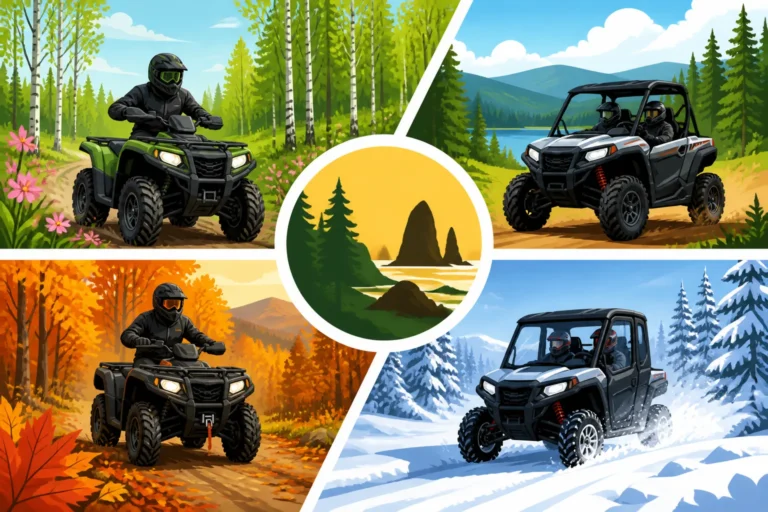
New Brunswick Groomed Trails Run Four Seasons
A “four-season” groomed trail permit can sound like a promise that every New Brunswick trail is open in every month. It isn’t. Riders still need to account for seasonal closures, changing ground conditions, trail sharing and local notices. This guide explains what four-season access means, how to plan rides around it, and what to check before loading your ATV or UTV.
What four-season groomed trail access means
Four seasons describes access, not a guarantee that every trail is open
In New Brunswick, “four-season” access means a rider may have access to the groomed trail network across the year’s seasons, subject to the rules and conditions applying to each trail. It does not mean every section stays open from spring through winter, or that you can ride any marked corridor whenever you like. A trail may be closed temporarily because of thaw, flooding, damage, maintenance, weather or another use of the land.
That difference matters if you are planning a ride weeks ahead. You might pick a loop near Miramichi for a fall weekend, only to find that a section has changed or been closed before you arrive. Four-season access is best understood as the opportunity to ride during more of the year—not a guarantee of uninterrupted access to every route.
Think of it as permission to use eligible trails when they are open and appropriate for your machine. You still need to confirm the trail’s status, follow posted notices and stay on the marked corridor. For context on how permit categories differ, see [New Brunswick Groomed vs Non-Groomed Permits].
Groomed trails and grooming are not the same thing
A groomed trail is associated with a permit category and a maintained trail network. The word “groomed” can make people picture a trail being freshly prepared every time they ride it, but that is not what it promises. Trail work may include clearing brush, addressing drainage, repairing structures or preparing routes for a particular season. The amount and kind of maintenance varies by location and conditions.
Winter grooming is also a specific kind of trail preparation. It does not mean an ATV trail is automatically groomed for ATV use in winter. In some areas, winter use may involve snowmobiles or shared corridors, while other routes may be unsuitable or closed. Do not assume that a trail maintained for winter traffic is open to every vehicle type.
The practical question is not simply, “Is this a groomed trail?” It is, “Is this route open to my vehicle today, and is it suitable for the conditions?” Checking a club notice or current trail information before setting out is more useful than relying on the category name alone.
A permit does not replace route-by-route checks
A trail permit and the trail’s operating status answer different questions. Your permit concerns your authorization to use the eligible trail system; a closure notice tells you whether a particular route is available at that time. You need both pieces of information before a ride.
This distinction is especially important in spring and after heavy rain. A trail can be part of a four-season network and still be temporarily closed because saturated ground is vulnerable to rutting. Even where there is no formal closure, a wet, damaged or unsafe section may be a poor choice. Riding around a muddy patch can widen the damage and create a new path through vegetation.
Before heading out, check the permit information and the notices for the area you plan to visit. The details of a permit’s season and coverage can change, so review the relevant information through the trail organization or authorized seller. The article [New Brunswick's Groomed Trail Permit] is a useful place to understand the category, while local notices help answer the day-of question: can I ride this route now?
How trail access changes through the year
Spring is the season to be patient with thaw
Spring can be one of the most frustrating times to plan a ride. The calendar says warmer weather is here, but shaded woods roads may still be frozen in the morning, while lower sections are soft and waterlogged by afternoon. A route can look firm at the trailhead and become deeply rutted a short distance in.
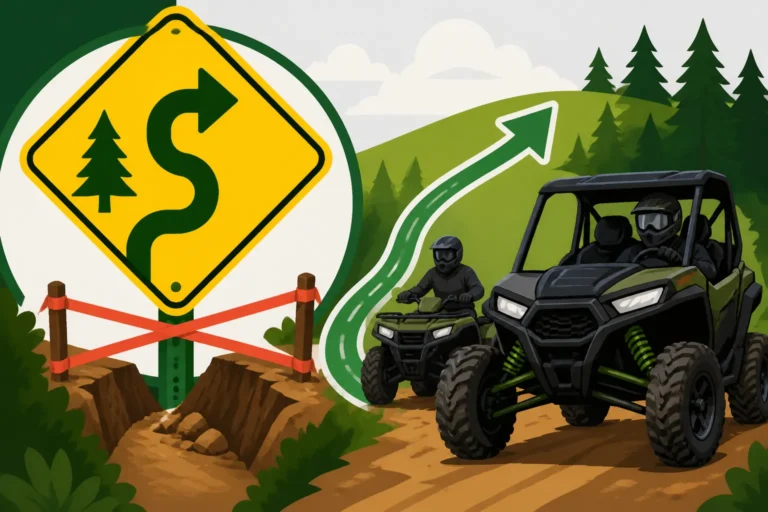
When the ground is soft, repeated tire traffic can damage the trail beyond the ride itself. Ruts hold water, widen under later traffic and may require club volunteers to make repairs. A posted closure is not a minor inconvenience or a challenge to work around; it is a signal that the route needs time, protection or maintenance. Check [New Brunswick Trail Closures in Spring Thaw] before deciding that an early-season ride is a good idea.
If a section is closed, do not ride around the barrier, detour through a field or make a new route beside the trail. Choose a different open route, or postpone the ride. A flexible plan makes that decision easier: identify a second trail area before leaving home rather than trying to improvise after you reach a closure.
Summer and fall offer different conditions, not automatic access
Summer often brings longer riding days, but it can also bring dust, washouts after storms, insect activity and busy trailheads. In a dry spell, dust can make it harder to see other riders around bends or on narrow corridors. After rain, the same trail may have standing water or soft shoulders. Conditions can vary sharply between open stretches and shaded forest sections.
Fall rides may offer comfortable temperatures and colourful scenery, but they also overlap with other activities in the woods. Hunters, forestry workers and other trail users may be present. Ride at a speed that gives you time to react, keep to the marked corridor and pay attention to signs and temporary notices. Seasonal weather can also change quickly, so carry appropriate layers and rain gear rather than assuming the day will stay mild.
A route that was open on your last visit may not be open today. Before a longer trip, check [New Brunswick Trail Conditions Before You Go] and look for information from the club responsible for the area. If you are travelling to a different region, do not assume the same conditions apply throughout New Brunswick.
Winter may involve shared use and changing limitations
Winter riding requires extra care because trail surfaces, visibility and the mix of users can change. Some corridors may be shared with snowmobiles or managed differently during winter. A route that seems wide enough in summer may feel very different when snowbanks narrow it or when visibility is reduced.
Before using a winter trail, confirm that ATV or UTV access is allowed there at that time. Follow posted signs, stay alert for oncoming traffic and never assume that a snowmobile track is an ATV route. Shared use depends on the local arrangement and any applicable notices, not on a rider’s familiarity with the trail from another season.
Cold weather also changes the practical demands of a ride. A small mechanical problem can become much more serious when you are far from a road, daylight is limited or your clothing is inadequate. Plan a shorter route than you might attempt in summer, let someone know where you are going and carry a way to communicate if your phone loses service. For seasonal context, read [New Brunswick Trail Closures in Winter] and check local information before leaving.
| Season | Conditions to anticipate | Useful planning habit |
|---|---|---|
| Spring | Thaw, soft ground, standing water and temporary closures | Check for thaw-related notices and do not ride around barriers |
| Summer | Dust, storms, busy trailheads and variable ground | Recheck conditions after rain and leave space for other users |
| Fall | Changing weather, shorter daylight and activity in the woods | Carry layers, ride attentively and confirm the route is open |
| Winter | Snow, ice, reduced visibility and possible shared use | Confirm vehicle access and plan for cold-weather delays |
Planning a four-season ride
Choose a route for your group and the day’s conditions
A good ride plan starts with realistic questions: How far can the group comfortably travel? Does everyone have experience on the type of terrain? Will the route include remote sections, narrow passages or places where turning around is difficult? A long loop that looks manageable on a map may be a poor choice for new riders, young passengers or a group with different machine capabilities.
Use a trail map to understand the broad route, but do not treat a line on a screen as proof of access. Maps can help you see where a trail runs, estimate how sections connect and identify nearby communities. They cannot always show a temporary closure, a recent washout or a change in local access. Check information from the club or trail organization responsible for the corridor.
A mapping app such as onX Offroad can help you review routes and keep track of your position, especially when you are planning a ride in an unfamiliar area. Use it as a navigation aid rather than a substitute for local trail notices. Save maps for offline use where possible, and carry a backup way to navigate if your phone battery dies or you lose reception. You can also explore [New Brunswick Trail Maps and the MapGear App] when deciding how to prepare your route information.
Build flexibility into the ride plan
A plan should include a starting point, an intended route and a sensible way to shorten or change the ride. If a trail is closed, a bridge is damaged or a group member is uncomfortable, the best response is to adapt—not to press on simply because the route was planned in advance.
For example, a group leaving from the Woodstock area might intend to ride a longer loop, then discover that one connector has been closed. If the riders have already identified an alternate open section, they can adjust without taking an unauthorized detour. If they have not, they may end up debating options at the trailhead with poor reception and limited daylight.
Share your plan with someone who is not riding with you. Include the general area, expected return time and the person to contact if the group is delayed. On a remote ride, avoid relying on a single phone or a single rider’s memory of the route. Keep the group together at junctions, and agree in advance on what to do if riders become separated.
Check the map and the notice board
A useful pre-ride check combines a map with current local information. First, identify the club trail or region you intend to ride. Then look for current notices about closures, reroutes, maintenance, weather impacts or restrictions. If the information is unclear, contact the responsible club or organization before travelling a long distance to the trailhead.
Apps can help you locate yourself and follow a route, but the map layer may not tell you whether a section is currently closed. onX Offroad can be useful for viewing and tracking a planned route, but do not use a downloaded track as proof that riding is permitted. A GPX route shared by another rider may be old, incomplete or unsuitable for your machine and the day’s conditions.
For a regional overview, [New Brunswick's Eight Trail Regions] can help you think about where to ride. For the actual outing, narrow that down to the specific trail area and confirm local status. A little checking at home is far less frustrating than arriving at a closed gate after a long drive.
Riding responsibly on a four-season network
Stay on the marked route and respect closures
Staying on the marked trail is one of the simplest ways to protect access. A bypass around a muddy spot may look harmless, but repeated detours can create parallel tracks, damage vegetation and take riders onto land where access has not been granted. If a section is too wet or blocked, turn around or use a recognized alternate route that is open.
Treat gates, signs and barriers as meaningful instructions. Do not move a barrier to get through, and do not assume a route is open because another rider has gone past a sign. If you see damage, a washout or a hazard that could affect others, report it through the appropriate club channel when safe to do so. A useful report includes the location, the kind of problem and any clear landmark nearby.
Trail etiquette is not just about being polite. It helps reduce conflict with landowners, other trail users and the volunteers who maintain the network. Keep noise and speed under control near homes, yield appropriately and leave the trailhead tidy. For more detail, see [New Brunswick Trail Etiquette Locals Expect].
Prepare for the route, not just the forecast
A forecast for a sunny day does not guarantee dry conditions in the woods. Bring clothing that suits the season, including a warm layer and rain protection when appropriate. In summer, water, basic first-aid supplies and insect protection can make a long day more comfortable. In colder weather, think carefully about how quickly a minor delay could become uncomfortable or unsafe.
Check your ATV or UTV before setting out. Look over the tires, controls, lights, brakes and fuel level, and bring any basic items appropriate to your machine and route. On a longer ride, consider what you would do if you had a flat, got stuck or needed to wait for help. A tow strap, tool kit or spare part may be useful depending on the machine and terrain, but only carry equipment you know how to use safely.
Communication deserves its own plan. A mobile phone may work near a town and fail a few kilometres into the woods. If your route has known dead zones, tell someone your expected return time and consider an appropriate backup communication device. Do not let a navigation app’s blue dot create a false sense of security: location tracking does not guarantee that you can call for help.
Remember that four seasons can mean four kinds of trail users
Trail sharing may vary by location and time of year. You may encounter snowmobiles, hikers, cyclists, logging trucks, maintenance crews or other authorized users. A route’s usual summer character does not tell you what to expect in winter, during hunting season or while forestry work is underway.
Slow down when visibility is limited, keep to your side of the trail where appropriate and approach blind bends cautiously. If you meet a large vehicle on a narrow woods road, look for a safe place to yield rather than assuming the driver can move aside. Dust, snowbanks, vegetation and uneven surfaces can hide the edge of the corridor.
Be especially thoughtful around communities and private property. A trail may pass near homes, camps or work areas, and access can depend on arrangements that riders do not see. Follow signs, avoid stopping where you block a gate or driveway and respect requests to stay on the designated route. [New Brunswick Trail Sharing] explains why the habits of individual riders matter to everyone who wants continued access.
Permits, seasonal details and common mistakes
Confirm the permit category before you ride
Riders sometimes assume that owning a machine or having used a trail in the past is enough to ride again. Before setting out, confirm the permit requirements for your machine and the trails you plan to use. Permit categories and their coverage are not interchangeable simply because the routes appear on the same map.
If you are comparing a groomed option with a non-groomed one, consider when you realistically ride, which areas you want to visit and what the permit covers—not just the label. A rider who mainly goes out in summer may have different needs from someone who wants to ride in winter as well. A family with several machines should check each machine’s requirements rather than assuming one sticker or permit covers the whole group.
The permit system and prices can change, so confirm current details with the relevant organization or authorized seller before purchase. The article [New Brunswick Trail Permits for 2026 and 2027] is a related reference, but for a specific ride, rely on the applicable current permit information and the local trail status.
Avoid the mistakes that turn a good ride into a frustrating one
One common mistake is planning around the season name rather than the trail’s actual condition. “It is summer” does not mean every route is dry, and “four-season access” does not mean there are no closures. Another is checking a map but not checking recent notices. Both can lead to a wasted trip or, worse, riding into a closure or hazardous area.
A second mistake is assuming that a route used by one type of vehicle is open to all types. Winter access, shared corridors and local arrangements can differ. Confirm that your ATV or UTV is allowed on the route before you ride, and pay attention to signs at access points and junctions.
A third mistake is trying to save a ride by improvising around a closed section. It may feel like the practical choice when the group has driven a long way, but creating a new path can damage the trail and put access at risk. Keep an alternate legal route in mind, turn back when needed and treat a closure as part of the planning information rather than an invitation to find a way around it.
Use a simple pre-ride checklist
A short checklist can take the guesswork out of a four-season outing. Before leaving, confirm that your permit is appropriate, the route is open and your machine is ready. Check the forecast, daylight and travel time, then tell someone where you plan to ride and when you expect to return.
At the trailhead, read posted signs and compare them with your plan. If conditions are worse than expected, shorten the ride or choose another open route. During the ride, remain on the marked corridor, watch for other users and stop somewhere safe if you need to consult a map.
Use this as a practical last check:
- Confirm your permit and vehicle requirements.
- Check local trail notices, closures and reroutes.
- Verify that the planned route allows your vehicle type.
- Review weather, daylight and likely trail conditions.
- Inspect the machine and carry suitable supplies.
- Share your route and expected return time.
- Follow signs and stay on the authorized trail.
- Turn back or reroute only along an open, permitted route.
Four-season groomed access can make it easier to enjoy New Brunswick trails throughout the year, but the best rides still depend on local knowledge and good judgment. Check the route before travelling, adapt to conditions and leave the corridor in good shape for the next group.
Disclaimer
This article is for general informational purposes only and does not constitute professional advice. Laws, prices and regulations vary by location and change over time. Consult a qualified professional for guidance on your specific situation.