Passengers Need a Helmet as Much as Drivers
There's a common misconception out there, especially among new riders or folks just taking a quick spin on their property, that helmets are mainly for the driver, or only for serious trail riding. But the truth in New Brunswick couldn't be clearer: if you're on an ATV or UTV, whether you're behind the handlebars or just along for the ride, a proper helmet is legally required and absolutely essential for your safety. This guide will walk you through the specifics of New Brunswick's helmet laws for every occupant, the standards your helmet needs to meet, and why this piece of gear is your first line of defence against serious injury.
The Non-Negotiable Law: Helmets for Every Rider in New Brunswick
Riding an ATV or UTV in New Brunswick offers incredible freedom and access to our beautiful wilderness, but with that freedom comes a serious responsibility. And at the top of that list of responsibilities is wearing a helmet. It’s not just a suggestion; it’s a hard-and-fast rule that applies to every single person on the machine.
Who Needs a Helmet? Drivers and Passengers Alike
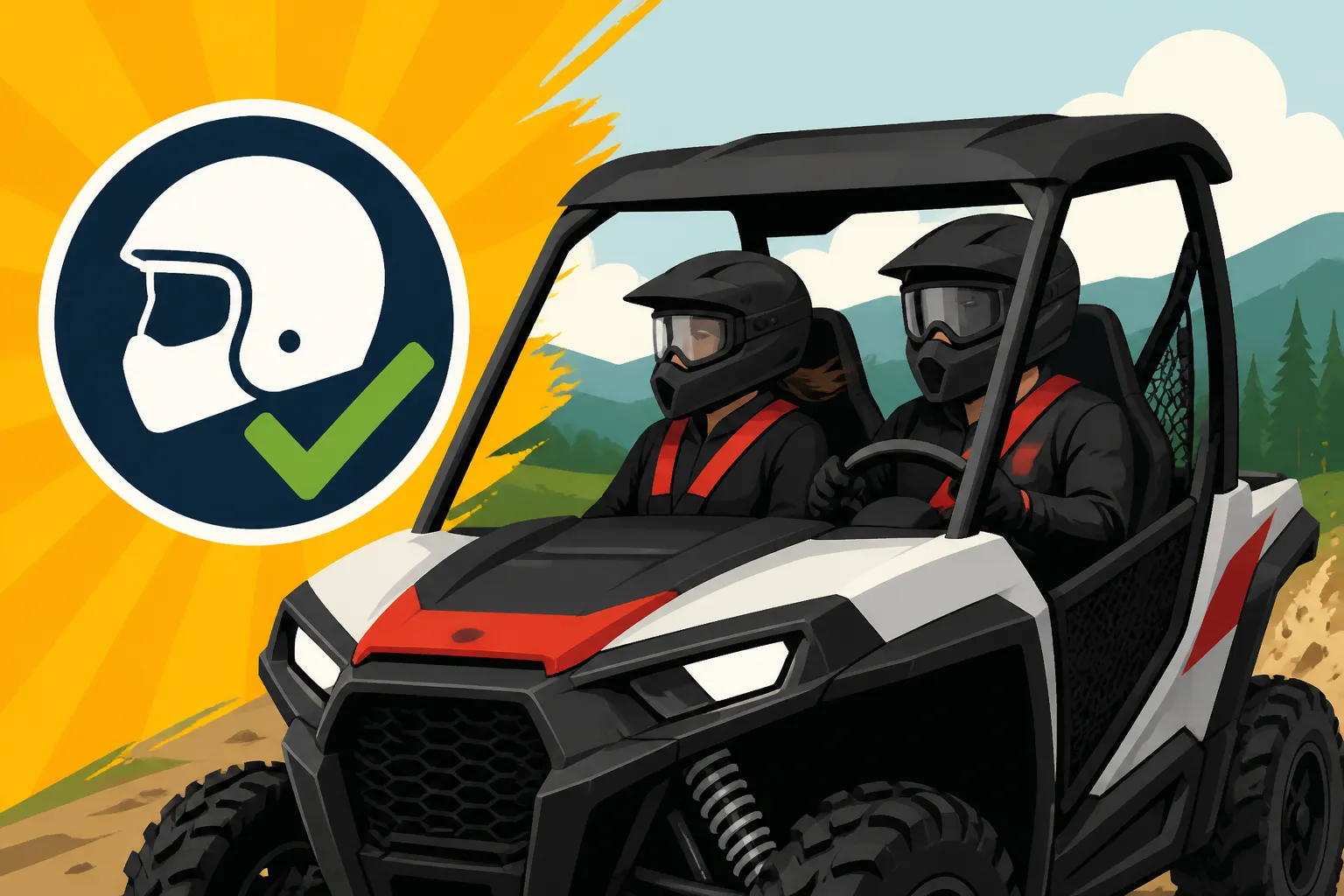
Let's cut right to it: in New Brunswick, if you are operating or riding as a passenger on an off-road vehicle (ORV), you are legally required to wear an approved helmet. There are no exceptions for experience level, how short the ride is, or whether you're just puttering around your own woodlot. This isn't just about protecting the driver; it's about protecting every single occupant. Think about it this way: if a rollover happens or you hit an unexpected obstacle, a passenger can be ejected or impacted with just as much force as the driver, if not more, depending on where they're positioned. The law understands this shared risk, which is why it's so stringent.
Consider a scenario many of us have seen: a beautiful summer day, a farmer driving their side-by-side a short distance down a private laneway to check on a fence line, with a grandchild perched in the passenger seat, hair blowing in the breeze. While it might feel harmless in the moment, legally, both the driver and the child should be wearing approved helmets. The law doesn't differentiate between a casual cruise and an intense trail ride – the potential for serious head injury is always present. Ignoring this puts everyone at risk, not just of injury, but also of legal trouble. You'll find that [New Brunswick ATV Helmet Law] applies across the board, without ifs, ands, or buts.
The Legal Ramifications of Riding Without a Helmet
Flouting the helmet law isn't just risky for your skull; it's risky for your wallet and your legal standing. If you're caught riding an ATV or UTV in New Brunswick without an approved helmet, you're looking at a significant fine. We're talking about [New Brunswick's $172.50 Helmet Fine]. This isn't pocket change; it's a substantial penalty that could easily be avoided by simply donning the right gear. And remember, this fine applies to each individual not wearing a helmet. So, if both a driver and a passenger are found without helmets, that's two separate fines.
Beyond the immediate financial hit, there are other, more severe consequences. If you're involved in an accident and weren't wearing a helmet, your insurance company might deny coverage for your injuries, or at least significantly reduce the payout, arguing that your injuries were preventable. Furthermore, in any legal proceedings following an accident, not wearing a helmet could be used against you, impacting liability and potential compensation. It’s a serious matter, and the authorities are not lenient when it comes to head protection. This is part of the broader [New Brunswick Penalties for Riding Unregistered] and uninsured context, where safety is taken very seriously. The question of [Who Gets Ticketed When a Passenger Skips a Helmet] is clear: the passenger themselves can be ticketed, and in some cases, the driver may also face consequences for allowing an unhelmeted passenger.
What Makes an ATV Helmet "Legal" in New Brunswick?
It's not enough to simply put any helmet on your head. New Brunswick has specific safety standards that helmets must meet to be considered legal. This is critical for ensuring the helmet actually provides the protection it's designed for.
Understanding Accepted Safety Standards
When you're shopping for a helmet, or checking the one you already own, look for a certification sticker. This sticker is your proof that the helmet has undergone rigorous testing and meets recognized safety criteria. In New Brunswick, approved helmets must meet one of several recognized standards. These include:
- CSA Standard D230: This is the Canadian Standards Association standard for motorcycle helmets. If your helmet has this sticker, you're good to go. [A Helmet Meeting CSA D230] indicates it's designed to withstand Canadian conditions and impacts.
- FMVSS 218: The Federal Motor Vehicle Safety Standard 218 is the US Department of Transportation (DOT) standard. Many helmets sold in Canada will carry this certification. [A Helmet Meeting FMVSS 218] signifies it meets stringent American safety tests.
- Snell: The Snell Memorial Foundation is a non-profit organization that develops its own voluntary, higher-than-required safety standards for helmets. A Snell-certified helmet offers an extremely high level of protection. You'll often find [Finding the Snell Sticker Inside a Helmet Shell].
- ANSI Z90.1: The American National Standards Institute (ANSI) also has a standard for protective headgear. [Why an ANSI-Certified Helmet Is Accepted Too] is because it represents another widely recognized safety benchmark.
Always double-check the internal labelling of your helmet to confirm it carries one of these certifications. Without it, even if it looks robust, it might not be considered legal or safe in the eyes of the law. These are the [New Brunswick Helmet Standards Accepted] that riders need to be aware of.
The Importance of Proper Fit and Condition
A helmet, no matter how highly rated, is only as good as its fit. A helmet that's too loose can shift during an impact, offering inadequate protection or even obscuring your vision. One that's too tight can be uncomfortable and distracting. When trying on a helmet, it should feel snug all around your head, with no pressure points. It shouldn't move side-to-side or up-and-down when you shake your head gently. The chin strap should be securely fastened, allowing only a finger or two to fit underneath.
Beyond fit, the condition of your helmet is paramount. Helmets are designed to absorb impact by deforming or crushing materials within their shell. If a helmet has been involved in an accident, even if there's no visible damage, its protective capabilities may be compromised. It’s always best to replace a helmet after an impact. Additionally, helmets have a lifespan. Over time, materials degrade due to UV exposure, sweat, and general wear and tear. Most manufacturers recommend replacing helmets every five to seven years, regardless of visible damage. For components like visors or goggles, ensuring they are scratch-free and clear is also part of maintaining safe vision on the trails. Companies like SuperATV offer a range of aftermarket accessories, including replacement visors or specialized goggles that can enhance your visibility and comfort.
Beyond the Law: Why Helmets Are Your Best Co-Pilot
While adhering to the law is important, the primary reason to wear a helmet goes far beyond avoiding fines. It's about protecting your most vital organ and ensuring you can continue to enjoy the sport you love.
Mitigating the Risks of Off-Road Riding
ATV and UTV riding, by its very nature, carries inherent risks. You're traversing uneven terrain, navigating obstacles, and often riding at speeds where a moment's inattention or a sudden change in conditions can lead to an accident. Common incidents include rollovers, where the machine tips on its side or even overturns, collisions with trees or rocks, and falls from the machine, especially in rough terrain or during sudden manoeuvres. In all these scenarios, your head is incredibly vulnerable.
Head injuries can range from concussions, which can have long-lasting effects on cognitive function, to traumatic brain injuries (TBIs) that can result in permanent disability, loss of motor skills, or even be fatal. No one wants to imagine these outcomes, but they are a very real possibility when riding unprotected. A helmet acts as a crucial buffer, absorbing and distributing the force of an impact, drastically reducing the severity of head injuries. Think about a sharp turn on a muddy trail where a passenger might suddenly shift, leading to an imbalance. Without a helmet, a simple fall could mean hitting their head on a rock or the machine itself. For young riders, especially, whose necks and heads are still developing, a helmet is absolutely non-negotiable. [New Brunswick Safety Course for a 14-Year-Old] emphasizes safety equipment as a fundamental part of responsible riding.
Making Smart Gear Choices for All Occupants
A helmet is the cornerstone of your safety gear, but it's part of a larger system. To truly protect yourself and any passengers, consider the full array of personal protective equipment (PPE). Eye protection, such as goggles or a face shield integrated into your helmet, is essential to shield your eyes from dust, debris, insects, and low-hanging branches. Sturdy gloves can protect your hands from scrapes and offer better grip. Long pants, long-sleeved shirts, and over-the-ankle boots provide crucial protection against abrasions and impacts.
When outfitting passengers, especially children, proper sizing of all gear is vital. A child's helmet must fit them perfectly, not just be a hand-me-down that's too big. Their boots should provide ankle support, and their clothing should cover their skin. On side-by-sides, while roll cages offer some protection, helmets remain critical, particularly in the event of a rollover or side impact. Many riders enhance their UTVs with additional safety features, and here's where accessories from brands like SuperATV come into play. They offer robust windshields, full doors, and even specialized harnesses that, while not replacing a helmet, work in conjunction with it to create a safer environment for all occupants. Remember, [New Brunswick Equipment a Rider Must Carry] extends beyond just the machine itself to include what you wear.
Ultimately, whether you're a seasoned pro or taking out a loved one for their very first ride, the commitment to helmet use for everyone on board is paramount. It’s about more than just checking a box; it’s about ensuring that every ride is a safe adventure, allowing you to focus on the joy of exploring New Brunswick's stunning trails.
Here’s a quick overview of acceptable helmet standards in New Brunswick:
| Standard Acronym | Full Name / Description | Key Benefit | Where to Find It (Commonly) |
|---|---|---|---|
| CSA D230 | Canadian Standards Association D230 for motorcycle helmets | Designed for Canadian safety requirements | Helmets sold in Canada |
| FMVSS 218 (DOT) | Federal Motor Vehicle Safety Standard 218 | US Department of Transportation standard; rigorous | Helmets sold in the USA and Canada |
| Snell | Snell Memorial Foundation (M or SA series) | Voluntary, often higher-than-required safety testing | Premium, performance-oriented helmets |
| ANSI Z90.1 | American National Standards Institute Z90.1 | Another recognized US standard for head protection | Certain types of protective headgear |
Disclaimer
This article is for general informational purposes only and does not constitute professional advice. Laws, prices and regulations vary by location and change over time. Consult a qualified professional for guidance on your specific situation.