Financing a Quad at a New Brunswick Credit Union
Dreaming of hitting those New Brunswick trails on a brand-new ATV or side-by-side but feeling a bit daunted by the upfront cost? You're certainly not alone in that feeling. For many riders, purchasing a machine outright just isn't feasible, and exploring financing options is a critical step. This guide is here to walk you through the ins and outs of securing a loan for your off-road vehicle through a New Brunswick credit union, offering a path that often feels more personal and connected to our local communities.
Why a New Brunswick Credit Union Stands Out for ATV/UTV Financing
When you're looking to finance a significant purchase like an ATV or UTV, you've got choices. Banks, dealerships, private lenders – the options can feel overwhelming. But for many New Brunswickers, a local credit union offers a distinct advantage, especially when it comes to getting that dream machine onto our stunning trails.
A Community-Focused Approach
One of the biggest differences you'll find with a credit union is their deeply rooted community focus. Unlike larger, often national or international banks, credit unions are member-owned. This means their primary goal isn't just about maximizing shareholder profit; it's about serving their members and the local community they operate within. When you walk into a credit union branch in Fredericton, Moncton, or anywhere else across the province, you're often dealing with folks who live and work right alongside you. They understand the local economy, the local passions—like our love for ATVing—and they often have a more nuanced view of an applicant's financial situation than a rigid, far-off corporate office might.
This personalized approach can be a huge relief, especially if your financial history isn't a textbook perfect example. Maybe you're a seasonal worker, or you've had a few bumps in the road in the past. A credit union might be more willing to listen to your story, consider your individual circumstances, and work with you to find a solution that fits your budget. They're often more flexible because they have a vested interest in the financial well-being of their members. It's not just about a transaction; it's about building a relationship within the community.
Competitive Rates and Member Benefits
While large banks often have standard, non-negotiable rates, credit unions can sometimes offer surprisingly competitive interest rates on vehicle loans. Because they are non-profit organizations, any earnings are typically reinvested into the credit union or returned to members through lower fees, higher savings rates, or better loan rates. It's worth remembering that "competitive" doesn't always mean "the absolute lowest" on paper, but rather a rate that, combined with flexible terms and a personalized service, creates a better overall value.
Beyond the interest rate, being a member of a credit union can unlock other benefits. You might find lower fees on other banking services, better rates on savings accounts, or even financial literacy programs designed to help you manage your money more effectively. For many, the peace of mind that comes from dealing with a local institution that genuinely cares about its members outweighs any marginal rate difference you might find elsewhere. Plus, if you already have other accounts or loans with your local credit union, you've established a relationship, which can often streamline the application process for an ATV loan and potentially lead to more favourable terms. They know you, and that trust goes a long way.
Navigating the Application Process at a Credit Union
So, you've decided a credit union might be the right fit. Excellent! Now, let's talk about the practical steps involved in actually applying for that loan. It's usually a straightforward process, but being prepared can save you a lot of time and potential headaches.
Essential Documents and Information
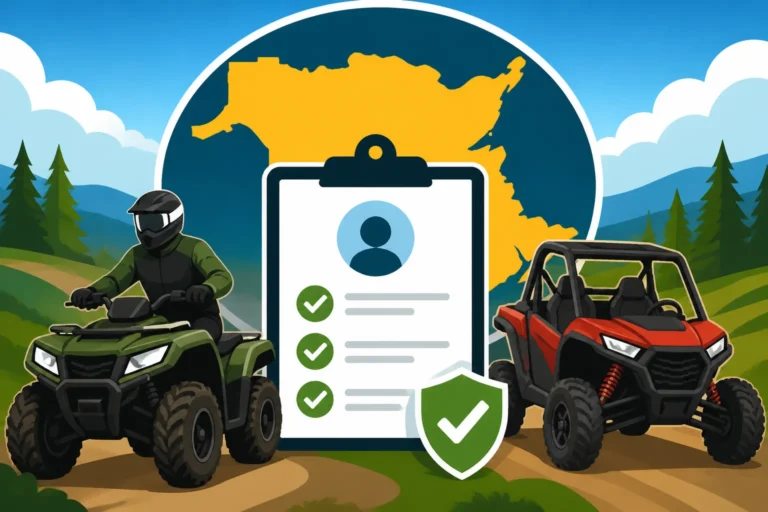
Before you even step foot into your local credit union branch, it's a good idea to gather some key documents. Think of it like packing for a long ride: you don't want to get halfway there and realize you forgot something crucial. Lenders, including credit unions, need a clear picture of who you are, your financial standing, and the collateral you're looking to finance.
You'll definitely need government-issued identification, such as your driver's license. Proof of residency is also typically required, like a utility bill or another official document showing your current address in New Brunswick. When it comes to your financial health, be prepared to provide proof of income – recent pay stubs, employment letters, or tax returns if you're self-employed. They'll also want to know about your existing debts and assets to calculate your debt-to-income ratio. This includes information on any other loans, credit cards, or mortgages you might have.
As for the ATV or UTV itself, you'll need details about the machine you intend to purchase. If it's a new machine from a dealer, bring the purchase agreement or a quote. If it's a used machine from a private seller, you'll need the seller's information, the vehicle identification number (VIN), and ideally, a draft of a bill of sale. Sometimes, a credit union might even request a professional appraisal for a used machine to ensure the loan amount isn't more than the machine's market value. Being thorough at this stage means fewer follow-up calls and a quicker path to approval. For a deeper dive into general vehicle paperwork, you might find information in [New Brunswick Registration Paperwork Checklist] helpful as some of it overlaps.
Here’s a quick checklist of common documents you might need:
| Document Category | Specific Items | Purpose |
|---|---|---|
| Personal Identification | Driver's License or other Photo ID | Verify identity and age |
| Proof of Residency | Utility bill, lease agreement, property tax bill | Confirm current New Brunswick address |
| Income Verification | Recent pay stubs (2-3), Letter of Employment | Confirm stable income source and amount |
| T4s, Notice of Assessment (NOA), tax returns | For self-employed or to show annual income | |
| Financial Information | Bank statements (recent 3 months) | Show cash flow and payment history |
| List of assets (savings, investments, property) | Demonstrate overall financial health | |
| List of liabilities (other loans, credit cards) | Calculate debt-to-income ratio | |
| Vehicle Information | Purchase agreement/quote (new machine) | Confirm exact price, model, and dealer details |
| Bill of sale (draft or final, used machine) | Document transaction details from private seller | |
| Vehicle Identification Number (VIN) | Unique identifier for the ATV/UTV | |
| Year, Make, Model, Odometer Reading (used machine) | Assess collateral value | |
| Credit History | (Usually pulled by the credit union) | Evaluate creditworthiness |
The Application and Approval Timeline
Once you've submitted all your documents, the waiting game begins. The good news is that for many credit unions, especially local ones, the process can be surprisingly efficient. They understand you're eager to get out on the trails! Generally, after your application is complete, a loan officer will review everything. This involves checking your credit history, verifying your income and employment, and assessing the value of the ATV or UTV you want to purchase.
The actual approval timeline can vary. For a straightforward application with strong credit and all documents in order, you might hear back within a day or two. If there are questions, missing information, or if your credit situation requires a bit more discussion, it could take longer, perhaps up to a week. Be prepared for follow-up questions; it's part of their due diligence. They might ask for additional proof of income, clarification on a previous loan, or more details about the machine. Responding promptly to these requests can help keep the process moving. It's often reassuring to remember that credit unions are generally very communicative throughout, ensuring you're not left in the dark. For insights into general wait times, [New Brunswick Registration Processing Time] might offer some context, though loan approvals are a different beast.
Understanding Your Loan Terms and Obligations
Getting approved for a loan is a fantastic step, but it's equally important to fully grasp the terms of that loan. A loan isn't just a lump sum of money; it's a financial commitment, and understanding the details will ensure you're comfortable and prepared for the journey ahead.
Key Elements of Your Loan Agreement
Your loan agreement is a legally binding document, so taking the time to read and understand it thoroughly is paramount. The primary elements you'll encounter include the principal amount, which is the exact sum of money you're borrowing. Then there's the interest rate, which can be fixed (meaning it stays the same throughout the loan term) or variable (meaning it can fluctuate with market rates). Most ATV loans tend to be fixed, offering predictable payments.
The loan term refers to the length of time you have to repay the loan, typically expressed in months or years. A longer term usually means lower monthly payments but you'll pay more interest over the life of the loan. A shorter term means higher monthly payments but less overall interest. It's about finding the balance that works for your budget. Your payment schedule will outline exactly when and how much you need to pay each month. Be aware of any penalties for late payments, which can add up quickly. Some loans also offer prepayment options, allowing you to pay off the loan early without penalty, which can save you a significant amount in interest.
Crucially, because you're financing a vehicle, the credit union will likely place a lien on your ATV or UTV. This means they legally own a portion of the machine until the loan is fully repaid. This lien will be recorded on the vehicle's registration certificate. You won't receive a clear title until the loan is satisfied. Understanding these details, including any clauses about insurance requirements or how the lien is handled upon sale, is vital. You might even find it useful to review general legal document templates from resources like LawDepot to better familiarize yourself with the structure and language of such agreements, even if you're not drafting the loan agreement yourself, it can help you understand the nuances. The article [New Brunswick Registration and Financing] dives deeper into how financing affects your vehicle's paperwork.
Factors Influencing Your Rate and Approval
A credit union, like any lender, assesses risk. The terms and interest rate you're offered will largely depend on how they perceive that risk. Your credit score and credit history are big players here. A higher credit score, which reflects a consistent history of paying bills on time and managing debt responsibly, typically leads to better interest rates and easier approval. If your credit history has a few blemishes, the credit union might still approve you, but possibly at a slightly higher interest rate to offset the perceived risk. It's always a good idea to check your credit report before applying for a loan so you know where you stand.
Beyond your credit score, your debt-to-income ratio is a critical factor. This is a calculation of how much of your monthly income goes towards paying off existing debts. If a large portion of your income is already committed to other payments, a credit union might be hesitant to add another significant loan, as it could strain your finances. Stable employment, demonstrating a reliable source of income, is also very important. Lenders want to see that you have the consistent ability to make your payments.
Finally, the loan-to-value (LTV) ratio of the machine itself can influence your approval and terms. If you're able to provide a down payment, reducing the amount you need to borrow, it lowers the credit union's risk and can sometimes result in a better rate. The age and type of machine (new vs. used, ATV vs. side-by-side) can also play a role, as lenders consider the resale value of the collateral. For instance, a brand-new machine might be seen as less risky than an older, high-mileage used one. If you're looking at a used machine from a private seller, you'll need to be especially diligent; the article [New Brunswick Registration After a Private Sale] offers insights that could be relevant to the purchase process itself.
Beyond the Loan: Important Considerations for Your Financed Machine
Once you've secured your financing and are the proud owner of a new (or new-to-you) ATV or UTV, the journey isn't over. There are a few more critical steps and ongoing responsibilities that come with owning a financed machine in New Brunswick.
Insurance and Registration Requirements
This is where the rubber meets the trail, quite literally. In New Brunswick, if you're planning to ride your ATV or UTV on designated trails, you absolutely need insurance. And if you've financed your machine, your credit union will almost certainly require comprehensive insurance coverage as part of your loan agreement. This protects their investment (the machine itself) in case of an accident, theft, or damage. Make sure you understand the minimum coverage requirements set by your lender and choose a policy that meets both those and your personal needs. For more details on this, take a look at [New Brunswick Requires Insurance on Trails] and [New Brunswick Insurance Cost for an ATV].
Beyond insurance, proper registration is non-negotiable. Every ATV and UTV operated in New Brunswick must be registered with Service New Brunswick. When you have a financed machine, the credit union's lien will be noted on your registration certificate. This means that while you're the registered owner, the credit union has a financial interest in the machine until the loan is paid in full. The dealer usually handles the initial registration if you buy new, but if you're buying privately, it's your responsibility to transfer the registration into your name and ensure the lien is correctly recorded. Keeping your registration certificate and proof of insurance readily accessible and up-to-date is not just smart practice, it's the law when you're out on the trails. Our comprehensive guide [New Brunswick ORV Registration Explained] can fill you in on all the details.
Future Planning and Management
Owning a financed ATV or UTV isn't just about the monthly payment; it's about looking ahead. What happens if you decide to sell the machine before the loan is paid off? This is a common scenario. If you sell your financed ATV, you'll need to coordinate closely with your credit union. The proceeds from the sale will first go towards paying off the outstanding loan balance and discharging the lien. Only then can a clear title be transferred to the new owner. It's a process that requires careful communication and documentation to ensure everything is handled legally and smoothly for both parties. [Selling a Registered Machine in New Brunswick] covers this in more detail. When you're dealing with the transfer of ownership documents, especially if there's a lien involved, familiarizing yourself with forms and contracts on resources like LawDepot can give you a better grasp of the legalities and necessary paperwork for such transactions, even if you're using official government forms.
You might also consider refinancing your loan down the line. If interest rates drop significantly, or your credit score improves considerably, you might be able to get a better rate on your existing loan, which could save you money over the remaining term. It's always worth discussing these options with your credit union.
Finally, don't forget the ongoing costs beyond the loan payment. Budget for fuel, regular maintenance (oil changes, tire wear, minor repairs), and of course, your annual [New Brunswick Trail Permit Cost in 2026] if you plan to ride on club trails. Being proactive about these expenses means you'll enjoy your ATV or UTV without any unexpected financial bumps in the road.
Disclaimer
This article is for general informational purposes only and does not constitute professional advice. Laws, prices and regulations vary by location and change over time. Consult a qualified professional for guidance on your specific situation.